The Permanent Things

by Russell Kirk

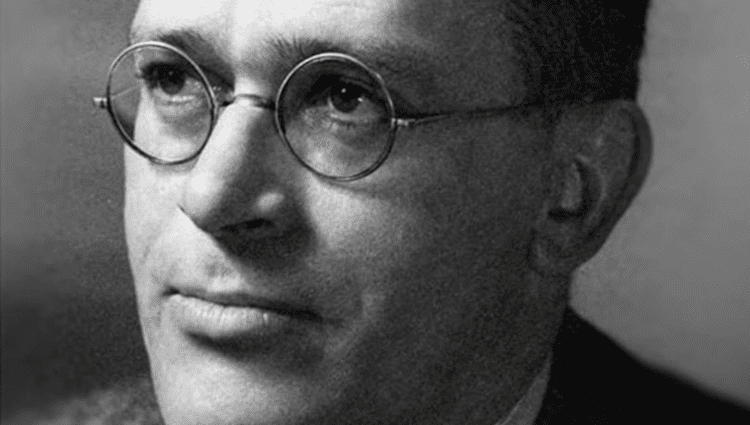
T.S. Eliot

T.S. Eliot

By “the Permanent Things” [T. S. Eliot] meant those elements in the human condition that give us our nature, without which we are as the beasts that perish. They work upon us all in the sense that both they and we are bound up in that continuity of belief and institution called the great mysterious incorporation of the human race.

For books by Russell Kirk and T.S. Eliot please visit The Imaginative Conservative Bookstore. [Read more...]

How Dead is Edmund Burke?

by Russell Kirk

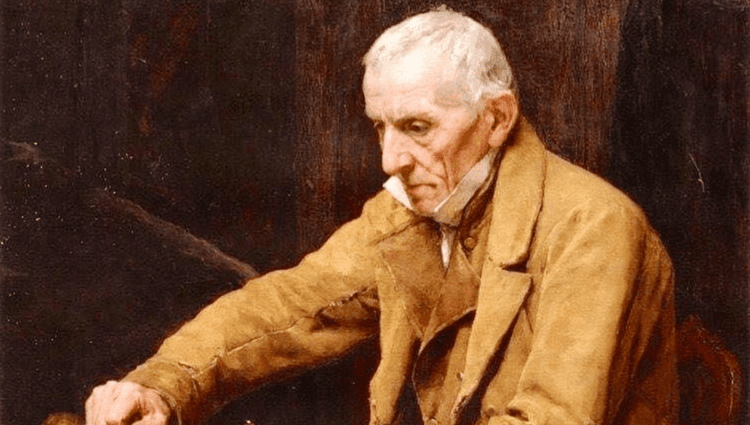
BurkeWalk beside the Liffey in Dublin, a trifle west of the dome of the Four Courts, and you come to Number 12, Arran Quay. This is a brick building of three stories, which began as a gentleman’s residence, some time since became a shop, and now is a governmental office of the meaner sort—symbolic of changes on a mightier scale during the generations since 1729. For here in that year Edmund Burke was born. Across the river you see what once was the town house of the Earls of Moira and is now the office of a society for suppressing mendicity; and beyond that, the great Guinness brewery. Back of Burke’s house, toward the old church of St. Michan in which, they say, he was baptised, stretch tottering brick slums where barefoot children scramble over broken walls. If you turn toward O’Connell Street, an easy stroll takes you to the noble façade of Trinity College and the statues of Burke and Goldsmith; to the north, near Parnell Square, you may hear living Irish orators proclaiming through amplifiers that they have succeeded in increasing sevenfold the pensions of widows, a mere earnest of their intent. And you may reflect, with Burke, “What shadows we are, and what shadows we pursue!” [Read more...]

Russell Kirk among the Historians: Myth and Meaning in the Writing of American History

by Mark G. Malvasi

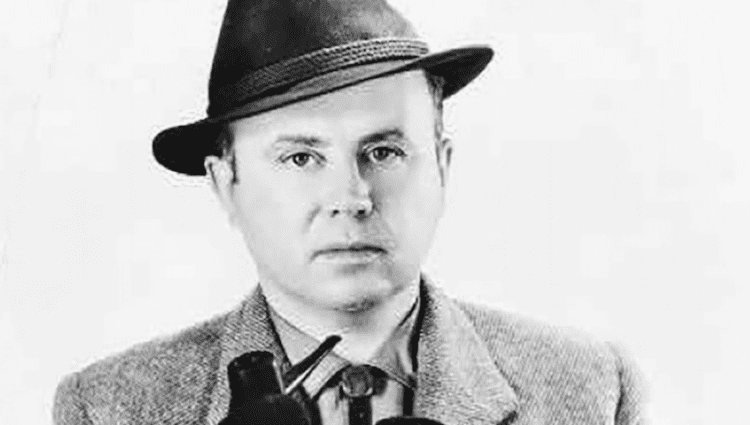
Russell Kirk

Russell Kirk

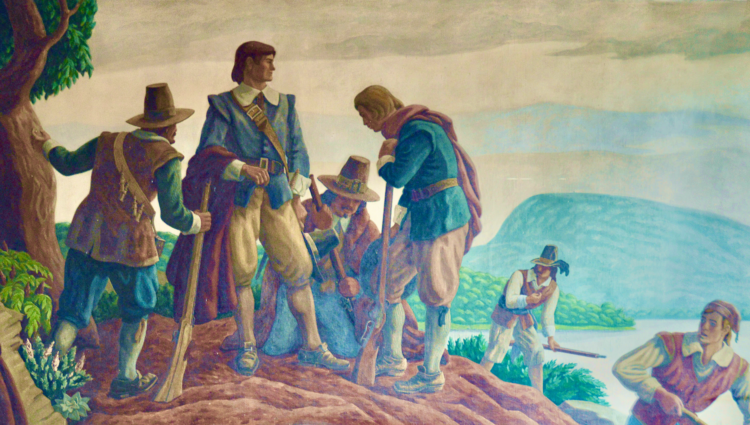
America is the land of progress, speculative, contingent, pragmatic, experimental, traditionless. An American conservatism, accordingly, is oxymoronic, blundering, graceless, and embarrassing in a society devoted to change and forgetful of the past. “The storybook truth about American history,” began Louis Hartz in The Liberal Tradition in America, is that the country “was settled by men who fled from the feudal and clerical oppressions of the Old World. If there is anything in this view…then the outstanding thing about the American community in Western history ought to be the non-existence of those oppressions, or since the reaction against them was in the broadest sense liberal, that the American community is a liberal community.”[1] In 1953, two years before the appearance of The Liberal Tradition in America, Russell Kirk, then an unknown professor at Michigan State College (later University), had published The Conservative Mind. Kirk not only announced the existence of a vibrant Anglo-American conservative tradition, but, as his publisher Henry Regnery declared, he gave “coherence and integrity” to the postwar conservative movement in the United States.[2] [Read more...]

The Imaginative Conservative Bookstore

Conservative Bookstore

The Imaginative Conservative Bookstore offers books in the tradition of Russell Kirk, T.S. Eliot, Edmund Burke, Irving Babbitt, Paul Elmer More, Wilhelm Roepke, Robert Nisbet, M.E. Bradford and Christopher Dawson. We hope you will enjoy the books by those who inspire us to be imaginative conservatives.

We hope you will join us in The Imaginative Conservative community. The Imaginative Conservative is an on-line journal for those who seek the True, the Good and the Beautiful. We address culture, liberal learning, politics, political economy, literature, the arts and the American Republic in the tradition of Russell Kirk, T.S. Eliot, Edmund Burke, Irving Babbitt, Paul Elmer More, Wilhelm Roepke, Robert Nisbet, M.E. Bradford, Eric Voegelin, Christopher Dawson and other leaders of Imaginative Conservatism (Visit The Imaginative Conservative Bookstore to find books by/about these men) .

We address a wide variety of major issues including: What is the essence of conservatism? What was the role of faith in the American Founding? Is liberal learning still possible in the modern academy? Should conservatives and libertarians be allies? What is the proper role for the American Republic in spreading ordered liberty to other cultures/nations?

We have a great appreciation for the thought of Russell Kirk, T.S. Eliot, Edmund Burke, Irving Babbitt, M.E. Bradford, Eric Voegelin and Christopher Dawson, among other imaginative conservatives. However, some of us look at the state of Western culture and the American Republic and see a huge dark cloud which seems ready to unleash a storm that may well wash away what we most treasure of our inherited ways. Others focus on the silver lining which may be found in the next generation of traditional conservatives who have been inspired by Dr. Kirk and his like. We hope that The Imaginative Conservative answers T.S. Eliot’s call to “redeem the time, redeem the dream.”

Russell Kirk: What is the Object of Human Life?

Russell Kirk

Russell Kirk

by Winston Elliott III

In the paragraphs below, from A Program for Conservatives, Dr. Russell Kirk addresses conservatives with words which remind us of our pilgrim status in this world of tears. We are not called to material success. We are called to obedience. We are called to love. The True, the Good, and the Beautiful will find their true place in our culture only when many more of us are obedient to Love.

“What is the object of human life? The enlightened conservative does not believe that the end or aim of life is competition; or success; or enjoyment; or longevity; or power; or possessions. He believes instead, that the object of life is Love. He knows that the just and ordered society is that in which Love governs us, so far as Love ever can reign in this world of sorrows; and he knows that the anarchical or the tyrannical society is that in which Love lies corrupt. He has learnt that Love is the source of all being, and that Hell itself is ordained by Love. He understands that Death, when we have finished the part that was assigned to us, is the reward of Love. And he apprehends the truth that the greatest happiness ever granted to a man is the privilege of being happy in the hour of his death. [Read more...]

The Essential Russell Kirk

by George Nash

IMG_0036In the book of Ecclesiasticus it is written: “Let us now praise famous men, and our fathers that begat us.” Today I propose to honor the memory of a famous man, a man who earned his fame by writing about those who, in an intellectual and spiritual sense, were our fathers. In the great chain of being that we call Western civilization, Russell Kirk was a sturdy link.

Some years ago a young libertarian wrote a book entitled It Usually Begins with Ayn Rand. I do not know how many young conservatives in 2013 would say that their intellectual awakening began with the books and essays of Russell Kirk. But certainly many visitors to The Imaginative Conservative can testify to his continuing influence and especially to the impact of his masterful book, The Conservative Mind.

[Read more...]

A Guide to Reading Ghost Stories with Russell Kirk

russell kirkby Robert Woods

His was no Enlightenment mind, Kirk now became aware; it was a Gothic mind, medieval in its temper and structure. -Russell Kirk, The Sword of Imagination, 68

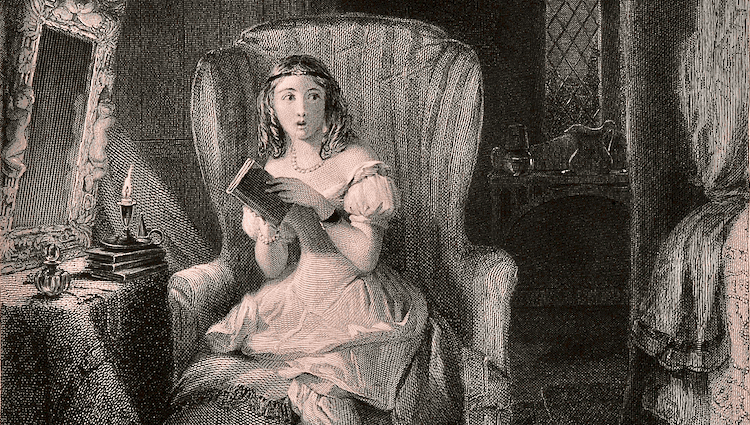
As J.R.R. Tolkien assisted many with his most informative essay, On Fairy Stories, Russell Kirk provides a short, but helpful primer into the genre of “ghost stories.” Now, of course, reading the essay, “A Cautionary Note on the Ghostly Tale,” the reader realizes that “ghost stories” are not merely about “ghosts” just as “fairy-tales” are not merely about “fairies.”
     
As with G.K. Chesterton’s assertion in his “Ethics of Elfland,” fairytales are inherently moral as they reflect a universe of moral order and consequences when good is dismissed and evil embraced. Russell Kirk writing of his own ghost stories says, “What I have attempted, rather, are experiments in the moral imagination. Readers will encounter elements of parable and fable…literary naturalism is not the only path to apprehension of reality. All important literature has some ethical end; and the tale of the preternatural…can be an instrument for the recovery of moral order.” The key here is the ethical end toward which great literature often aims, but has been rejected in our own moment. [Read more...]

The American Cause: Justice, Order, and Freedom

The American Causeby John Pafford

The American Cause by Russell Kirk

Henry Regnery, publisher of Kirk’s magnum opus, The Conservative Mind and friend of his, urged him to write a short book easily understood by the average person, setting forth the foundational spiritual, moral, social, political, and economic principles of the United States. Initially Kirk demurred, having other projects in mind, but changed his stance after carefully considering the situation. His concern grew about the susceptibility to enemy propaganda of “well-intentioned Americans who lack any clear understanding of their own nation’s first principles.” He further stated that “good-natured ignorance is a luxury none of us can afford.” [Read more...]

The Living Edmund Burke

Edmond Burke

Edmond Burke

by Russell Kirk

Getting up in recent months an anthology of conservative writing, The Portable Conservative Reader, I had reason to reread much of Burke. More than ever before, I was impressed with how relevant Burke’s thoughts – and, indeed, Burke’s actions – remain to our present discontents. (It is with some reluctance I employ that word “relevant,” its abuse by the young ideological zealots or the ’sixties and ’seventies considered.) As the bicentenary of the Constitution of the United States approaches, we may expect another strong renewal of attention to Burke, comparable to that reawakened interest in his writings, which surged up in America about 1953, when my Conservative Mind was published. [Read more...]

The Conservative Mind After Forty Years: An Interview with Russell Kirk

by Russell Kirk, William H. Mulligan, Jr. and David B. Schock

conservative mind

Russell Kirk was a major figure in American intellectual history. His second book, The Conservative Mind, was a landmark historical study of conservative thought. The book captured a wide readership and stimulated interest in conservative ideas.

Q: I know it can be hard sometimes looking back at something that was done forty years ago, but I would like to go back today and discuss how you came to write The Conservative Mind. As you started on the project, what did you hope to accomplish intellectually?

Kirk: When I was an instructor at Michigan State University I reflected that there had been no published book on American conservative thought and I began thinking of preparing an anthology which I meant to call The Tory’s Home Companion. That passed through my mind. I was thinking of getting a doctorate and writing on some such theme and I decided to go to St. Andrew’s University in Scotland and write a doctorate on the thought of Edmund Burke. That book on Burke eventually developed into The Conservative Mind, a book about Burke and his followers and his long tradition of thought both in America and Britain. So all this came about without any very deliberate designs and changed the complexion of American thought. [Read more...]

Three Great Bodies of Principle and Conviction: Russell Kirk

Russell Kirk

Russell Kirk

by Russell Kirk

Cant and equivocation dismissed, it seems to me that there are three great bodies of principle and conviction that tie together what is called modern civilization.

The first of these is the Christian faith: the theological and moral doctrines which inform us, either side of the Atlantic, of the nature of God and man, the fatherhood of God, the brotherhood of man, human dignity, the rights and duties of human person, the nature of charity, and the meaning of hope and resignation. [Read more...]

Why I Am a Conservative

conservative

Russell Kirk

by Dennis Gallagher

To condense into a short essay the reason I’m a conservative is no mean feat. From my perspective, in order to represent my reasoning, I need to address not only what it is about conservatism that first captured my attention, but also how I believe that the principles of conservatism best suit humankind’s natural inclinations and that of society as a whole.

My initial introduction to what conservatism embodies was through Russell Kirk’s magnum opus The Conservative Mind. Kirk’s rendering of conservatism’s legacy fascinated me primarily because I found it to be such a noble heritage and I was intrigued by conservatism’s persistent quest for seeking the high moral ground. Kirk’s book was consistent with other works on conservatism I read in their respect for virtue, humility, tradition, and piety grounded in the natural laws of Judeo-Christian beliefs. I found it interesting how those wonderful values are also very much rooted in the formation of local communities that serve as the building blocks for the world’s greatest civilizations, epitomized by America’s founding. I also came to appreciate that conservatism’s respect for ancestral wisdom has served as a guiding principle for leaders from Burke, Washington, Disraeli, and Lincoln to Churchill, Thatcher and Reagan. [Read more...]