The Humane and The Inhumane

Brave New World humane inhumaneby Robert M. Woods

Over the years I’ve seen countless book lists and there are two books on “must read lists” that speak to the modern world insightfully, but in differing manners. As dystopian works, people have tended to see them both as “prophetic” and yet, of the two, most think that the one literary vision was closer to reality than the other.

The two works are George Orwell’s 1984 and Aldous Huxley’s Brave New World. Just prior to the year 1984 Orwell’s book became a best seller even though it was originally published in 1949. However, of the two works the case could be made that Huxley’s vision was closer to getting it right and it has remained increasingly contemporary even though it was originally published in 1932. [Read more...]

Religion & Culture: Christopher Dawson as Superlative Guide

religion culture

Christopher Dawson

by Robert M. Woods

There is a popular series of books entitled, “Eat This, Not That.” The premise of the series is that of all the foods out there, some are healthier for you than others or some are not as unhealthy as others. We can classify this essay as a “Read This, Not That.” With the growing number of published works by fundamentalist atheists, let me suggest when trying to think through the complex issues of religious reality and human cultures, one should read Christopher Dawson and not the venomously ill-informed works of those who seem driven primarily by profit and not generous, well informed scholarship.​

[Read more...]

Incarnational Humanism: A Philosophy of Culture

by Robert WoodsIncarnational Humanism

Incarnational Humanism, by Jens Zimerman

This work is thoroughly grounded in Christian theology and biblical reflection. At the very heart of Zimmerman’s case is the incarnation of Christ. Possibly the most explicit assertion defended throughout the book is “True humanity is the heart of the Gospel and the goal of Christ’s redemptive work…” This is a truth that is sure to give some Christians, and certainly secularists, pause. Another point that all fundamentalists (Christian or atheist brand) would find troubling in this work is the argument that, “all human knowledge is always interpretive.” Again Zimmermann addresses an important issue without lapsing into relativism.  [Read more...]

Humans Fully Living…Why I Love Books by James Schall

On the Unseriousness of Human Affairs by James Schallby Robert M. Woods

On the Unseriousness of Human Affairs: Teaching, Writing, Playing, Believing, Lecturing, Philosophizing, Singing, Dancing by James V. Schall

Ever since God commanded His creation to rest, humans have managed to busy themselves to near oblivion.  James Schall has long been recognized as one of the great masters of the essay.  In his most recent collection of essays, Schall tackles the important issue of “what to do when all else is done” (xi).  Most reflective people realize that our culture is driven by pragmatism.  This idea has even worked its way into the community of the saints.  Maybe even worse than this is that our entire society (and the church) breathe the atmosphere of utilitarianism.  Even when it is not affirmed explicitly, it is implicit in virtually all of our pursuits—what is the use of this activity?  It is in this setting that Schall plays the role of heretic and questions the reigning orthodoxy of utilitarianism. [Read more...]

A Few Modest Observations for One Against the Great Books

Great Booksby Robert Woods

A colleague in our Great Books program shared an article with me over the Christmas break, and as I was buried in reading some of the Great Books and a few seasonal works, I was hard pressed to read this article. The article, by Patrick Deneen, was published in First Things and entitled, Against Great Books Questioning Our Approach to the Western Canon. When I finally did get a chance to read it, I found several points of merit, a few points that I simply disagreed with and one common error with such arguments, but it is a major and recurring error when some address the Great Books. [Read more...]

Fantastic Flying Books of Mr. Morris Lessmore

flying booksby Robert Woods

Featured Book: The Fantastic Flying Books of Mr. Morris LessmoreFor all bibliovores, regardless of age, this book is for you. It is beautiful in form and content, it is good in form and content, and it is true in form and content. Rarely does one find a children’s picture book that so throughly celebrates a bookish life, but also deals with some grand humane themes. [Read more...]

A Christian Humanistic Devotional? Hallowed Be This House

by Robert Woods

DevotionalAs with Erasmus, I affirm that The Imitation of Christ by Thomas A’Kempis is the grandest of devotional reads. The devotional books that litter the bookstores, especially the local Christian bookstore are more shaped by the lowest common denominator of trivial therapeutic drivel, the “cutting edge” madness of the management class, or silly self-help books that know nothing about the complexities of the human self and never address the matter of how a self so open to self deception can really help that same self. The insipid devotional books reign supreme.

In this dismal situation there is a bright ray of devotional greatness that arrives. Actually, it is making a bit of a second coming. Originally published in 1976, Thomas Howard’s Hallowed Be This House has been reprinted by Ignatius Press. My wife and I have been reading it (almost finished) and it has changed our sense of place. Thomas Howard, co-author of Christianity: The True Humanism, brings that same poetic prose to examine the reality that with our secularized consciousness comes secularized space. He draws attention to the “common” space where we spend much of our time and calls for the reader to see the holy, to see transcendence breaking in, and calls for our participation. There are themes that recur, such as “life for life,” and the way this is played out in everything from meals to intimacy between husband and wife. [Read more...]

Why Ray Bradbury’s Martian Chronicles Is a Great Book

by Robert Woods

BradburyOn numerous occasions, Mortimer Adler wrote about the criteria that were used to determine which books of all the books written in the West would be placed within The Great Books of the Western World.  Contrary to confusion and many misstatements I’ve read over the years, Adler says it was essentially three criteria and they are as follows:

1) Contemporary significance – Even though historically valuable, these works address “issues, problems, or facets of human life that are of major concern to us today as well as at the time in which they were written.” While the work is within the genre of science fiction and fantasy, it really explores humane themes much as traditional fiction. In other words, change the setting from Mars to Montana and it still works as a literary masterpiece. [Read more...]

A Guide to Reading Ghost Stories with Russell Kirk

russell kirkby Robert Woods

His was no Enlightenment mind, Kirk now became aware; it was a Gothic mind, medieval in its temper and structure. -Russell Kirk, The Sword of Imagination, 68

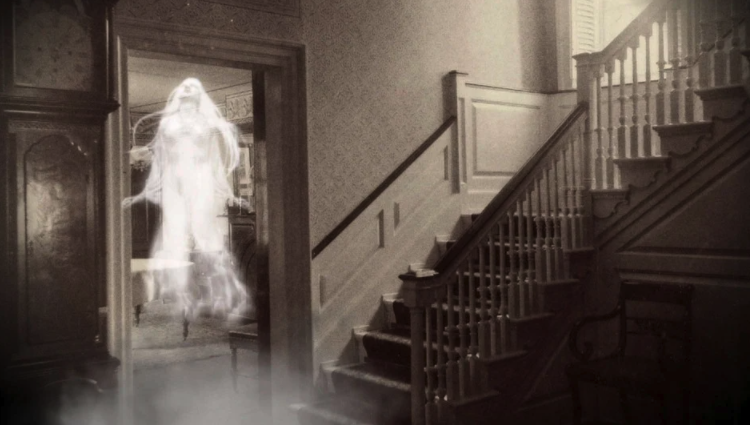
As J.R.R. Tolkien assisted many with his most informative essay, On Fairy Stories, Russell Kirk provides a short, but helpful primer into the genre of “ghost stories.” Now, of course, reading the essay, “A Cautionary Note on the Ghostly Tale,” the reader realizes that “ghost stories” are not merely about “ghosts” just as “fairy-tales” are not merely about “fairies.”
     
As with G.K. Chesterton’s assertion in his “Ethics of Elfland,” fairytales are inherently moral as they reflect a universe of moral order and consequences when good is dismissed and evil embraced. Russell Kirk writing of his own ghost stories says, “What I have attempted, rather, are experiments in the moral imagination. Readers will encounter elements of parable and fable…literary naturalism is not the only path to apprehension of reality. All important literature has some ethical end; and the tale of the preternatural…can be an instrument for the recovery of moral order.” The key here is the ethical end toward which great literature often aims, but has been rejected in our own moment. [Read more...]

Humanism and Religion: Renewing Western Culture

humanism

by Robert Woods

Humanism and Religion: A Call for the Renewal of Western Culture, by Jens Zimmermann, Oxford University Press, 2012.

As a number of books from important thinkers (Etienne Gilson, Jeffrey Burton Russell) have sought to educate open-minded readers to a most enlightened Middle Ages, Zimmermann seeks, in part, to challenge some misinterpretations and terrible damage done to a most Christian era–the Renaissance. According to Zimmerman, the roots of secularism and secularization are not to be found in the Renaissance, but at a later time and in different soil. At worst, there were some bad seeds planted here and there that later produced mixed fruit even during the Renaissance, but not all the bad seed can be be attributed to that age.

This book is difficult to specify the type of analysis it offers. Zimmermann moves in a most erudite manner from one discipline to another, is conversant with a breadth of primary sources, and clearly familiar with the secondary and therefore derivative and sometimes misguided sources. Structurally, the work is a survey of the Western intellectual and cultural terrain. Philosophically and theologically, it is an informed and engaging interpretation of incarnational humanism and its implications for possible cultural renewal. [Read more...]

A Picture Book That Calls Us to Books and Living: Fantastic Flying Books of Mr. Morris Lessmore

flying booksby Robert Woods

My wife is a librarian and daily interacts with children and books. If I were not a Professor, I cannot think of a more appealing calling. We talk daily about the little ones in her school, books, and the relationship between bookish children and their overall demeanor. A picture book that we recently became aware of is The Fantastic Flying Books of Mr. Morris Lessmore[Read more...]

New fully Accredited Great Books Based Distance PhD Program

phdby Robert Woods

Finally, after years of planning and a great deal of hard (mental) work, the PhD that is profoundly grounded in the Great Books is here. It was a dream I had about five years ago to offer a fully accredited Great Books based PhD. Originally the degree was to be a DLitt, but with some possible confusion out there, the degree was slightly altered to conform to the requirements of a PhD. 

We received word late afternoon on Oct. 29th. We have everything in place and will be taking applications immediately. With already more than 100 people having seriously inquired about the program for the past year, we anticipate admitting the top forty-five. A candidate can opt to concentrate in History, Literature, Philosophy, or aspire to be a generalist in the Liberal Arts. The tutorials are ideal for in-depth research in an era, person, idea, or select writings. [Read more...]