Reflections on A Republic Divided to the Point of Collapse

by Bradley J. Birzer

republic

Bradley J. Birzer

What better word might explain America in 1861 than that of word Homer used to begin The IliadRage.

But, rage for or against what? And, with what consequences?

A century and a half later, we must recognize the whole period as rich with potential, rich with glory and . . . ripe for corruption. Noble tragedy.

Who can forget about The Old Northwest Ordinance, passed over a half century earlier, with its pledge of true republicanism–the right of association, the freedom of land, the freedom of thought and faith, the freedom of labor–the ability to develop the gifts that God distributes to each one of us uniquely. [Read more...]

We Retain the word Republic; Long After We Have Lost the Reality

cicero republic

Cicero

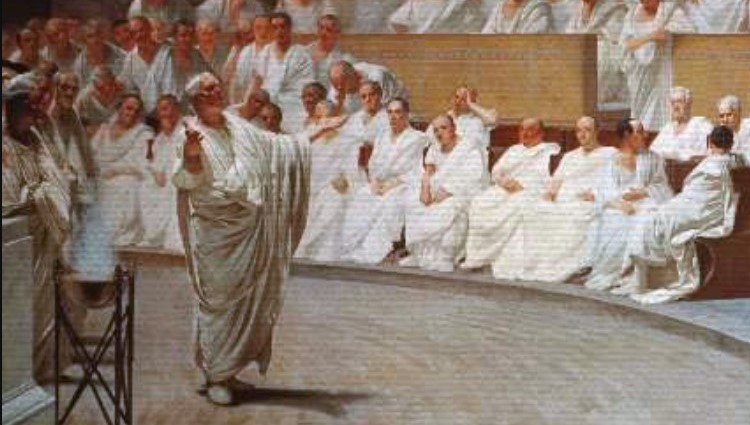
Long before our own time, the customs of our ancestors moulded admirable men, and in turn these eminent men upheld the ways and institutions of their forebears. Our age, however, inherited the Republic like some beautiful painting of bygone days, its colors already fading through great age; and not only has our time neglected to freshen the colors of the picture, but we have failed to preserve its form and outlines. For what remains to us, nowadays, of the ancient ways on which the commonwealth, we are told, was founded? We see them so lost in oblivion that they are not merely neglected, but quite forgot. And what am I to say of the men? For our customs have perished for want of men to stand by them, and we are now called to an account, so that we stand impeached like men accused of capital crimes, compelled to plead our own cause. Through our vices, rather than from happenstance, we retain the word “republic” long after we have lost the reality.

–Cicero, De Re Publica [Read more...]

Wishful Thinking: A Response to Winston Elliott on Foreign Wars

foreign wars

George Carey

by George W. Carey

Two posts by our good friend Winston Elliott serve as my point of departure. The first (on 3 May) was entitled, “What is the proper role of military power for a Republic?,” and raised salient considerations in seeking an answer to that question; the second (appropriately enough on Memorial Day) emphasized the responsibility of the people for holding to account those elected officials who “put our soldiers in harm’s way.”

Both these posts dealt with crucial issues, particularly in light of our recent military ventures. It is evident from Winston’s first post, for example, that he has strong doubts, as well he might, that these ventures have served any useful purpose. And, although Winston doesn’t come right out and say this, I think it also fair to conclude that he believes they have not been worth the price, the lives lost and the treasure expended. In this belief, it should be noted, he is not by any means alone. His views are shared by a healthy majority of Americans who even seem to be coming around to Pat Buchanan’s view, “If there is nation building to be done, let it begin here.” [Read more...]

Liberalism and Republicanism in the American Revolution

by Brad Birzer

republicanism in the american revolution

One of my favorite books!

 The colonies were “not only under different governors, but [had] different forms of government, different laws, different interests, and some of them different religious persuasions and different manners,” Benjamin Franklin wrote to a British audience in 1760. Ethnicity, religion, geography, economic systems, political systems, and degrees of freedom and servitude divided the population against itself. “The American colonists were reputed to be a quarrelsome, litigious, divisive lot,” writes Edmund Morgan. “Historical evidence bears out this reputation.”[1] [Read more...]

Four Tenets of Republicanism: A No-Frills Primer

by Brad Birzer

tenets of republicanismOne may find four fundamental tenets to republicanism rightly understood. First, for a society to be effective, men must behave virtuously. Second, men must use the gifts that nature or God has bestowed upon them. Typically, republican thinkers believed the best economic activity for man was agricultural. Third, republicans must be independent and armed, willing to defend one’s family, beliefs, and community without hesitation and at a moment’s notice. Fourth, republicans fear power and prevent its accumulation through the delicate process of balance. [Read more...]

Americana Res Publica: No Revolution

american founding principles

by Bradley J. Birzer

As we celebrate the 236th anniversary of the passage of the Declaration of Independence (the signing would have to wait until August 2, 1776), it’s very much worth remembering what form of government the Founders hoped to establish in America. We were founded unquestionably as a Republic with the writing and passages of the Articles of Confederation, with the Constitution of 1787 only reaffirming this form of government.

Despite our post-modern tendency to distort and mock the true meanings of words, America never has been, nor really can it be, a democracy. Indeed, as several founders made clear, democracy was a great evil, necessary perhaps in some manifestation, but not as the ruling element of a balanced government or a stable society. [Read more...]

Self-Government Requires Self-Governing Citizens

During the first four decades of the American Republic, the irascible William Findley was the leading state politician of the Western Pennsylvania backcountry. He had seen action as a captain in the American Army during the Revolution, was an outspoken Antifederalist during the state’s ratifying convention, and was a persistent critic of both state and national public finances. Many a high-born Philadelphian of the likes of Robert Morris and James Wilson, crossed swords with William Findley, only to come away with a healthy respect for his tenacity and shrewd political sense. It came as little surprise that Findley would write the definitive critique of the first administration’s handling of the western counties’ resistance to the federal excise tax on whiskey in the early 1790s. In that work Findley felt compelled to remind his readers that America was not great because of those in power or because of its “privileged orders,” but derived its “dignity and importance, through the natural and honorable channels of prudence and industry.” These were not political qualities, but social values of individual responsibility and integrity. Government in America was not their source. They sprang from the people through their own private and civil associations. But when government exercised power badly it threatened to break up those “natural and honorable channels.” State and society were not the same. It was not so long ago that this distinction was still part of the American understanding. 

In the earliest dictionaries of American English, the definition of self-government was not political, but reflected the same personal quality expressed by Findley–it was the “government of one’s self.” This remained true as late as 1959 when the Merriam-Webster dictionary defined self-government as “Self-control; self-command,” and self-control meant simply, “control of one’s self.” The second definition followed, and is the one usually expressed today as majority rule. What was unusual for a dictionary definition was that the second definition was made dependent on the first: “Hence, government by the joint action of the mass of people constituting a civil body; also, the state of being so governed; specifically, democratic government.” By the inclusion of “Hence,” the dictionary reflected the view that you could not have democracy or the rule of law without individuals capable of governing themselves. The present edition of the dictionary has dropped that beginning, and today, we appear to think primarily of the collective, governmental meaning of self-government. Indeed many current English dictionaries simply list majority rule as the only definition of the term. To recapture a sense of the older notion, we need to go back to a time when Americans still maintained a clear conception of themselves as a people composed of individuals capable of self-government. The American revolution was the dramatic culmination of just such a moment.

The Constitutional Thought of Thomas Jefferson

by James W. Ely, Jr.

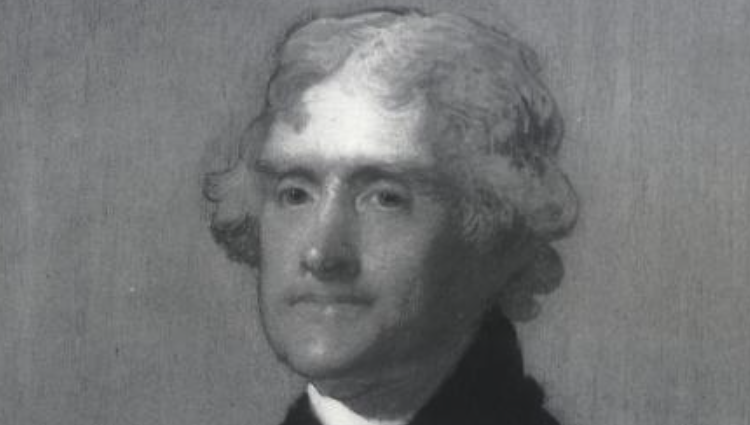
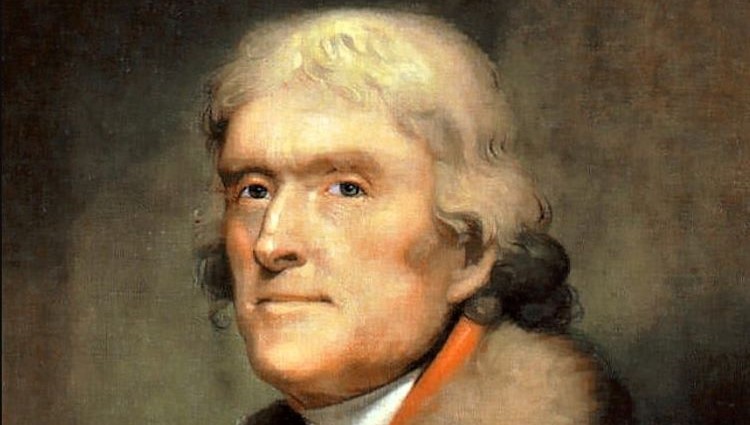
Thomas Jefferson

The Constitutional Thought of Thomas Jefferson by David N. Mayer,  University Press of Virginia, 1994

Thomas Jefferson continues to fascinate scholars. A voluminous literature examines his long public career and extensive comments on political issues. Historians have shown particular interest in exploring the elusive philosophical underpinnings of Jefferson’s political persuasions. David N. Mayer makes a valuable contribution to this debate with his comprehensive study of Jefferson’s constitutional principles as they matured from the 1760s to the 1820s. [Read more...]

John Dickinson on the Transmission of Liberty

john dickinson

by John Dickinson

Honor, justice and humanity call upon us to hold and to transmit to our posterity, that liberty, which we received from our ancestors. It is not our duty to leave wealth to our children; but it is our duty to leave liberty to them. No infamy, iniquity, or cruelty can exceed our own if we, born and educated in a country of freedom, entitled to its blessings and knowing their value, pusillanimously deserting the post assigned us by Divine Providence, surrender succeeding generations to a condition of wretchedness from which no human efforts, in all probability, will be sufficient to extricate them; the experience of all states mournfully demonstrating to us that when arbitrary power has been established over them, even the wisest and bravest nations that ever flourished have, in a few years, degenerated into abject and wretched vassals.–A New Essay by the Pennsylvania Farmer, 1774

For books by/about John Dickinson visit The Imaginative Conservative Bookstore. [Read more...]

A Teaching for [r]epublicans: Roman History and the Nation’s First Identity

by M. E. Bradford

roman

The Federal District of Columbia, both in its formal character as a capital and also in its self-conscious attempt at a certain visual splendor, is, for every visitor from the somewhat sovereign states, a reminder that the analogy of ancient Rome had a formative effect upon those who conceived and designed it as their one strictly national place. What our fathers called Washington City is thus, at one and the same time, a symbol of their common political aspirations and a specification of the continuity of those objectives with what they knew of the Roman experience. So are we all informed with the testimony of the eye, however we construe the documentary evidence of original confederation. So say the great monuments, the memorials, the many public buildings and the seat of government itself. So the statuary placed at the very center of the Capitol of the United States. And much, much more. [Read more...]

Thomas Jefferson on Peace: A Friendly Relationship

thomas jefferson on peace

by Thomas Jefferson

“Always a friend to peace, and believing it to promote eminently the happiness and prosperity of nations, I am ever unwilling that it should be disturbed, until greater and more important interests call for an appeal to force. Whenever that shall take place, I feel a perfect confidence that the energy and enterprise displayed by my fellow citizens in the pursuits of peace will be equally eminent in those of war.” — to John Shee, 1807. ME 11:140

For more on the American Founding visit The Imaginative Conservative Bookstore. [Read more...]

M.E. Bradford’s Constitutional Theory: A Southern Conservative’s Affirmation of The Rule of Law

M.E. Bradford

M.E. Bradford

by Marshall DeRosa

A Better Guide Than Reason: Studies in the American Revolution. (La Salle, IL: Sherwood Sugden & Company Publishers, 1979). Cited in the text as Guide.

Remembering Who We Are: Observations of a Southern Conservative. (Athens, GA: The University of Georgia Press, 1985). Cited in the text as Remembering.

A Worthy Company: The Dramatic Story of the Men Who Founded Our Country. (Westchester, IL: Crossway Books, 1988).

The Reactionary Imperative: Essays Literary & Political. (Peru, IL: Sherwood Sugden & Company Publishers, 1990). Cited in the text as Reactionary.

Against The Barbarians and Other Reflections on Familiar Themes. (Columbia, MO: University of Missouri Press, 1992). Cited in the text as Barbarians.

Original Intentions On The Making Of The United States Constitution. (Athens, GA: The University of Georgia Press, 1993). Cited in the text as Intentions.

M.E. Bradford’s constitutional theory is firmly grounded in the original intent of the Framers. His scholarly links to original intent are twofold; original intent is the only way to legitimately apply the U.S. Constitution to contemporary politics and it is better than any alternative at procuring good government. [Read more...]