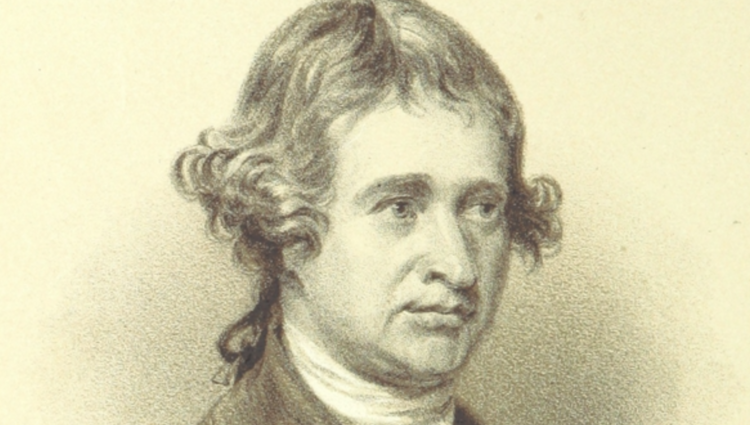
Edmund Burke on Manners

By |2026-03-27T20:09:46-05:00March 27th, 2026|Categories: Civil Society, Culture, Edmund Burke, Ian Crowe, Philosophy, Political Philosophy, Timeless Essays|Tags: , |

It took Edmund Burke a very little time to decide that French Revolutionary philosophy posed a massive threat to civilization and social stability throughout Europe. By the end of his life, eight years after the storming of the Bastille, his fears of Jacobin contagion had led him to ask for a secret grave, removed from [...]
Statesmanship & Statesmen According to Willmoore Kendall

By |2025-10-26T14:26:54-05:00October 26th, 2025|Categories: American Republic, Congress, Democracy, History, Political Philosophy, Politics, Willmoore Kendall|

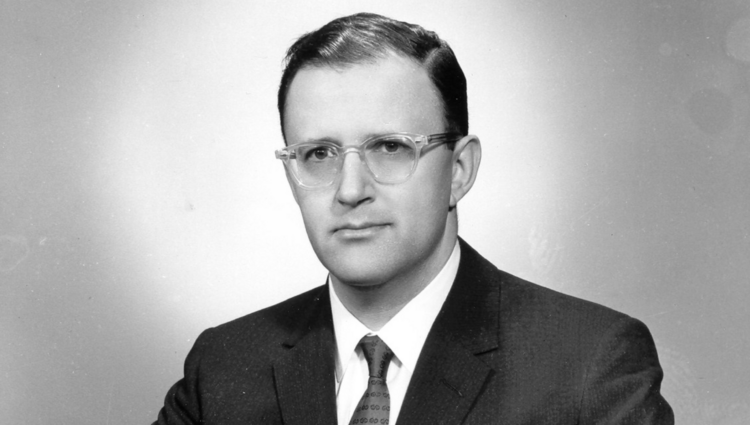
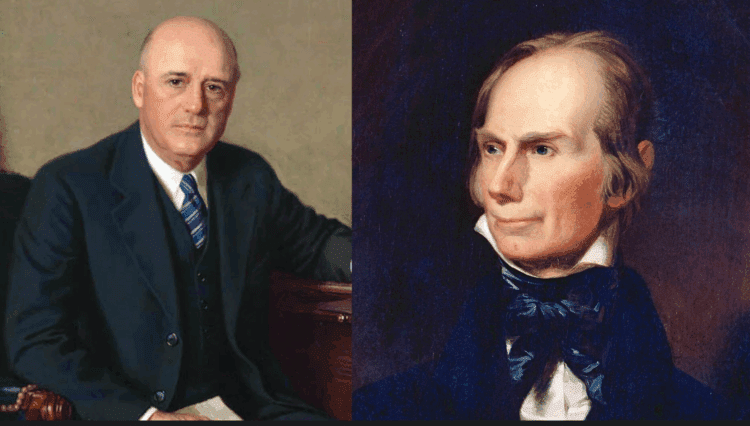
Henry Clay and Sam Rayburn fit well with Willmoore Kendall’s views of the democratic statesman. Both were skilled politicians who sought the good, avoided extremism, and consciously represented the people in Congress. For many centuries, scholars have written weighty tomes on statesmanship. In the twentieth century in particular, many students of the American political philosopher [...]

Samuel Taylor Coleridge: A Romantic Conservative

By |2025-10-20T17:13:26-05:00October 20th, 2025|Categories: Conservatism, Philosophy, Political Philosophy, Samuel Taylor Coleridge, Timeless Essays|

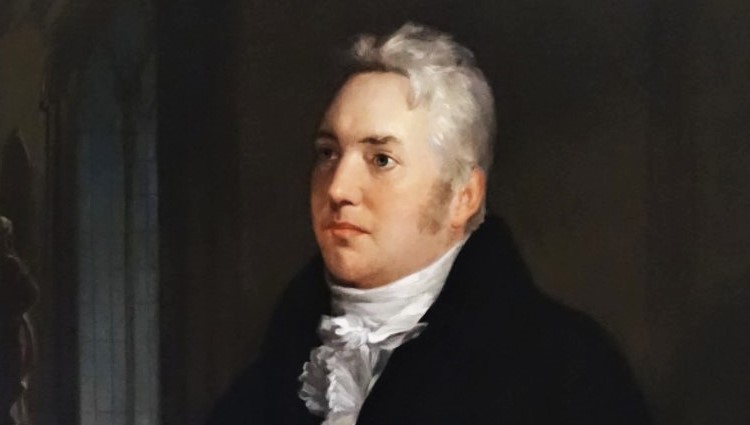
Samuel Taylor Coleridge’s romantic conservatism is passionate, incisive, and high-minded. His notion of the “Idea” is persuasive in regard to how it exists in human society, and he lit the way to resolving the ever-present conservative tension between theory and practice. The life of Samuel Taylor Coleridge, if tumultuous and at times disastrous, was a [...]

At the Twilight of Civilization

By |2025-08-29T14:19:48-05:00August 23rd, 2025|Categories: Books, Catholicism, Philosophy, Political Philosophy, Politics, Western Civilization|

Russell Hittinger’s new book, "On the Dignity of Society," articulates Catholic principles regarding the social order. One of the great themes of the book was the continuity between man’s nature and society. On the Dignity of Society by F. Russell Hittinger Is the history of philosophy full of philosophers rejecting past philosophers? Broadly, this may be [...]

Harry Jaffa and the Demise of the Old Republic

By |2024-09-26T14:29:39-05:00September 26th, 2024|Categories: American Republic, Conservatism, Constitution, Declaration of Independence, Edmund Burke, Featured, Foreign Affairs, History, Political Philosophy, Politics, Timeless Essays, Tradition|

Harry Jaffa’s constitutional history of America’s late-eighteenth-century is not credible nor, in keeping with many of his own pronouncements, is it conservative. The writing of history, as we have learned from authors as diverse as Thucydides, Voltaire, Nietzsche, Butterfield, Collingwood, and Oakeshott can and has been done in strikingly different ways while serving radically different [...]

An Introduction to Conservatism for “Well-Meaning Liberals”

By |2023-11-15T05:47:05-06:00November 14th, 2023|Categories: Books, Conservatism, Economics, Government, Natural Rights Tradition, Political Philosophy, Senior Contributors, Thomas R. Ascik, Timeless Essays, Western Civilization|

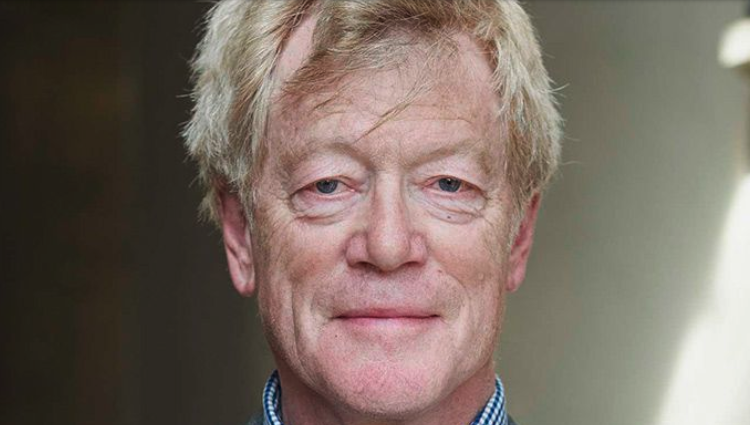
Instead of considering contemporary political issues, or politicians, Roger Scruton attempts to rebuild conservatism by looking seriously at its past. Conservatism: An Invitation to the Great Tradition, by Roger Scruton (176 pages, All Points Books, 2018) In his Conservatism, An Introduction to the Great Tradition (2017), long-time Anglo-American conservative champion and author Sir Roger Scruton says [...]

Reading “The Politics of Prudence” in a Time of Troubles

By |2023-07-14T16:42:09-05:00July 14th, 2023|Categories: American Republic, Books, Conservatism, Ideology, Neoconservatism, Political Philosophy, Politics, Russell Kirk|

Russell Kirk would agree that what is happening these days is civil liberty (gone astray) prioritized over public morality. Kirk urged the rising generation to take up the defense of the moral order and the social order, the order of the soul, and the permanent things. It’s a faith worth fighting for. In  the opening [...]

Thoreau’s Guilty Conscience

By |2023-07-12T00:21:51-05:00July 11th, 2023|Categories: Henry David Thoreau, Justice, Philosophy, Political Philosophy, Politics, Timeless Essays|

There could be no Henry David Thoreau without a Ralph Waldo Emerson. Emerson glorified the individual independence of the new American; Thoreau evolved that into a nation-less, anarchic, natural man of subjective conscience. In 1838, Harvard College exiled a young James Russell Lowell to the tutelage of a minister in Concord, Massachusetts, a suspension for [...]

Orestes Brownson’s New England & the Unwritten Constitution

By |2023-04-16T17:38:55-05:00April 16th, 2023|Categories: American Republic, Civil Society, Constitution, Culture, Featured, History, Political Philosophy, Politics, Timeless Essays|

Orestes Brownson so esteemed New England people, customs, and institutions that they dominated his writings and fit at the heart of his political ideas. The danger of majoritarian tyranny hangs over republics. The dilemma of constituting a virtuous republic while also restricting interests, sects, and factions’ use of unchecked political power possessed eighteenth century American [...]

A Backwards Civilization: Unthinking Leaders, Frenzied Citizens

By |2023-02-07T17:08:49-06:00February 7th, 2023|Categories: Civil Society, Civilization, Democracy, Featured, Meno, Modernity, Plato, Political Philosophy, Politics, Socrates, Timeless Essays|

In America today, we are living in a toxic political climate that is the product of a very dangerous combination: Our rulers lack the learning necessary to ask the kinds of deep and fundamental questions that leaders and lawgivers ought to make a habit of pondering, while our people rebelliously scrutinize all orthodoxies and impose [...]

Harrington’s Cake: Institutions, Power, and Virtue

By |2022-12-12T14:22:47-06:00December 12th, 2022|Categories: American Republic, Congress, Government, Political Philosophy, Politics, Timeless Essays|

James Harrington insists on the possibility of an empire of laws. The claim that institutional arrangements can force self-interested behavior to serve the common interest underlies the system of separated powers and checks and balances central to the American constitutional order. But is he right? Can this theory of “dividing-and-choosing” give us confidence? “Two [girls] [...]

Nicolás Gómez Dávila and the ‘Authentic Reactionary’

By |2022-10-25T14:22:59-05:00October 25th, 2022|Categories: Culture War, History, Imagination, Philosophy, Political Philosophy, Politics, Timeless Essays|

It is fitting that one of the most profound thinkers of the 20th century should also have been one of its most obscure. Nicolás Gómez Dávila's critique of democracy may go some way in explaining why he remains a relatively unknown figure in the English-speaking world, for we in the modern West are all children [...]

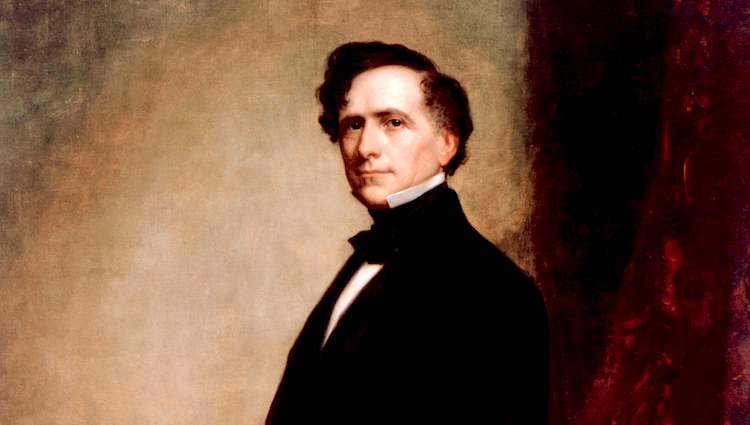
Franklin Pierce, Political Protest, & the Dilemmas of Democracy

By |2021-11-22T14:23:22-06:00November 22nd, 2021|Categories: American Republic, Christianity, Civil Society, Civilization, Constitution, Democracy, Government, History, Ordered Liberty, Political Philosophy, Religion, Timeless Essays|

Franklin Pierce’s suspicions reflected a tension within the antebellum Democratic Party in relation to slavery—how can we reconcile an advocacy of democratic decision-making with the existence of transcendent moral values, the Constitution with the Bible? On the stump in New Boston, New Hampshire in early January 1852, Franklin Pierce gave a long oration during which [...]

Go to Top