Russell Kirk Defends Assassination with Natural Law Theory

Russell Kirk

Russell Kirk

by Bradley J. Birzer

Therefore a little knot of brave and conscientious men determined to save Germany and Europe by killing Hitler. They had been reared in the doctrine that all citizens must obey the inerrant state. In this exigency, however, they turned to doctrines of natural law for justification. Was there no remedy against an unnatural master of the state? In the teachings of natural law they discerned a fatal remedy. Fatal to them, at least; for nearly all of the heroic men involved in the several conspiracies against Hitler died frightful deaths. I knew well Dr. Ludwig Freund, a kindly professor of political science, one of the two survivors of the first plot to kill Hitler. By nature Professor Freund was a law-abiding gentleman. And being law-abiding, in defense of true law he was prepared to slay the chief of state, perverter of Germany’s laws and the laws of man’s nature.-Russell Kirk [Read more...]

The Importance of Marcus Tullius Cicero

Brad Birzer Cicero

Bradley J. Birzer

by Bradley J. Birzer

How do I define the Natural Law?  Taking my cue from Cicero–especially from On the Republic, On Duties, and On the Laws–I can state that Natural Law theory argues that there is a supreme being who holds everything together through his love or his force or his will or whatever it might be that moves him.  His will then radiates into time and creation, thus holding all things together in a brotherhood and sisterhood under his parentage.  He bestows dignity upon us by shining a part of his light into us.  We, though understanding through a glass darkly, perceive only very small parts of the infinite.  We perceive them by looking behind us, discerning what should be inherited and what should be discarded, and we look forward, deciding what should be promoted and what should be forsaken.  Through it all, we anchor our understanding to the transcendent, thus preventing any single one of us from proclaiming the status of law giver or law maker.  We are, instead, poetically, discoverers of Natural Law.  Never creators but always discoverers.  By definition, the natural law must already exist, but through our various gifts and perceptions, we see dimly and partially what has been forgotten or never been seen before. (See end note information on forum for this lecture.*) [Read more...]

A Tale of Two Companies: HSBC, Hobby Lobby & Religious Freedom

religious freedom

Bruce Frohnen

by Bruce Frohnen

It is the best of times, it is the worst of times.

It’s the best of times for HSBC, the giant British bank caught using American personnel and facilities to launder money for Mexican drug cartels and various rogue states.  How so?  HSBC’s stock value has continued to rise since the U.S. government announced a “record fine” to “punish” the corporation for its willful flouting of laws intended to prevent just this kind of profiteering on, and assistance to, crime.  An accommodating company, HSBC fired employees who sought to implement anti-corruption procedures required by law and even widened the windows at some of its branch offices in Mexico to allow tellers to accept larger boxes of money from the Sinaloa drug cartel.  The “record” fine levied on them by the American government of $1.9 billion sounds like a lot, no doubt, but represents only about one-twentieth of the company’s profits last year.  One commentator likened the fine to a parking ticket. Some corporate officers have lost their jobs, of course (after all, they got caught and produced bad publicity, and a parking ticket), but no one is going to jail—or even paying any fines out of their own pockets—for helping murderous thugs put drugs on our streets and rogue regimes finance repression and programs to build weapons of mass destruction.  Why not?  According to the Obama Administration, actually prosecuting these gross violations of our laws would cause unrest and cost jobs.  And we know how committed the Obama Administration is to getting Americans off the dole and back to work.  As for HSBC, it’s good to be “too big to fail.” [Read more...]

The Wise Men Know What Wicked Things Are Written on the Sky

by M. D. Aeschliman

The Wise Men Know What Wicked Things Are Written on the Sky by Russell Kirk.

Although Dr. Kirk knows how hard the tempest of our time really rages, he has not fled or been driven to the heath like Lear or Lear’s fool. His insight is abundantly apparent in his new volume of lectures, which takes its title fittingly from the greatest long poem of our century, G. K. Chesterton’s Ballad of the White Horse. [Read more...]

A Marriage of Personal Convenience: The Unity of Economic and Social Conservatism

by Bruce Frohnen

economic

Bruce Frohnen

Over on the First Things blog, Robert George has blessed us, yet again, with the conventional and convenient wisdom of (Catholic) neoconservatism. The post, titled “No Mere Marriage of Convenience: The Unity of Economic and Social Conservatism,” is a sustained argument for just how convenient this marriage of utility and principle really is, and why it should continue. Along the way, George likens traditional conservatives to the Amish, intimating their hostility to higher learning and economic freedom.

More than anything, George’s post reads like an application for funding from a Republican-leaning foundation. It is not helpful to his argument that he so clearly seeks to show well-off potential supporters how their own economic interests are tied in with his largely academic interests. [Read more...]

Just Beyond Our Grasp: Personal Reflections on Christian Humanism

by Bradley J. Birzer

ChristianOver the last decade and a half, as many readers of TIC have probably noted, I’ve had the blessed opportunity of researching and writing about Russell Kirk (1918-1994), generally agreed upon as the founder of post-war American conservatism.

At first, I did this mostly as a hobby, having become intensely interested in Christian Humanism through discussions with Winston Elliott, Donald Nesti, and Gleaves Whitney. Through a series of conferences over seven or eight years in and around Houston, Winston sponsored a number of speakers (but, especially important to me were Gleaves and Ben Lockerd) who spoke on the significance of Christopher Dawson, T.S. Eliot, Robert Frost, Willa Cather, Jacques Maritain, Romano Guardini, Etienne Gilson, Russell Kirk, Wilhelm Roepke, Eric Voegelin, C.S. Lewis, E.F. Schumacher, and J.R.R. Tolkien.  [Read more...]

Iron Ladies

by Julie Robison

After convincing my fiance that it would be so much better to watch the life of Margaret Thatcher than a  movie involving aliens attacking the Earth (will they never cease?!), I suffered one of the greatest cinematic disappointments of my life.

target=”_blank”>The Iron Lady taught me three things:
A) It’s more important to focus on a person’s dementia and hallucinations than their humanity and life’s accomplishments;
B) The best way to show accomplishments is through really long montages of police riots and quick scene changes portraying important decisions and huge world events (the Berlin Wall coming down, for instance, got about 5-10 seconds); and
C) Conservatism is pretty heartless, but on principle.

Principle is a beautiful thing, a foundation by which people cannot be swayed or bought. Principle should not and cannot be confused with politics. When Thatcher argued for hard work, making one’s own way and fiscal austerity, the movie showed how people rioted. But does that show fault in Thatcher’s principles? Or that people truly need to connect personal actions with the good of society?

Russell Kirk wrote in “Ten Conservative Principles” that the very first principle conservatism adheres to is that “there exists an enduring moral order. That order is made for man, and man is made for it: human nature is a constant, and moral truths are permanent. This word order signifies harmony. There are two aspects or types of order: the inner order of the soul and the outer order of the commonwealth.” (emphasis mine)

Kirk lamented that

Our twentieth century world has experienced the hideous consequences of the collapse of belief in a moral order. Like the atrocities and disasters of Greece in the fifth century before Christ, the ruin of great nations in our century shows us the pit into which fall societies that mistake clever self-interest, or ingenious social controls, for pleasing alternatives to an old-fangled moral order.

It has been said by liberal intellectuals that the conservative believes all social questions, at heart, to be questions of private morality. Properly understood, this statement is quite true. A society in which men and women are governed by belief in an enduring moral order, by a strong sense of right and wrong, by personal convictions about justice and honor, will be a good society–whatever political machinery it may utilize; while a society in which men and women are morally adrift, ignorant of norms, and intent chiefly upon gratification of appetites, will be a bad society–no matter how many people vote and no matter how liberal its formal constitution may be. For confirmation of the latter argument, we have merely to glance about us in the District of Columbia.

As a resident of a swing state and a woman, I’m particularly aware of how the political machine utilizes the rhetoric of principle. If Gov. Romney is elected, he will take away my ability to “choose” (satisfactorily vague and scary). If President Obama is re-elected, my birth control bill will be paid for (by my own tax dollars, of course).

But the arguments are all wrong.

The irony isn’t lost, ladies

The national discussion of birth control and abortion acutely shows the difference between politics and principles. In politics, people parade around wearing vagina costumes to make a statement about respecting women, ordering everyone to stay out of their bedroom, and then asking the State to provide birth control as part of their health care requirements. To respect them, they say, you must respect their right to not take responsibility for what happens to and within their body. You can disagree with them, but you cannot stop them from acting as they wish.

On principle their arguments are completely off-course. The portrayal of women is a diminishing one, for starters. A woman is a whole person and a whole human. She does not vote based because of her “lady parts.” Birth control is deplorable because it allows a man to want only parts of a woman (that is, her body) and not the rest. Pooh, pooh! on her soul. No thanks! to her fertility. It also rejects the whole man, although in much less obstinate ways. But it feels so good? Could that be a contributing factor to the dramatic rise in divorce in the 20th century? Sex, the ultimate union between two people, is life-giving. Anyone who uses a condom knows that. Furthermore, any one remotely devoted to a healthy life would certainly not put chemicals into their body without a proper diagnosis. Fertility, may I remind the dear readers, is not an illness. Birth control, on the other hand, can seriously harm a woman’s body.

To tie this issue back to the election (a few more days, people!), an argument has been made that people need to make sacrifices. Some of these sacrifices should be their own religious liberty; other sacrifices should be made monetarily. One sacrifice no one is asking Americans to make is to not have sex if you’re more willing to abort the baby than love it. Bear with me: when a person is looking to lose weight, no one only takes diet pills and forgoes the exercise or indulges on desserts. This is what birth control is: taking a “wonder drug” and engaging in any kind of activity. Sadly for some people, even birth control cannot protect from STDs, or unwanted pregancies, or broken hearts.

Women, you deserve so much more than that. Men, you too! No election changes that. No politician changes that. It is one reason why I am a conservative, and an imaginative one at that. I imagine a higher calling for men and women alike, one which acts and responds with love for all fellow humans.

Helen Avare, a law professor at George Mason University, started Women Speak For Themselves, an organization created in protest of the HHS mandate in respect to women and religious liberty. In an e-mail she sent out on November 2, she wrote:

The amount of ink spilled over the last year suggesting that “relationship-free-sex” (i.e. no baby AND no commitment), makes women free, is alarming.  I will state frankly that I don’t believe this to be in women’s interests at all. Of course, some women are made for the single life, and beautifully live out the meaning of their lives, and live as gifts to others, in that particular vocation.  Most women, however, wish to marry and to have children, and it is this vocation which is being called into question most virulently at the present time. 

Today, according to numerous, well-done studies, privileged women mostly get their wish, and less-privileged women do not. Poorer and minority and newly emigrated Americans marry less, cohabit more, divorce more, and have more nonmarital pregnancies, nonmarital births, and abortions, than do their more privileged sisters.

I think, in short, that the version of women’s “freedom” promoted by this year’s HHS mandate is really, really harmful to our most vulnerable sisters.  And I think our resistance to it — and our efforts to turn the tide — have all the hallmarks of a new civil rights movement: the right to a healthy relationship and marriage and parenting culture, for ALL, not just for the privileged.

The Guiding Star Project, a non-profit dedicated to promoting the Culture of Life through holistic health centers, posted on their Facebook wall:

We believe that many of the “Second Wave” feminists truly thought they were helping women by promoting universal birth control use and abortion on demand. They thought those things would help women understand her other gifts, besides motherhood. Instead they ultimately changed the societal expectation that women would not let motherhood get in the way of anything else. That motherhood was a second-best option to “real successes”. That their fertility and motherhood held them back. We know better and insist that we change society to meet the needs of women; of mothers. Because we will never settle for the idea that our fertility, our pregnancies, our breastfeeding, our children make us capable of anything less than amazing.

Respect is a two-way street, and the government’s ability to worm its way into every aspect of human life is a prime example that it does not respect any decisions of its citizens. The latest Obama ad targets women by comparing voting for the first time to losing one’s virginity. As vlogger TokenLibertarianGirl pointed out, that is creepy and rages its own war on women by presumption.

Women, like men, are more than sexual objects to be used and gratified. As Margaret Thatcher shows us, women can be mothers and wives as well as successful. There is no limit to what a woman can achieve, especially in America. To suggest that women must forgo meaningful relationships, marriage and children (as well as put themselves at risk for further health problems and mental distress), in order to have a meaningful life speaks more loudly that the system needs to be adjusted for women, not women for the system. No one is asking men to do that, and they have equal responsibility for every child they create and care for.

Preach it, Maggie!

The real contest between principles is between the short and the long-term views. The conservative is concerned with the short and long — the health of the person (and as such, their soul) is integral to our country. If we as conservatives do not live what we value, then our words are empty. We need to revive the culture through the joy of being human, the honor of worshiping God, the freedom which comes through an obedience to his laws, and the wisdom of knowing our life is not more valuable than another’s.

This election is short-term. Whoever wins will not affect my own principles, even if he may violate them. This whole silly season reminds me distinctly of a Margaret Thatcher quip in her autobiography, The Downing Street Years:

Consensus: The process of abandoning all beliefs, principles, values, and policies in search of something in which no one believes, but to which no one objects; the process of avoiding the very issues that have to be solved, merely because you cannot get agreement on the way ahead. What great cause would have been fought and won under the banner: ‘I stand for consensus’?

Friends, let us stand for more! Here’s to your soul and mine; let’s put some heart and love back into these principles of ours, and our commonwealth might just profit.

Russell Kirk and the Tradition of Natural Rights, 1957

rights

“From this concept of the dignity of man—dignity which exists only through our relationship with God—there has grown up recognition of what called “natural rights.” These are the rights which all men and women are entitled to: rights which belong to them simply because they participate in human dignity. There are other rights in our world: rights conferred by society at large, or by certain political economic and social groups. These latter are man-made rights. But natural rights are rights which originate in the nature of every man—the character and personality given to men by God, the privileges that come from the fatherhood of God and the brotherhood of man. Everyone is entitled to possess these rights, no matter how strong or how weak he is, no matter how rich or how poor, not matter how civilized or how savage, no matter how famous or how humble. Precisely what these rights are has never been entirely agreed upon, even among professed Christians. The medieval philosophers of the church debated for centuries on the character and extent of these rights: St. Thomas Aquinas’s description of the rights of nature is one of the more important. Richard Hooker, an English theologian, discussed natural rights and natural laws in the sixteenth century, and his writings greatly influenced subsequent English and American opinion. John Locke, in the seventeenth century, said that there are three primary natural rights, ‘life, liberty, and property.’ In America, Thomas Jefferson, in the Declaration of Independence, made these rights ‘life, liberty, and the pursuit of happiness.’ Edmund Burke, perhaps the greatest modern political thinker, when he criticized the confused notions of natural right then popular among the French revolutionaries, went on to say that there are certain true and abiding natural rights, though they cannot always be set down independently and without qualification. Among them, he wrote, men have a right to live by law, for law is made to benefit them. ‘Men have a right to live by that rule; they have a right to do justice, as between their fellows, whether their fellows are in public function or in ordinary occupation. They have right to the fruits of their industry, and to the means of making their industry fruitful. They have a right to the acquisitions of their parents; to the nourishment and improvement of their offspring; to instruction in life, and to consolation in death.’ But, Burke added, ‘Men have no right to what is not reasonable, and to what is not for their benefit.’”

--Russell Kirk, The American Cause (Chicago, Ill.: Henry Regnery Co., 1957), 30-31; revised edition expertly edited by Gleaves Whitney, ISI Books.

Books on or by Dr. Kirk may be found in The Imaginative Conservative Bookstore. Essays on or by Dr. Kirk may be found here

Homosexual Unions v. Incest – What’s the Difference? (Part II)

homosexualby John Creech

As I mentioned in my previous post, although we still think incest is wrong, we appear to be reaching the point where we can’t explain why its wrong.  We’re in this predicament because, at some point, we began to that think that extra-marital heterosexual sex is morally permissible, and, more recently, that homosexual sex is as well.  And whatever our motivations for this change in belief, its rational justification is based on the assumption that sex is morally legitimate so long as it occurs between two competent, consenting adults for whom it is an expression of their emotional bond (henceforth, the “consensual view of sex”).  The problem is that the consensual view makes it impossible to defend rationally our belief that incest (and I mean here incest between two consenting adults) is wrong.  Of course, some would argue that we can, in fact, explain why incest is wrong without impugning our acceptance of homosexual sex and the consensual view of sex on which it relies.  But this is merely wishful thinking for two reasons:  (1) at least one of the explanations for why incest is wrong also applies to homosexual sex, which, by the way, gives the state a legitimate interest in regulating it; and (2) even apart from its consequences, both principle and logic require that we reject the consensual view of sex, as well as homosexual sex and incest along with it.  [Read more...]

Homosexual Unions v. Incest – What’s the Difference? (Part 1)

incestby John Creech

The short answer:  none — that is, if all that’s required for a morally permissible sexual relationship is that it involve: (1) adult partners; (2) who are mentally competent; and (3) who fully consent to the relationship (for good measure, we could even add that the partners have a sufficient emotional bond and that their sexual acts serve to express that bond).

This is increasingly becoming the standard, of course, for society’s determination of whether a sexual relationship is permissible.  It’s for this reason that the lawyer representing the Columbia University Professor, David Epstein, accused of a three-year incestuous relationship with his adult daughter, can sincerely ask, “It’s OK for homosexuals to do whatever they want in their own home — how is this so different?”  As such, we should not be surprise that Switzerland is considering legalizing consensual incest between siblings as well as parents and their adult children.  Switzerland is not blazing any trails, however, for, according to one study, incest is already legal in China, France, Israel, the Ivory Coast, the Netherlands, Russia, Spain and Turkey (the article citing this study did not clarify, however, whether it’s legal because there’s never been a law against it, or whether an existing law forbidding incest was overturned). [Read more...]

MLK and The Rule of Law

MLK

MLK

by John Creech

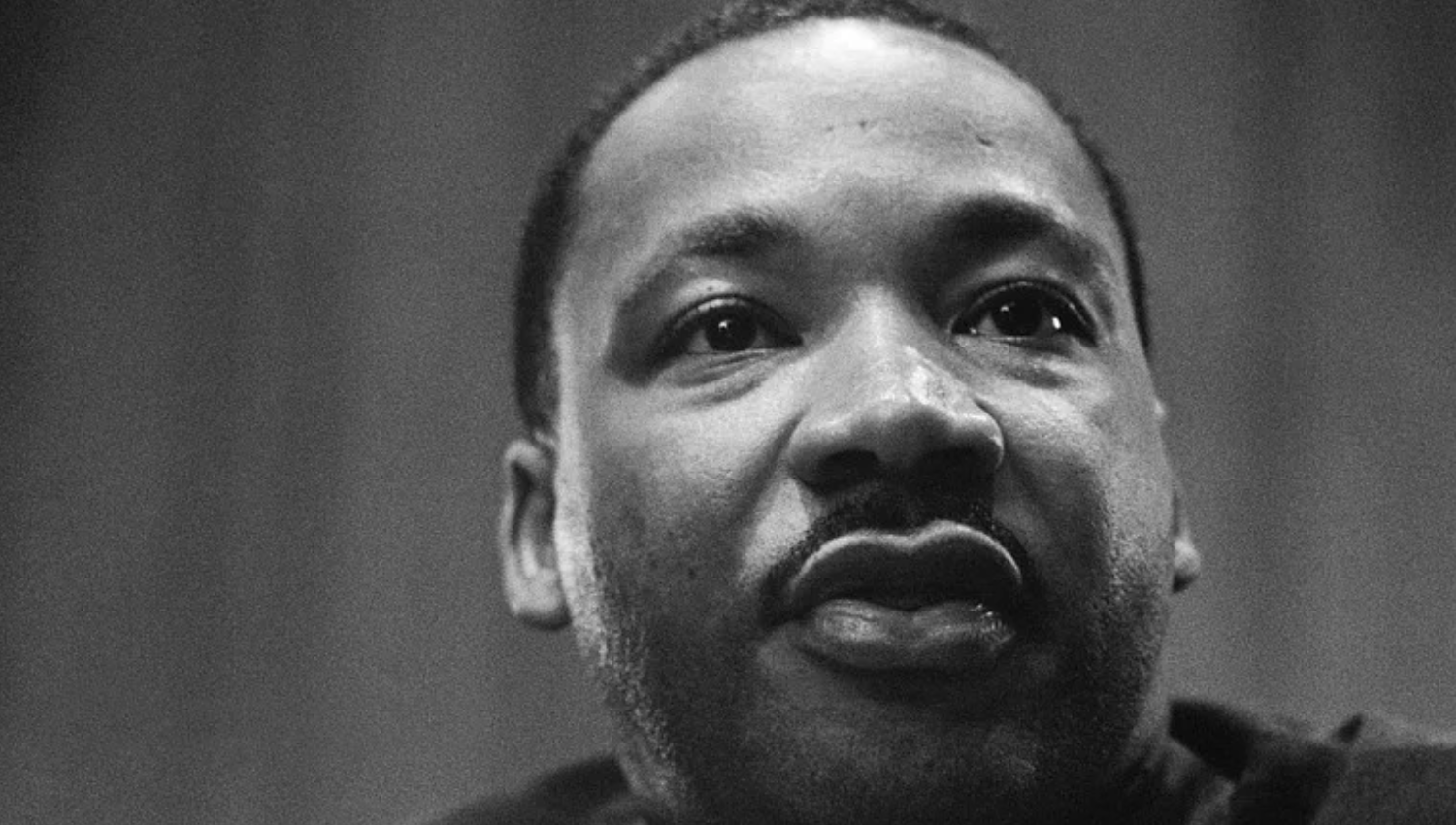
In acknowledgement of MLK day, I wanted to raise the question, based on Martin Luther King Jr.’s, “Letter from Birmingham Jail,” as to when, if ever, as well as to what extent, it is appropriate to defy the rule of law.

On The Imaginative Conservative Winston Elliott raised the question “When is a Change in Government a Duty”, asking whether the Declaration of Independence’s statement that society has a right, under certain circumstances, to abolish its form of government, would ever apply, despite the Constitution’s amendment provision.  In response, Stephen Masty appropriately suggested that preserving the rule of law may limit us to using the amendment provision in bringing about any changes in the form of our government.  MLK’s “Letter from Birmingham Jail” is relevant here because his letter, in part, was meant to allay the fears of his fellow Christian ministers who were concerned about MLK’s and his followers willingness to break laws.  Relying on St. Augustine and Aquinas, MLK makes a natural law argument to the effect that there are times when it is appropriate to break the laws. [Read more...]

What is Marriage?: Reply to Objections

Giotto_-_Scrovegni_-_-24-_-_Marriage_at_Cana marriageby John Creech

As indicated in my post last week on Dr. George’s article addressing the “gay marriage” question, following is a summary of his responses to certain objections.  My summary of the main thrust of his argument can be found here and the complete text of Dr. George’s article can be found here.

Objection I:  Some, if not all, human beings need meaningful companionship that involves romance (presumably including sex) as well as public recognition.  Limiting the legal marriage to one man and one woman, as the traditional understanding of marriage requires, refuses public recognition to homosexual partnerships.  Consequently, homosexually oriented people are denied a basic human need for meaningful companionship and hence true human fulfillment. [Read more...]