Founding Fathers-Lives of the Framers: Featured Book

Founding Fathers: Brief Lives of the Framers of the United States Constitutionfounding fathers

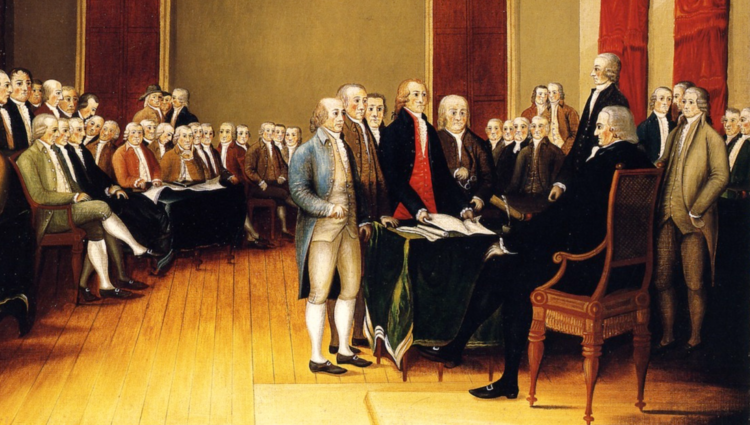
M.E. Bradford’s brief lives of the Founding Fathers, free of ideological prejudices, tell us the sort of delegates those fifty-five were: gentlemen, with few exceptions, attached to precedent and custom, prescription and “ancient constitutions.” Those colonial gentlemen, so very British, were not in the least inclined to destroy the prevailing pattern of American society. More fully than most commentators upon those Framers, Bradford has carefully examined their several religious persuasions or affiliations, discovering few Deists or unchurched… [from Dr. Kirk's introduction to Founding Fathers] Find books by M.E. Bradford and Russell Kirk in The Imaginative Conservative Bookstore. TIC offers essays by Dr. Kirk and Dr. Bradford. [Read more...]

Original Intentions: On the Making and Ratification of the Constitution

constitutionby Kevin R. Gutzman
The late M. E. Bradford left an historiographical oeuvre devoted in large part to the story to which the subtitle of his last book, Original Intentions: On the Making and Ratification of the United States Constitution, refers. As a Southern conservative of the Vanderbilt Agrarian stamp, and as a Texan who claimed descent from three members of the Texas Secession Convention, Professor Bradford was driven by an imperative to remind Americans of what they once knew, and to do so before the opportunity passed.

He entitled one of his previous books The Reactionary Imperative. Eugene Genovese was mistaken when he said that the use of the word “reactionary” there was playful in that Bradford wanted a return neither to an ancient nor to a medieval polity.[1] The reason Bradford’s vision was truly reactionary is that he yearned for a return to America’s birthright, the nomocratic constitution of 1787. “This book,” he says, “is by nature and purpose an invocation of the patrimony.”[2] To invoke the patrimony is now, alas, reactionary. [Read more...]

Artists at Home: Frost and Faulkner

M.E. Bradford

M.E. Bradford

by M. E. Bradford

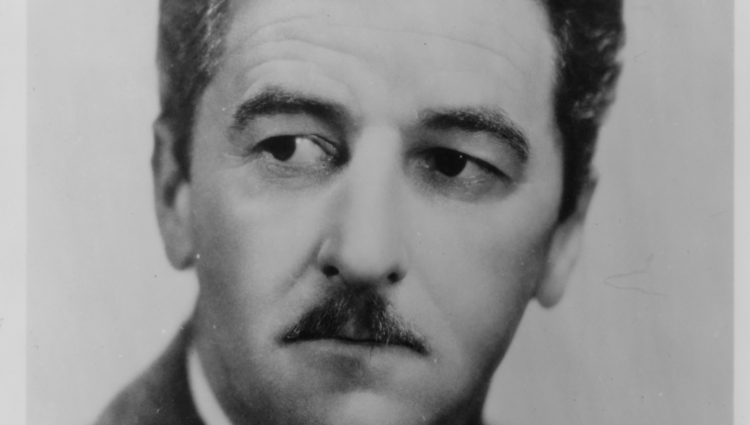
It is a paradox of our times that close observers of the American literary scene residing beyond our borders receive, from the self-appointed guardians of “high” culture and the life of the mind within this country, so little really useful direction or assistance in identifying what American writing is worthwhile or likely to retain its importance. Most of these mandarins teach in the universities of our Northeastern Megalopolis or in some other way define themselves by the use they make of the language. They owe their status to what they write for the newspapers and magazines of that almost closed society. By and large, they address only one another. Concerning the rest of the Republic, they have only conventional responses proceeding not from reflection but from fear, ignorance, and animosity. That this other America, in all of its antique multiplicity, should foster or possess serious literature is for them a contradiction in terms. Therefore I frequently advise Europeans of my acquaintance that they are mistaken in forming their view of American letters (or, for that matter, any other facet of our cultural life) through the filter of Boston/New York/Washington and their California satellites. To support this injunction I often advert to the confusion of the late Professor Lionel Trilling of Columbia University, a great authority on the modern era, when he brought to bear the myopia and insularity of (in his own words) “a narrow class of New York intellectuals” upon the handiwork of Robert Frost, our most respected twentieth-century poet, and William Faulkner, our finest novelist of the same generation.[1] [Read more...]

The Declaration of Independence & the Kendall Thesis

Declaration of Independenceby M. E. Bradford

Our collective confusion about the American experience begins at the beginning. Most Americans who think about such questions imagine that they understand the Declaration of Independence, though many of them may be puzzled that it did not (and does not) produce the results one might expect from the commitments which they believe it makes. After much misleading, they take the task of interpreting it to be a belaboring of the obvious, even though they know very little about its text, its content, or the moment in history that produced it. For by the spokesmen for one tradition in American politics they have been carefully taught to apprehend the document in a certain selective way: that is, by the tradition usually acknowledged by press and electronic media, pulpit and textbook maker; the tradition which is perhaps too confident of itself, even though it has brought forward nothing in the way of proof for its favorite assumptions. So much is indeed self-evident truth.  [Read more...]

A Proper Patrimony: Russell Kirk and America’s Moral Genealogy

by M. E. Bradford

Kirk

The Roots of American Order, by Russell Kirk.

It is nowadays the fashion to think of these United States as a wholly “invented” polity, as the pure and miraculous handiwork of those gifted political craftsmen who were our honored forefathers and whose high achievements we celebrate during this commemorative year. It is also the conventional wisdom that our original revolution was the genuine revolution, the paradigm for all serious and progressive rebellions, early or late, and the fulcrum upon which the modern world has since been obliged to turn. It is obvious that the emphasis behind these assumptions is upon what was new about America, that break with the general Western prescription which should ostensibly account for our distinctive political habitude and origination. A corollary premise is that such a revolution is destined to continue on and on, perpetually unfinished, perpetually at war with whatever remains of the older world turned upside down when Lord Cornwallis marched out from his works.

What I have been describing is, to be sure, the basis for a variety of impious readings of the American past. In recent months we have heard or read about them all as part of the regular Bicentennial fare. And perhaps detected in the almost choral harmonies of the music they make together a fanfare sanctioning disorders yet to come. However, most of our countrymen are so thoroughly accustomed to the calculus which informs these interpretations that they notice its operation rarely, if at all. When told that the France of Robespierre, the Russia of Lenin and the China of Mao are close relations to the America of 1776, that our “political religion” is a position defined by reaction against the structures, customs, and feelings which had informed the long record of Western man prior to the inception of our adventure with independence, they offer no objections. And even though the same solid citizens will, in all likelihood, act in their everyday affairs to belie such infamous analogies, the pressure of distortion gathers continuously in the absence of vigorous refutation. The results, in our contemporary social and political discourse, are something we experience with ever growing dismay. [Read more...]

The Baleful Comet of Boston: Samuel Adams and the Puritan Republic

by M.E. Bradford

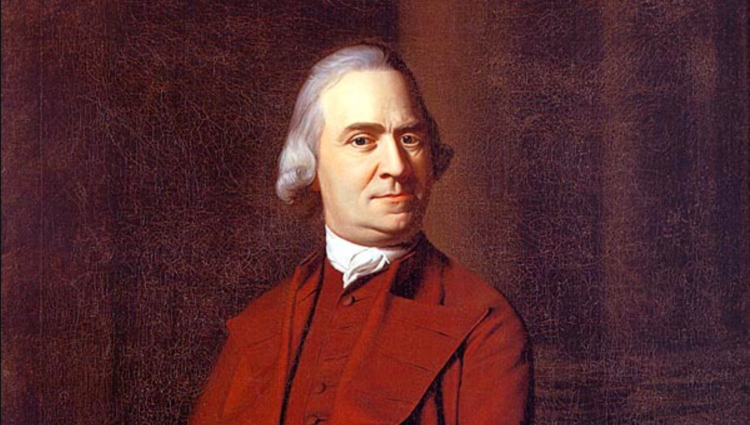
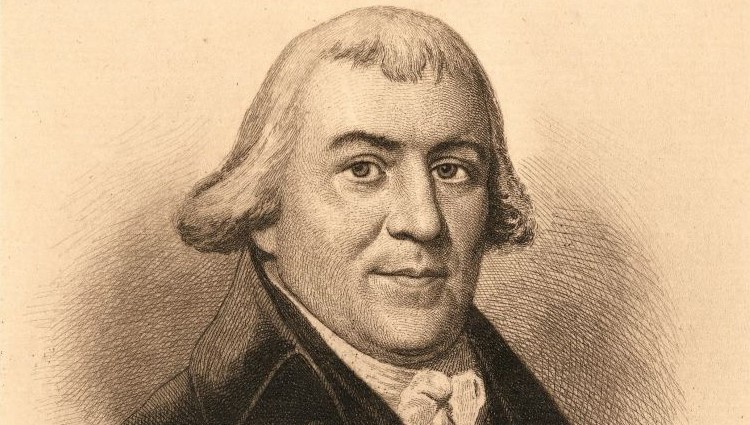
Samuel Adams (September 17, 1722-October 2, 1803), the political “boss” of the Boston town meeting, maltster, tax collector, essayist, Signer of the Declaration of Independence and Articles of Confederation, leader of the Continental Congress, and a great influence over the public life of Massachusetts during the early years of the Republic. Called by Thomas Jefferson “the Man of the Revolution.” On the other hand, described by a Tory as “the would-be Cromwell of America.” A source of amazement to British authorities attempting to prevent a rebellion, one of whom wrote, “Would you believe it, that this immense continent, from New England to Georgia, is moved and directed by one man!—a man of ordinary birth and desperate fortune who, by his ability and talent for factious intrigue, has made himself of some consequence; whose political existence depends upon the continuence of the present disputes…” A cross between Hawthorne’s Gray Champion and the village malcontent, who always “loved turmoil, and desired a continuence of the troubles…” In his affected righteousness almost a humbug, but a master politician when in opposition. Antifederalist, but restrained in his attacks on the proposed Constitution by the warm and open Federalism of the mechanics and tradesmen of his city, the old Sons of Liberty, who felt a stronger government might better protect the commerce of New England. A Puritan born after his time, a violent Whig both by birth and by conviction. A prophet who lived inside the typology implied by his given name, recalling his neighbors to “the noble spirit of our renowned ancestors.” One who hoped to see the old “New England Way” become the basis for converting a free America into a “Christian Sparta.” [Read more...]

The Household Gods of Freedom

God

John Randolph

by M. E. Bradford

John Randolph of Roanoke: A Study in American Politicsby Russell Kirk.

For Southerners of my antique persuasion, Russell Kirk’s John Randolph of Roanoke is a locus classicus. And for most American conservatives, it is a work of decisive importance, a path leading into a neglected portion of our common patrimony, a portion now not well understood, even in the South. For in this book is organized and preserved, with grace and economy, the still persuasive testimony of the most noble and disinterested of the Old Republicans, the American political figure who, in the first quarter of the nineteenth century, set his face most resolutely against the great god Whirl. John Randolph embodied the wisdom of the Antifederalists. And in that role acted out, bespoke, what now appears to be our most durable inheritance from the Virginia dynasty. To see Kirk’s study of Randolph’s career (first published in 1951) reissued in one of the handsome editions of the Liberty Press is therefore an occasion for real rejoicing. For, in this era of unchallenged statism, we stand in need of Randolph’s public example as never before: his searching critique of the “metaphysical madness” which comes from an ideological reading of the Revolution. Dialectics and abstraction threaten the very foundations of our civil order. And require of us that we be able, through the study of his language and his thought, to invoke the shade of the American Burke. [Read more...]

A Teaching for [r]epublicans: Roman History and the Nation’s First Identity

by M. E. Bradford

roman

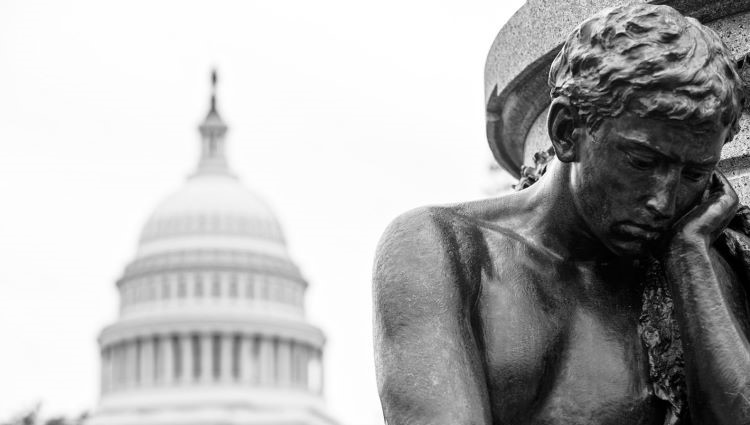
The Federal District of Columbia, both in its formal character as a capital and also in its self-conscious attempt at a certain visual splendor, is, for every visitor from the somewhat sovereign states, a reminder that the analogy of ancient Rome had a formative effect upon those who conceived and designed it as their one strictly national place. What our fathers called Washington City is thus, at one and the same time, a symbol of their common political aspirations and a specification of the continuity of those objectives with what they knew of the Roman experience. So are we all informed with the testimony of the eye, however we construe the documentary evidence of original confederation. So say the great monuments, the memorials, the many public buildings and the seat of government itself. So the statuary placed at the very center of the Capitol of the United States. And much, much more. [Read more...]

M.E. Bradford’s Constitutional Theory: A Southern Conservative’s Affirmation of The Rule of Law

M.E. Bradford

M.E. Bradford

by Marshall DeRosa

A Better Guide Than Reason: Studies in the American Revolution. (La Salle, IL: Sherwood Sugden & Company Publishers, 1979). Cited in the text as Guide.

Remembering Who We Are: Observations of a Southern Conservative. (Athens, GA: The University of Georgia Press, 1985). Cited in the text as Remembering.

A Worthy Company: The Dramatic Story of the Men Who Founded Our Country. (Westchester, IL: Crossway Books, 1988).

The Reactionary Imperative: Essays Literary & Political. (Peru, IL: Sherwood Sugden & Company Publishers, 1990). Cited in the text as Reactionary.

Against The Barbarians and Other Reflections on Familiar Themes. (Columbia, MO: University of Missouri Press, 1992). Cited in the text as Barbarians.

Original Intentions On The Making Of The United States Constitution. (Athens, GA: The University of Georgia Press, 1993). Cited in the text as Intentions.

M.E. Bradford’s constitutional theory is firmly grounded in the original intent of the Framers. His scholarly links to original intent are twofold; original intent is the only way to legitimately apply the U.S. Constitution to contemporary politics and it is better than any alternative at procuring good government. [Read more...]

Poetry: Donald Davidson’s “Aunt Maria and the Gourds”

poetry

by John E. Rocha, Sr.

While studying at the University of Dallas in the early ’90′s, I was taught and influenced by a few notable professors, such as Janet Smith, Frederick Wilhelmsen, Wayne Ambler, Leo Paul de Alvarez, along with a few others.  Following Prof. Wilhelmsen after many class lectures back to his office or at least to the university mall, I was regaled with many stories about Catholic intellectuals of the 20th century.  In a few of those conversations two names came up more than once: Russell Kirk and M.E. Bradford. Little did I know that I would be reading Russell Kirk over the next 20 years later as well as referencing the American founding as understood by M.E. Bradford. [Read more...]

The Oracle of the South

by M. E. Bradford

The Essential Calhoun: Selections from Writings, Speeches, and Letters. Edited with an Introduction by Clyde Wilson. Foreword by Russell Kirk.

The contemporary academic interpretation of John Caldwell Calhoun is like the contemporary academic response to anything and anyone thoroughly and unmistakably Southern: a politically correct caricature, both as to motives and with regard to the meaning of Calhoun’s many achievements. It is a reaction which begins in splenetics and concludes in hackneyed vituperation against Calhoun’s views on two subjects: the status of Negro slavery under the original Constitution and the rights of the states to protect themselves against usurpations not authorized by the fundamental law. It is against this previous and unseemly focus on one part of Calhoun’s doctrine (a focus which results in distortion and latter-day animosity) that Professor Clyde Wilson works in assembling this excellent collection The implicit proposition behind his selection from such an extensive variety of documents touching on so many subjects is that in such variety we should recognize the richness, complexity, and sophistication of Calhoun’s thought. Assumed also is that we will then not attempt to judge such teaching by emphasizing its most familiar components in Calhoun’s prophecies of a war between the sections, a struggle certain to occur if the North continued in its policy of threat and gasconade, and by his commitment to the rights of members of the federal compact to restrain anything short of an overwhelming national majority when their prospects for future existence required such a protection. [Read more...]

A Few Rude and Not So Rude Reflections on America

by Bradley J. Birzer

Some observations, rude and otherwise, from two weeks of traveling across the United States.

I’m at the end of seven weeks of intense traveling. Frankly, I’m tired and more than a bit cranky. But, of course, I brought the travel on myself entirely. For what it’s worth, here are a few observations from my adventures—focused on the events of the last two weeks.

If I ever found myself in a crisis, I would much rather stand next to a member of the Tea Party than to a member of Occupy Whatever.

Tea Party people I met in New Mexico have worked for their money and have pride in themselves and those around them. They love their families and their country—not necessarily for what it is, but for it could be. [Read more...]