The Political Thought of Gouverneur Morris

Gouverneur Morris

Gouverneur Morris

by Forrest McDonald

As is well known, Gouverneur Morris, the New York aristocrat who represented Pennsylvania in the Philadelphia Convention of 1787, wrote the Constitution of the United States. When the Convention completed its substantive deliberations on September 10, it turned its various resolutions over to a Committee of Style and Arrangement, consisting of Morris, Alexander Hamilton, James Madison, Rufus King, and William Samuel Johnson. The other members, aware of Morris’s considerable skills as a pensman. entrusted the drafting to him. Morris, in correspondence with Timothy Pickering many years later, asserted that the Constitution “was written by the fingers, which write this letter”—an assertion substantiated by Madison in a letter to Jared Sparks in 1831. [1] [Read more...]

The Importance of Marcus Tullius Cicero

Brad Birzer Cicero

Bradley J. Birzer

by Bradley J. Birzer

How do I define the Natural Law?  Taking my cue from Cicero–especially from On the Republic, On Duties, and On the Laws–I can state that Natural Law theory argues that there is a supreme being who holds everything together through his love or his force or his will or whatever it might be that moves him.  His will then radiates into time and creation, thus holding all things together in a brotherhood and sisterhood under his parentage.  He bestows dignity upon us by shining a part of his light into us.  We, though understanding through a glass darkly, perceive only very small parts of the infinite.  We perceive them by looking behind us, discerning what should be inherited and what should be discarded, and we look forward, deciding what should be promoted and what should be forsaken.  Through it all, we anchor our understanding to the transcendent, thus preventing any single one of us from proclaiming the status of law giver or law maker.  We are, instead, poetically, discoverers of Natural Law.  Never creators but always discoverers.  By definition, the natural law must already exist, but through our various gifts and perceptions, we see dimly and partially what has been forgotten or never been seen before. (See end note information on forum for this lecture.*) [Read more...]

History of State’s Rights, 1774-1817

rights

Bradley J. Birzer

by Bradley J. Birzer

On the eve of the American Revolution, most American thinkers had embraced the idea of all rights (and, therefore, sovereignty) being inherited.[1] Americans, as brothers and descendents of Englishmen, were entitled to the rights inherited from the English through the development of Anglo-Saxon common law and through the several political battles, such as those witnessed most blatantly with King John signing the Magna Carta in 1215, the development of Parliament in the thirteenth and fourteenth centuries, and the ascendancy of Parliament in the Glorious Revolution of 1688. Parliament not only embodied the will of the people, but it also served as the ultimate authority and the sovereign, at least in conjunction with the Crown. Americans, prior to the fall of 1774, saw themselves in this tradition, inheriting the rights of the common law and of Englishmen. The legal scholar and future signer of the Declaration of Independence, Charles Carroll of Carrolton, put it succinctly:

How came many unconstitutional powers to be exercised by the crown, and suffered by parliament? for instance, the dispensing power—the answer is obvious; it required the wisdom of ages, and accumulated efforts of patriotism, to bring the constitution its is present point of perfection; a thorough reformation could not be effected at once; upon the whole fabrick is stately, and magnificent, yet a perfect symmetry, and correspondence of parts is wanting; in some places, the pile appears to be deficient in strength, in others the rude and unpolished taste of our Gothic ancestors is discoverable.[2] [Read more...]

Low Expectations: The American Presidency

by Joseph A. Scotchie

The American Presidency, by Forrest McDonald, Lawrence, Kan.: University Press of Kansas. 516 pp. 

Twice, in The American Presidency, Professor Forrest McDonald states that the executive office of our government “has been responsible for less harm and more good … than perhaps any other secular institution in history.” In the same sentence, he also notes that “the caliber of the people who have served as chief executive has declined erratically but persistently from the day George Washington left office.” And elsewhere, McDonald acknowledges that he is “not sanguine about its [the presidency’s] future and [does] not feel how anyone who lived through the 1992 presidential election could be.” The decline of the presidency follows the transformation of a nation. When the dreaded bureaucracy first arose, only a handful of men toiled for the state. By the 1920s, the bureaucratic machinery had exploded in size-over 120 federal units running the country and the worst was yet to come. [Read more...]

Most Underrated of all the Founders: John Dickinson

by Forrest McDonald and Ellen Shapiro McDonald
John

Having studied eighteenth-century America all our adult lives, we are prepared to offer a generalization: the more one learns about the subject, the less prone one becomes to make categorical statements. Who were the first to resist British encroachments upon American liberties? who were the most important figures in bringing about independence? what were the causes of independence? what did the Framers of the Constitution intend? and hosts of lesser questions can be answered only, if they can be answered at all, with a great many qualifications, Indeed, when we read or hear a discourse upon any aspect of eighteenth-century America, our almost invariable reaction is, “It was more complicated than that.”

[Read more...]

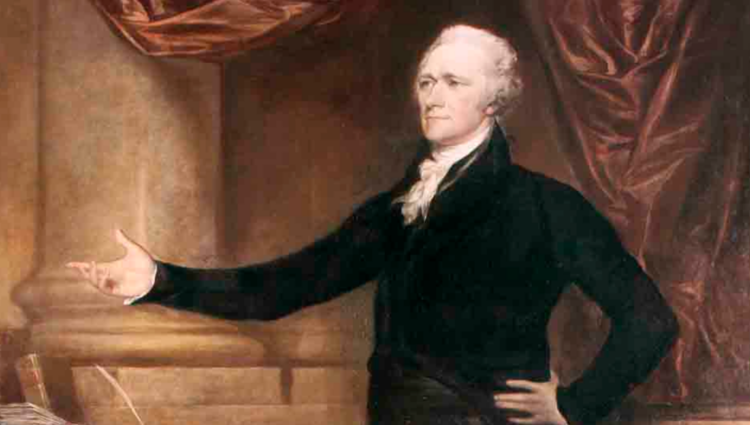
The Rhetoric of Alexander Hamilton

by Forrest McDonald

Alexander Hamilton

Alexander Hamilton

The political rhetoric of the Founders of the American Republic has received scant attention from scholars. The relative neglect is understandable. On the one hand, the very concept of rhetoric has, in modern times, all but lost its classical signification, and has come to mean empty verbosity or ornament. On the other, the political achievements of the Founders- the winning of independence, the establishment of a durable federal Union on republican principles, the creation of a system of government which is itself bound by law-were of such monumental proportions as to make their methods of persuasion seem of pedantic and picayune consequence. And thus, though every student of the epoch is at least vaguely aware that the general level of public discourse in late eighteenth-century America was extraordinarily high, perhaps unprecedentedly so, we tend to regard the way the Founders spoke and wrote as only incidental to what they did. I would contend, on the contrary, that it was their commitment to and practice of open, dispassionate, informed, and reasoned discussion of public questions which made their achievements possible. Their rhetoric, in other words, was not a mere by-product of their accomplishments: rather, their accomplishments were the product of their rhetorical interchange. [Read more...]

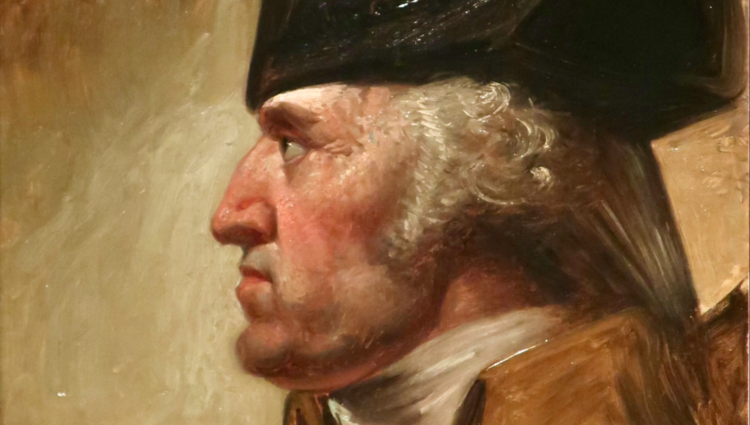
George Washington: Today’s Indispensable Man

George Washington

by Forrest McDonald

The men who established the American republic were acutely aware that they lived in a pivotal era in human history, and they eagerly rose to the occasion. They were all impelled by a love of liberty, but a large number were, in addition, driven by a desire for immortal Fame—the grateful remembrance of a distant posterity. To put it simply, they wanted to remain alive and be cherished in your memory and mine.

It may be that the Founders were as unlucky in their choice of posterity as they were lucky in their choice of time in which to live, for the American people are notoriously lacking in a knowledge of the past. But until Goals 2000 ensures that our children will learn nothing of our past, we still can assume that there is one American of the Founding generation whose name everybody knows: George Washington. And yet, knowledge of just what he did is far from widespread. Beyond the cherry tree episode (which never happened) and the fact that he was the first President, most Americans do not know why they should remember and cherish him. What I propose to do is to describe what he was like and thereby help us cherish his memory. [Read more...]

The Living Embodiment of the Nation

nationby Phillip G. Henderson

A review of The American Presidency: An Intellectual History, by Forrest McDonald. Lawrence, Kansas: University of Kansas Press, 1994.

Forrest McDonald’s The American Presidency: An Intellectual History is a most impressive work. Few contemporary books in American politics reflect the careful and prodigious research, as well as the considerable breadth of knowledge and historical insight brought to bear by McDonald. If you are looking for behavioral models and typologies of presidential behavior, this is not the right book. But if you seek a deeply historical and substantively rich overview of the U.S. presidency, this book is without peer. [Read more...]