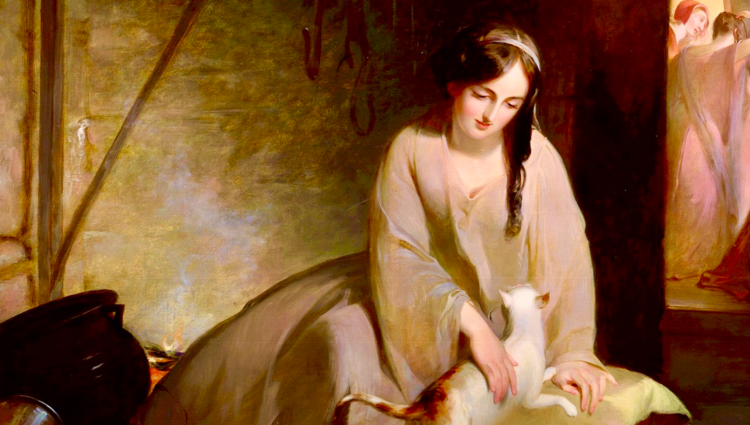
Damsels in Distress: a Cultural Anti-Depressant

DamselsInDistressby Barbara J. Elliott

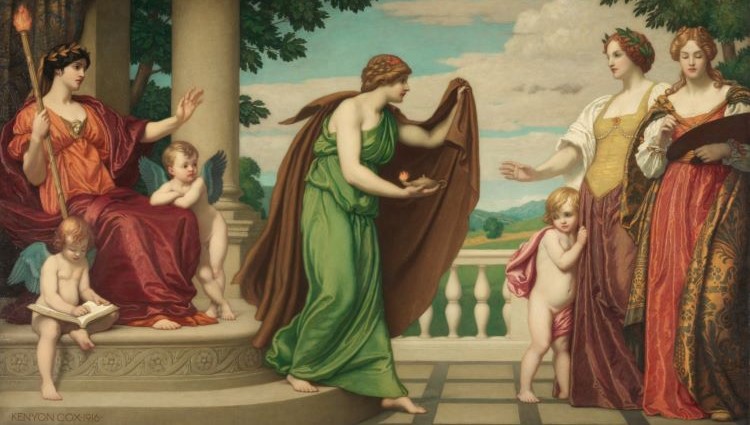
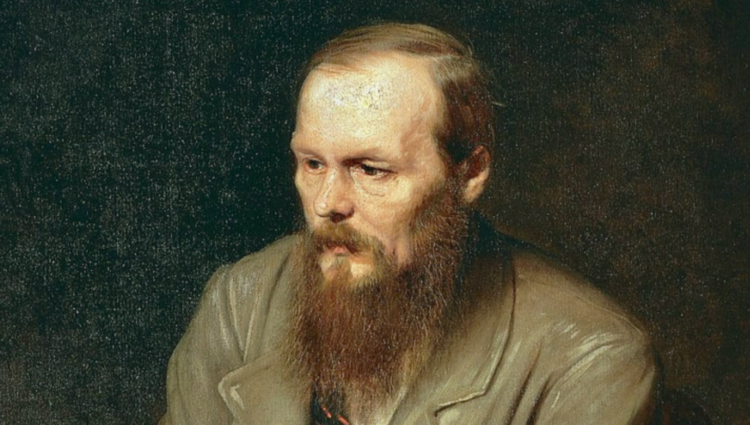
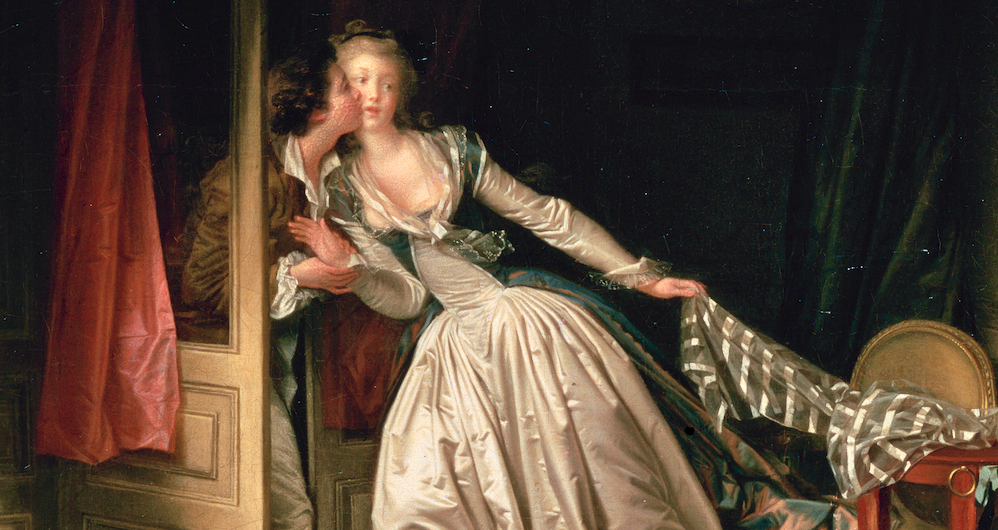
If you’re feeling depressed about the culture around you, Dr. Elliott has a prescription for you:  one full dose of Whit Stillman’s most recent film, Damsels in Distress, followed by tap dancing.  I am perfectly serious. This charming story unfolds with a group of quirky college girls on the campus of Seven Oaks, a fictitious Ivy League college, set in an indeterminate time with a retro feel.  Violet, played effortlessly by Greta Gerwig, is a big-hearted but sometimes manic student, determined to prevent suicides and reform frat boys.  It’s better to “find someone frankly inferior and improve them,” she tells her girlfriends as they approach the fraternity party wearing dresses and heels. “There’s enough material here for a lifetime of social work,” she remarks drily as one of the drunken lads lurches off the porch. [Read more...]

Why “Value” Families?

family

Bruce Frohnen

by Bruce Frohnen

In responding to a recent post of mine criticizing our liberal culture for its hostility toward the traditional family, a commenter wrote: “I don’t know a single liberal who…doesn’t value (and participate in) both traditional and non-traditional families.” I think it is important to examine this liberal response to conservative criticism, not because the issue can be “settled,” but because it can tell us why liberals and conservatives so often seem to be talking past one another when it comes to social issues.

Conservatives (like me) often are accused of being unfairly censorious in accusing liberals of undermining primary institutions like the family.  After all, the argument goes, we talk about “attacks” on relationships liberals genuinely value.  And there is a way in which this is true—a way that shows why the “culture wars” are not likely to end any time soon.  [Read more...]

Agrarianism Reborn: On the Curious Return of the Small Family Farm

agraianismby Allan C. Carlson

In 1941 the Prairie Farmer, America’s oldest farm periodical, celebrated its one hundredth anniversary. The centennial cover features a drawing of the iconic twentieth-century “new” farmer: tall, young, and slender. Bulky overalls have given way to tailored city clothes; the straw hat to a fedora. In the artist’s words, he is “a strong, virile, keen, friendly, forward-looking citizen standing in a field of gold.”[1] Importantly, there are no horses or mules in that golden field. Instead, a tractor tills the ground. “Modern machinery has straightened the farmer’s back,” the artist happily reports. More boldly, an ad on the inside cover features a slender farm wife in stylish garb beaming over four happy children, with her husband on a tractor in the background. It declares that “[e]very new MM [Minneapolis-Moline] machine put into action on your farm brings you closer to FREEDOM, and closer to the young folks for whom you are farming.”[2] At that moment, American farmers and their families still numbered about 29 million souls. The average farm was 160 acres in size.

[Read more...]

Irving Babbitt & Richard Weaver: Conservative Sages

by George A. Panichas

Irving Babbitt weaver

Irving Babbitt

richard weaver babbitt

Richard Weaver

Character and Culture: Essays on East and West, by Irving Babbitt, with a new Introduction by Claes G. Ryn

Visions of Order: The Cultural Crisis of Our Time, by Richard M. Weaver, with a foreword by Russell Kirk

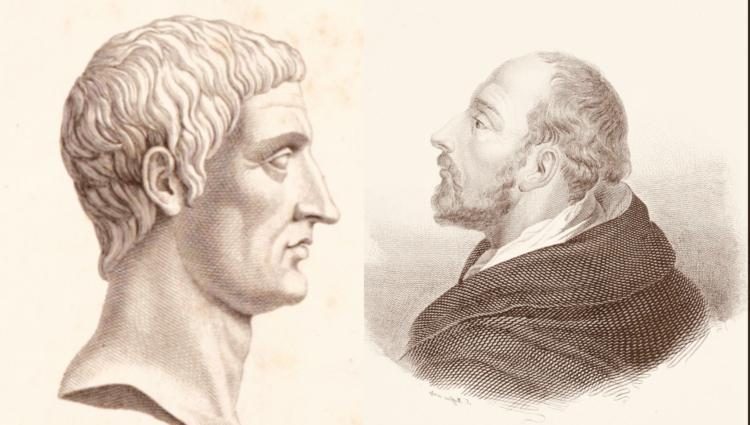
Two modern American teachers and critics who can now be honored as Sages and, indeed, included among the Sacri Vates, are Irving Babbitt (1865-1933) and Richard Weaver (1910-1963). One who in any way studies two recently reissued books, Babbitt’s Character and Culture (originally titled Spanish Character and Other Essays) and Weaver’s Visions of Order, will need very little convincing as to the appropriateness of the sapiential ascription. To read these two books again, or even for the first time, is to make contact with men of vision who are quintessentially men of wisdom. Perhaps at no time of our history do we have more urgent need for wisdom than now. For the wisdom we gain here is both salvific and restorative; it enables us to climb the ladder of illumination. Babbitt likens this process to “the ascending path of insight and discrimination”; Weaver describes it as the need to “have something ascending up toward an ultimate source of good.” This moving upward requires strenuous effort, and its rewards are to be found in the higher experiential contexts of what is self-cleansing and self-disciplining. [Read more...]

Six Little-Known Musical Portraits of the Sea

Sea Nymphsby Stephen M. Klugewicz

The sea has forever stirred the imagination of painters, poets, bards, and composers. In music, Ralph Vaughan Williams gave us “A Sea Symphony,” Claude Debussy his “La Mer,” Wagner his “Flying Dutchman.” Rimsky-Korsakov also depicts the sea in the first and last movements of his famous “Scheherazade.” In addition to these well-known works, however, there are other, lesser-known musical masterpieces inspired by the ocean. Here are six you have probably never heard.

[Read more...]

Russell Kirk: An Integrated Man

Russell Kirk

Russell Kirk

by Ian Boyd, C.S.B.

The most obvious and important thing that must be said about Russell Kirk concerns the harmony that existed between his public and his private life. He was an integrated man who lived what he wrote. There were no disappointing disjunctions between the private and the public self. On the contrary, the happy domestic life at Piety Hill was a sort of extension of his written work, a lived parable which illuminated everything he wrote about the primacy of private life over public life, about the family as the essential human community, and about the basic loyalties to the villages, neighborhoods, and regions in which human beings were most likely to find fulfillment and a measure of happiness. The philosophy that he outlined in his many books and essays was embodied in his everyday life, and his everyday life provided a running commentary on the deeper meaning of that philosophy. Those who were privileged to be his friends were people whose understanding of his thought was only deepened by their knowledge of a life which made that thought even more real for them. [Read more...]

Philosopher of Love: David Schindler

David L. Schindler

David L. Schindler

by Jeremy Beer

For the orthodox Christian, is doing one’s public duty more or less reducible to voting for the most socially conservative Republican on the ballot—and then shutting up about whatever misgivings one might have? Surely not. Yet for many election cycles, this has been often implied by the self-appointed guardians of practicality and political realism. It is even increasingly heard from the pulpit.

The assumptions that lurk behind this idea are that when it comes to ordering public life, modern liberal democracy in its best sense has things basically right. America rightly understood is the highest exemplar of this kind of liberalism. And the Republican Party is our best reasonable hope for defending this liberalism’s political, economic, and cultural accomplishments from its enemies. To question these assumptions is to be naïve or—a favorite epithet—utopian. [Read more...]

Religion & Culture: Christopher Dawson as Superlative Guide

religion culture

Christopher Dawson

by Robert M. Woods

There is a popular series of books entitled, “Eat This, Not That.” The premise of the series is that of all the foods out there, some are healthier for you than others or some are not as unhealthy as others. We can classify this essay as a “Read This, Not That.” With the growing number of published works by fundamentalist atheists, let me suggest when trying to think through the complex issues of religious reality and human cultures, one should read Christopher Dawson and not the venomously ill-informed works of those who seem driven primarily by profit and not generous, well informed scholarship.​

[Read more...]

Romano Guardini and the Dissolution of Western Culture

Romano Guardiniby Wayne Allen

The End of the Modern World, by Romano Guardini; with an Introduction by Frederick Wilhelmsen.

The appearance of this new and expanded edition of Romano Guardini’s book is both timely and helpful. Guardini (1885-1968) writes partially in the spirit of a theologian and partly with the critical eye of the philosopher. And he rightly sees no inherent hostility between the two, which itself is a modern prejudice, and one often held by both camps. Indeed, too many members of each camp have embraced modernity without flinching and abandoned their true calling. Guardini rightly treats modernity as less of an “age” and more as an idea, or distillation of ideas, that shapes and misshapes man according to the ascendant mundane preoccupations that are prevalent at the time. We have become accustomed to thinking unquestionably that modernity is as good as mother’s milk; that it is by definition a good, and that any force (reaction) or idea (conservatism) that impedes modernity is no different than poisoning mother’s milk. Guardini is not a sentimentalist, calling for some return to Eden. But he is more than mindful that modernity’s fascination with its own advent deserves more questioning than it has received thus far. He is one in this interrogation with Christopher Lasch (The True and Only Heaven, Progress and Its Critics), and demonstrates some of the poetic insight of a T.S. Eliot. [Read more...]

Physicians and the Culture of Death

culture of death

Bruce Frohnen

by Bruce Frohnen

Even during an age in which acts of callous brutality have become common, the case of Dr. Kermit Gosnell shocks.  It was Gosnell who ran the filthy abortion clinic in which live babies were murdered, women were subjected to “treatment” by unlicensed assistants (including massive and even deadly doses of drugs), and fetal remains were kept in jugs, jars and cat food containers.  His conduct still shocks any conscience left functioning in our culture of death.

Sadly, while certainly shocked, I can’t say that I was surprised by the Gosnell revelations in the sense of finding them unexpected.  Indeed, what is perhaps most disturbing in this horrifying series of events is the genuine mainstreaming of the attitude that produced them. [Read more...]

Is It Fair to Bring a Child Into a World With Such a Low Birth Rate?

childby John Zmirak

Imagine a world where a brave array of new technologies has proliferated to meet our human needs by taming nature — yielding a vast increase in wealth, leisure and education.

Instead of scrimping like our ancestors at the mercy of forces beyond their ken, we have attained a noble’s sovereignty. Vast swathes of our lives are planted not with the starches of grim necessity but the fruit of our free choice. [Read more...]

The Problem of Modernity & the Boston Marathon Bombing

Boston Marathon Bombing

Mark Malvasi

by Mark Malvasi    

“The worst lies,” declared the French writer Georges Bernanos, “are problems wrongly stated. “ How applicable that observation is to so many concerns at present, not least the tragic events that took place in Boston.

The chatter that fills the airwaves with speculation about the ideology that motivated two young men to detonate bombs on a crowded street is misplaced.   People mean well, of course.  They want to know why anyone would commit such an enormity, but their thinking is flawed.  As a consequence, they misstate the problem and obscure understanding, beguiled by superficial appearances and a relapse into outmoded ways of thought. [Read more...]