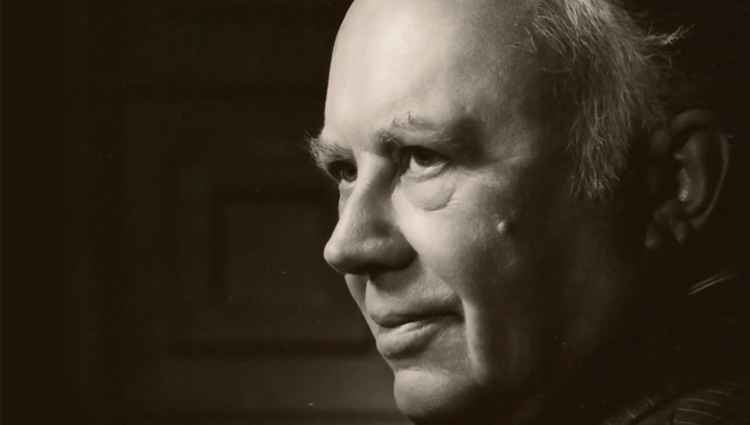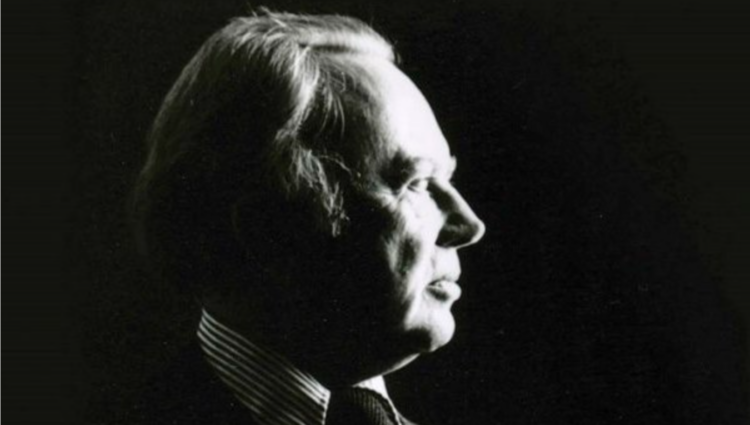
Romano Guardini and the Personality of Man

Romano Guardini

Romano Guardini

by Bradley J. Birzer

The profound Germano-Italian philosopher and theologian Romano Guardini (1885-1968) remains, by and large, one of the most unsung heroes of twentieth-century conservatism.

His reputation revived a bit during the all-too brief pontificate of Benedict XVI as so much of Ratzinger’s thought came from Guardini, directly and indirectly. But, he and his work should stand much higher than they do in our memory and in our adulation. In particular, his various books–a biography of Jesus; a discourse on technology; a metahistory on the meaning of modernity and post-modernity; and a meditation on the death of Socrates–should signal to us his depth of thought as well as his breadth of interests. [Read more...]

Progressives & Conservatives: Is there Common Ground?

Gleaves Whitney common ground

Gleaves Whitney

by Gleaves Whitney

Common Ground between Whom?

A lot of people are skeptical about what the Hauenstein Center is trying to do. Seriously now: common ground between conservatives and progressives? Each camp has been telling me how much it can’t stand the other. In popular culture, conservatives regard progressives as arrogant, woolly-minded, and un-American; progressives see conservatives as stupid, mossbacked, and greedy. Does anyone seriously think that the Tea Party would make common cause with Occupy Wall Street, or MSNBC reconcile with FOX News?

The gulf between the two camps has been widening in the academy. This is unfortunate because academic rigor requires intellectual diversity. [Read more...]

Irving Babbitt & Richard Weaver: Conservative Sages

by George A. Panichas

Irving Babbitt weaver

Irving Babbitt

richard weaver babbitt

Richard Weaver

Character and Culture: Essays on East and West, by Irving Babbitt, with a new Introduction by Claes G. Ryn

Visions of Order: The Cultural Crisis of Our Time, by Richard M. Weaver, with a foreword by Russell Kirk

Two modern American teachers and critics who can now be honored as Sages and, indeed, included among the Sacri Vates, are Irving Babbitt (1865-1933) and Richard Weaver (1910-1963). One who in any way studies two recently reissued books, Babbitt’s Character and Culture (originally titled Spanish Character and Other Essays) and Weaver’s Visions of Order, will need very little convincing as to the appropriateness of the sapiential ascription. To read these two books again, or even for the first time, is to make contact with men of vision who are quintessentially men of wisdom. Perhaps at no time of our history do we have more urgent need for wisdom than now. For the wisdom we gain here is both salvific and restorative; it enables us to climb the ladder of illumination. Babbitt likens this process to “the ascending path of insight and discrimination”; Weaver describes it as the need to “have something ascending up toward an ultimate source of good.” This moving upward requires strenuous effort, and its rewards are to be found in the higher experiential contexts of what is self-cleansing and self-disciplining. [Read more...]

Russell Kirk: An Integrated Man

Russell Kirk

Russell Kirk

by Ian Boyd, C.S.B.

The most obvious and important thing that must be said about Russell Kirk concerns the harmony that existed between his public and his private life. He was an integrated man who lived what he wrote. There were no disappointing disjunctions between the private and the public self. On the contrary, the happy domestic life at Piety Hill was a sort of extension of his written work, a lived parable which illuminated everything he wrote about the primacy of private life over public life, about the family as the essential human community, and about the basic loyalties to the villages, neighborhoods, and regions in which human beings were most likely to find fulfillment and a measure of happiness. The philosophy that he outlined in his many books and essays was embodied in his everyday life, and his everyday life provided a running commentary on the deeper meaning of that philosophy. Those who were privileged to be his friends were people whose understanding of his thought was only deepened by their knowledge of a life which made that thought even more real for them. [Read more...]

The Paradoxes of Individualism—False and Real

individualism

Bruce Frohnen

by Bruce Frohnen

A friend and colleague often forces me to read The Chronicle of Higher Education.  It is a dreary compendium of leftist ideology and smug conventional wisdom he enjoys using to depress me.  Nonetheless, I do occasionally read beyond the opening paragraphs to see what I would be thinking if only I were as “smart” as I should be.  I struck gold (well, pyrite at any event) in a recent issue.  The April 5 “Review” section of the Chronicle included an essay by one Mark S. Weiner titled “The Paradox of Individualism.”  The paradox?  That individualists (bad guys to begin with, of course) end up destroying true individualism by tearing down government.

If that sounds odd to you, congratulations.  But here is the argument:  were today’s individualists (by which Weiner means, of course, anyone opposed to the persistent expansion of government into every area of our lives) to succeed, the result would not be an increase in individual liberty.  Rather, the result of any substantial reining in of governmental power would be an increase in “clan” power, bringing intolerance, violence, and a general degradation of our way of life. [Read more...]

Conservatism: True & False

by Mike Church

conservatism

Here is my interview with Dr. Claes G. Ryn. On this show we discussed numerous topics including modern “conservatism” (or “Neo-Conservatism”) and traditional conservatism.

Mike: So let me start by asking you to flesh the question out a little bit, so maybe those that didn’t hear me talking about it and haven’t read your essay will understand, there is a difference between, I guess we would call it, or I’ll let you define it, traditional conservatism and what passes as conservatism today, which is filled with admiration, it seems, and acceptance of a very large state, and certainly a very large state abroad that wishes to have its way with the world, that’s willing to use military force in order to gain it. That’s not the kind of conservative or conservatism that is traditional, though, is it? [Read more...]

Are Conservatives (or Libertarians) Ruining Liberal Education?

Alexis de Tocqueville liberal education

Alexis de Tocqueville

by Peter Augustine Lawler

Plenty of liberals–and not just liberal professors–think there is a conservative conspiracy to use online education and MOOCs, to destroy genuinely higher education in this country. I see no organized conspiracy, and much of the liberal paranoia amounts to whining about the results of legitimate political defeats. Nonetheless, there is something to the thought that hostility to higher education as it now exists in our country is growing, and opposition to political liberals has gotten mixed up with hostility to “liberal education.” [Read more...]

Russell Kirk, Conservatism & Christian Humanism

Russell Kirkby Andre Gushurst-Moore

All the super-added ideas, furnished from the wardrobe of a moral imagination, which the heart owns, and the understanding ratifies, as necessary to cover the defects of our naked shivering nature, and to raise it to dignity in our estimation, are to be exploded as a ridiculous, absurd and antiquated fashion.-Edmund Burke, Reflections on the Revolution in France, 1790

As it will be in the future, it was at the birth of Man There are only four things certain since Social Progress began. That the Dog returns to his Vomit and the Sow returns to her Mire, And the burnt Fool’s bandaged finger goes wabbling back to the Fire;   And that after this is accomplished, and the brave new world begins When all men are paid for existing and no man must pay for sins, As surely as Water will wet us, as surely as Fire will burn, The Gods of the Copybook Headings with terror and slaughter return!-Rudyard Kipling, The Gods of the Copybook Headings, 1919

What is uniquely vivid in the life and work of Russell Kirk is the thoroughly considered identification of Christian humanism with a conservative political philosophy. [Read more...]

Restoring the Meaning of Conservatism: A Review

Conservatismby Jeffrey J. Folks

Restoring the Meaning of Conservatism: Writings from Modern Age, by George A. Panichas. Wilmington: ISI Books, 2008.

This collection of writings by George A. Panichas, all of which appeared in the pages of Modern Age between 1965 and 2007, is a testament to the author’s major contribution to conservatism for over four decades. During this period Dr. Panichas worked tirelessly as a scholar and editor, serving from 1984 to 2007 as editor of Modern Age, commenting widely on the religious, philosophical, and social issues of the moment, and engaging in extensive correspondence, all the while pursuing his own literary scholarship centered on such writers as Lawrence, Conrad, and Dostoyevsky. Panichas is the author or editor of 20 books, and perhaps a hundred or more essays, reviews, and occasional pieces (38 of which appear in this collection). More importantly, and what no mere enumeration of his accomplishments can suggest, Panichas is a scholar of a sort now endangered by university politics: one who, scorning the narrow partisanship and conformity of academe, has spent a lifetime of unflinching devotion to the pursuit of wisdom alone. [Read more...]

What is this Thing called Virtue?

virtueby Bruce Frohnen

Believe it or not, in at least one specific area public discourse in the United States is a bit better than it was a few decades ago.  How so? Today we occasionally hear the word “virtue” used—and not always in sarcasm.  This is good news because the return of the word “virtue” to the lexicon means we can at least talk about what it means to act with moral excellence, conforming to a standard of right conduct, to “be good” in a meaningful way.  And this makes it less difficult for us to talk about what we are supposed to be like as human beings, for what we ought to strive, and how. [Read more...]

Conservative Credo

conservative

Barbara J. Elliott

by Barbara J. Elliott

Conservatism seeks the Truth that has emerged over time, drawing from the deep wellsprings of human experience, and builds anew on foundations that have withstood the tests of time. It fosters order and the flourishing of human beings as they live in relationship with one another. We are united in the eternal contract between the dead, the living, and the yet unborn.

Conservatism is rooted in the acknowledgement that God is our Creator and that the human soul sojourns through this realm toward its eternal transcendent fulfillment. We are all flawed human beings in need of redemption, capable of great evil as well as great good.

Because man is fallible by nature, the conservative seeks to limit the damage that can be done through the abuse of power by limiting its concentration. [Read more...]

Conservatism: A Lecture by Christopher Dawson

christopher dawson

Christopher Dawson

Introduction and Notes by Joseph T. Stuart

The handwritten manuscript for this lecture “Conservatism” was found recently among the papers of the Catholic historian of culture Christopher Dawson (1889–1970),[1] housed at the University of St. Thomas in St. Paul, Minnesota. The lecture was never published. While it is not clear where or even if this lecture was actually delivered, Dawson seems to have addressed himself to a Conservative group, as is evident in his reference to his audience in section I. It is dated June 1932. [Read more...]