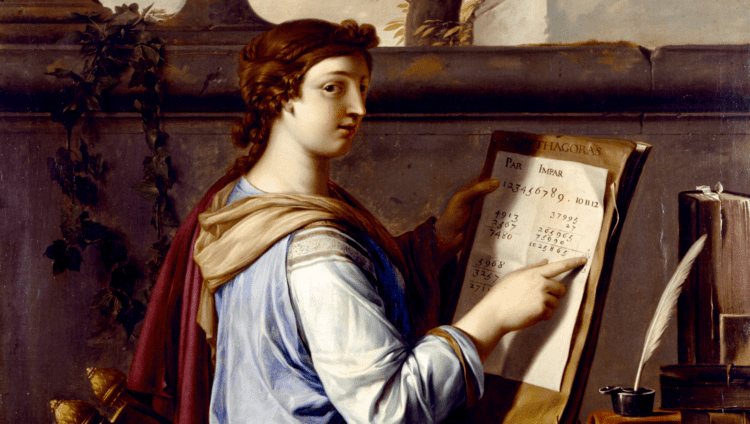
The Classics and the Traditional Liberal Arts Curriculum

by E. Christian Kopff

classical education

Christian Kopff

Before I started writing this essay, I went to University of Colorado library and took out one of the best books in English on education, Albert Jay Nock’s Theory of Education in the United States (1932). It is significant for our topic that, while Nock‘s irritable tirade, Our Enemy, the State, is easily available in three separate editions and is featured in most Libertarian book catalogues that come my way, Nock’s masterpiece, delivered as the Page-Barbour Lectures at the University of Virginia in 1931, is difficult to find and almost unknown, although in the 1950s it won the praise of a young man named William F. Buckley, Jr.

Nock makes the central distinction without which discussion of our topic is futile, the distinction between education and training. Education is the study and mastery of a body of knowledge which is formative in character. Training involves learning information which is instrumental or banausic and which serves to solve some immediate problem or accomplish some specific goal. Both training and education are important for a society. Anyone, however, can be trained to do something. (Naturally the complexity and difficulty of the jobs will vary from being a short order cook to being a brain surgeon.) Fewer can profit from education. The goal of education is to produce thoughtful people capable of judging matters of general importance in a disinterested manner, with maturity, with a wealth of general knowledge, and with the courage of the commitment (a condition which is both intellectual and moral) to face facts. A society without trained workers will not get its work done. A society without educated citizens will collapse in times of crisis and will wither away in times of ease and prosperity. [Read more...]

The Importance of Marcus Tullius Cicero

Brad Birzer Cicero

Bradley J. Birzer

by Bradley J. Birzer

How do I define the Natural Law?  Taking my cue from Cicero–especially from On the Republic, On Duties, and On the Laws–I can state that Natural Law theory argues that there is a supreme being who holds everything together through his love or his force or his will or whatever it might be that moves him.  His will then radiates into time and creation, thus holding all things together in a brotherhood and sisterhood under his parentage.  He bestows dignity upon us by shining a part of his light into us.  We, though understanding through a glass darkly, perceive only very small parts of the infinite.  We perceive them by looking behind us, discerning what should be inherited and what should be discarded, and we look forward, deciding what should be promoted and what should be forsaken.  Through it all, we anchor our understanding to the transcendent, thus preventing any single one of us from proclaiming the status of law giver or law maker.  We are, instead, poetically, discoverers of Natural Law.  Never creators but always discoverers.  By definition, the natural law must already exist, but through our various gifts and perceptions, we see dimly and partially what has been forgotten or never been seen before. (See end note information on forum for this lecture.*) [Read more...]

A Proper Core Curriculum is Political & Ought Not Be “Politicized”

by John Alvis

Core Curriculum

John Alvis

The idea for this essay came from a question posed during a meeting of the National Association of Scholars, where several of the presentations had decried recent academic movements of the sort led by Marxists, feminists, homosexualists, or Black separatists, and complained of these groups having politicized higher education. Subsequently, a panel discussing the idea of a core curriculum featured a defense of Thomas Jefferson’s model for a system based in classical republicanism and another paper arguing for a reinstatement of the traditional center of education in the ideal of developing the good citizen. Sensing an anomaly, a Princeton graduate student asked what was the difference between conceiving of the purpose of liberal education as political and abusing advanced education by politicizing it? I suggest the question deserves careful consideration, and I offer here a distinction that may guide us in thinking through the current debate on the Western canon and its place at the center of a general curriculum. [Read more...]

Stoicism and the Logos

stoicism

Bradley J. Birzer

by Bradley J. Birzer

And the end and the beginning were always there

Before the beginning and after the end.

And all is always now. Words strain,

Crack and sometimes break, under the burden,

Under the tension, slip, slide, perish,

Decay with imprecision, will not stay in place,

Will not stay still. Shrieking voices [Read more...]

The Purpose of Mathematics in a Classical Education

classical education

Thomas Treloar

by Thomas Treloar

A resurgence of interest in classical education has been evident in recent years. This has been due, in part, to a number of influential writings on regaining “lost” knowledge in our culture which have, in turn, inspired an increasing number of schools founded on a classical model. When surveying the landscape of classical education, it becomes evident that there is a clear vision available for the purpose of the study of humanities. What does not seem as clear, though, is the nature of mathematics in a classical education.

How is mathematics to be approached? Is mathematics a science? Is it a set of skills to be memorized? Can the study of mathematics be more deeply integrated into a classical education? If so, is this necessary or desirable? Nearly everyone would agree that the study of mathematics belongs in a classical education, but the purpose of this study is not always clear. [Read more...]

Classical Education: Entrusting The Future of the West to Our Children

classical education

Andrew Seeley

by Andrew Seeley

I am grateful to the founding parents and benefactors of the Lyceum that you have not had to grow up in a cultural wilderness as I did. Why anyone would be nostalgic for the 70’s I do not know. To give you an idea of how bad it was: In 1973, Admiral Jeremiah Denton returned to America from seven years in a Vietnam prison camp. He was utterly shocked by the society which greeted him. It must have been like Jimmy Stewart’s nightmare in It’s a Wonderful Life, when Bedford Falls became Pottersville. The new America was a society in which family life, virtue and nobility were not only lost, but openly mocked. Today the mockery is even more open, but at the time, that attitude was all we heard, except perhaps for the lonely voices of our parents. We had no Lyceums, no EWTNs, or popular Catholic publishers. [Read more...]

The New Classical Education

classical education

Peter Leithart

by Peter Leithart

In September 1974, the English philosopher Michael Oakeshott delivered the Abbott Memorial Lecture at Colorado College. Entitled “A Place for Learning,” Oakeshott’s lecture attacked the dominant model of education, a model predicated on the theories of the American educationist John Dewey. Learning, Oakeshott observed, should take place under “conditions of direction and restraint designed to provoke habits of attention, concentration, exactness, courage, patience, and discrimination”; but schools shaped by Dewey had instead become arenas of “childish self-indulgence,” “experimental activity,” “discovery,” and “group discussions.” Oakeshott was especially scornful of the notion that education’s purpose was “socialization,” which could only turn the child into a compliant little cog in the machine of commerce and industry. “The design to substitute ‘socialization’ for education,” he argued, was “the momentous occurrence of this century, the greatest of the adversaries to have overtaken our culture, the beginning of a dark age devoted to barbaric affluence.”[1] [Read more...]

The War of the Three Humanisms: Irving Babbitt and the Recovery of Classical Learning

Imaginative Conservative

Irving Babbitt

by Robert C. Koons

Where is the wisdom we have lost in knowledge? Where is the knowledge we have lost in information?—T. S. Eliot, Choruses from the Rock

Irving Babbitt (1865–1933) is not much remembered today, except perhaps through Sinclair Lewis’s snarky naming of the eponymous villain of the satire of mid-American manners and mores, Babbitt, after the Harvard professor whose anti-Progressive views Lewis denounced in his Nobel Prize acceptance speech. In fact, Irving Babbitt was far from the hidebound and fearful philistine Arthur Babbitt in Lewis’s novel. For forty years a professor of French and comparative literature at Harvard, Babbitt was the teacher and friend of T. S. Eliot and, with Paul Elmer More, the proponent of a cultural and intellectual movement, the New Humanism, that held center-stage in American intellectual life in mid-century. His first book, with the misleadingly modest title, Literature and the American College,1 is one of the ten most important and influential cultural critiques written by an American in the last century, comparable to Richard Weaver’s Ideas have Consequences or Russell Kirk’s The Conservative Mind.2 In addition, Babbitt’s book is the most profound reflection on the nature of higher learning written in the last one hundred years, comparable to Newman’s The Idea of a University,3 or, indeed, Quintillian’s On the Education of the Orator or Isocrates’ Antidosis. [Read more...]