Romano Guardini and the Personality of Man

Romano Guardini

Romano Guardini

by Bradley J. Birzer

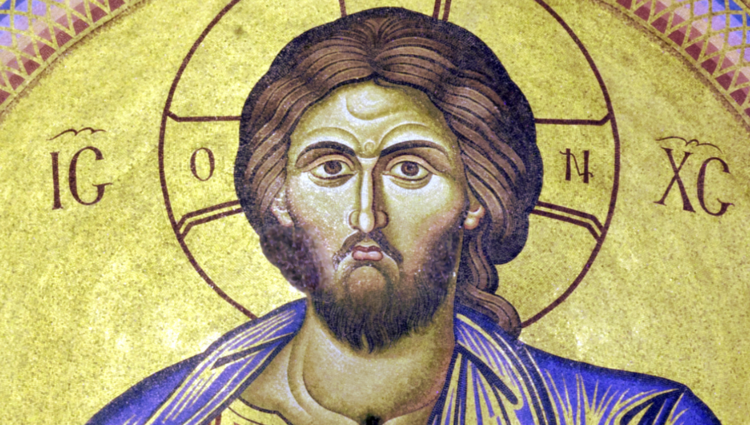
The profound Germano-Italian philosopher and theologian Romano Guardini (1885-1968) remains, by and large, one of the most unsung heroes of twentieth-century conservatism.

His reputation revived a bit during the all-too brief pontificate of Benedict XVI as so much of Ratzinger’s thought came from Guardini, directly and indirectly. But, he and his work should stand much higher than they do in our memory and in our adulation. In particular, his various books–a biography of Jesus; a discourse on technology; a metahistory on the meaning of modernity and post-modernity; and a meditation on the death of Socrates–should signal to us his depth of thought as well as his breadth of interests. [Read more...]

Finding Heroism in Cinema & Television Science Fiction

heroism

James T. Kirk

by Bradley J. Birzer

Where are the Heroes?

Where in this modern and post-modern world do we find an embrace of heroism and the heroic virtues?

Certainly not in most literature published since the 1960s.  There exists much irony and tragedy, certainly—remnants, perhaps, of late Greece as well as late Rome.  But, in present-day serious literature, there exists almost no real heroism.  Even the good Germanic, Norse, and Celtic legends seem absent from the most recent of fiction.

At worst, a hero is something to be mocked, an old fashioned (and out of time) boy scout, a puritan do-gooder.  At best, we wink at each other, knowingly acknowledging that he is being “over the top” or campy or something else that fills us with a glib sense of irony. [Read more...]

Oh, He’s Just a Biographer

christian western tradition american history biographer

Bradley J. Birzer

by Bradley J. Birzer

“In every age, society has been relieved only by the endeavors of a few people moved by the grace of God.”–Russell Kirk, Roots Of American Order (1974)

As I approach my fifteenth year teaching history at Hillsdale, and my seventeenth (or so) year of teaching at the college level over all, I find myself more and more taken with biography and the idea of personality as the fundamental and driving “forces” behind history.

“Oh, he’s just a biographer”

As a graduate student, I found–much to my surprise–that few professional historians viewed biography as anything other than a way of selling out to popular desires and public appetites.   [Read more...]

Russell Kirk Defends Assassination with Natural Law Theory

Russell Kirk

Russell Kirk

by Bradley J. Birzer

Therefore a little knot of brave and conscientious men determined to save Germany and Europe by killing Hitler. They had been reared in the doctrine that all citizens must obey the inerrant state. In this exigency, however, they turned to doctrines of natural law for justification. Was there no remedy against an unnatural master of the state? In the teachings of natural law they discerned a fatal remedy. Fatal to them, at least; for nearly all of the heroic men involved in the several conspiracies against Hitler died frightful deaths. I knew well Dr. Ludwig Freund, a kindly professor of political science, one of the two survivors of the first plot to kill Hitler. By nature Professor Freund was a law-abiding gentleman. And being law-abiding, in defense of true law he was prepared to slay the chief of state, perverter of Germany’s laws and the laws of man’s nature.-Russell Kirk [Read more...]

Jobs 2.0

Steve Jobs

Steve Jobs

by Bradley J. Birzer

A good friend of mine and a man I respect immensely, Hunter Baker, warned me to finish Isaacson’s long biography of Steve Jobs before passing too much judgment on the life and personality of the technology genius.  Another close friend (a fellow Apple fanatic going back to the 1980s when we were debate colleagues and constant companions), Ron Strayer, told me that he never read biographies of anyone who just died, as there simply could not be enough distance from the subject to offer any kind of meaningful and objective viewpoint of the person’s life.  Both, wise men. [Read more...]

Russell Kirk: An Old House Dies With Love and Honor

Russell Kirk

Russell Kirk

by Russell Kirk

[For those of us blessed enough to have visited Russell Kirk’s Piety Hill, we already know what charms have settled over the place, become one with the surrounding woods, the architecture, and the very home itself.

Annette Kirk, that uncontainable force of nature, is, of course, the perfect hostess.  And, who wouldn’t be enthralled with the variety and mystery of the place?  It hovers, lingers, and penetrates all who would gaze upon it.  Dancing girls leap from the roofs, lions sporting toupees welcome those who arrive by the front door, and stern Spiritualists (dead but not gone?) inspect from on high every person who actually enters into the realm of the Kirks.

The following served as one of Kirk’s last “To the Point” columns, syndicated in a number of papers around North America in early March, 1975.  The historian Louis Filler thought this column more than a column.  It was, he thought, even more than obituary.  The closest comparison in the world of art would be a requiem, and one of the highest order.  It was a requiem composed with courage by Kirk, a way to honor his ancestral home, burnt to nothingness on Ash Wednesday, 1975.

Interestingly enough, it harkens back to one of Kirk’s earliest writings, “Mementos,” awarded the best essay of the year (nationally) by a high school student in 1936 by Scholastic.

Though Kirk referenced Scott and Eliot directly in the article, Tolkien’s influence resides in it as well.  Just as Niggle’s tree found a spot in the eternal grandeur of the Eighth Day, so  does Kirk’s Old House.--Bradley Birzer] [Read more...]

The Awful Humanity of Russell Kirk

russell kirkby Bradley J. Birzer

The following is a speech given to the Hillsdale College faculty, April 3, 2013.  These faculty forums allow a Hillsdale professor to explain and consider his or her current scholarship.  My presentation, “The Awful Humanity of Russell Kirk,” comes from the research I’ve been doing for an intellectual biography of the great man himself, Russell Kirk.  I have seven of the projected ten chapters done.

Though without an official title yet, this book is tentatively entitled, The Humane Republic: The Christian Humanism of Russell Kirk.  The University Press of Kentucky, under the excellent editorial direction of Steve Wrinn, will publish the book in 2014.

I’ve been asked to talk about my research on Russell Amos Kirk (1918-1994).  Of course, his connections to this college should be somewhat legendary.  He wrote our statement of academic freedom, helped create our Program in American Studies, and influenced at least two of the freshmen core courses.  Many of you taught with him, and a few of you studied with him.  We, of course, house his library. [Read more...]

Review of Catholics in the Public Square

catholicsby Roger Thomas

Catholics in the Public Square is a lecture series by Dr. Bradley J. Birzer, offered by Catholic Courses.

In Rudyard Kipling’s classic work The Jungle Book, one of the stories is Kaa’s Hunting.  This tale is of how the young Mowgli, who is being instructed in Jungle Law by his tutor Baloo the bear, falls in with the Bandar-log, the monkey people who are despised and ignored by those of the jungle.  The reason for this is that the monkeys “have no remembrance” – they know not where they come from and have no purpose or direction.  They are devoid of tradition or law, doing nothing but what the fancy of the moment suggests.  They have no heritage and no shame, and to even acknowledge them is disgraceful. [Read more...]

Mark Twain and Russell Kirk against the Machine

mark twainby Bradley J. Birzer

Though neither a humanist nor a Christian—nor, for that matter, even a romantic in the vein of Blake who feared the “dark Satanic mills” of Industrial England—Mark Twain identified the late-nineteenth century fear of the machine run amok perfectly in his last novel, the tragically whimsical A Connecticut Yankee in King Arthur’s Court.  One of the first to use time travel as a plot device, the story revolves around Hank Morgan, an engineer devoid of any poetry or sentiment.  As his German last name indicates, he is the man of “tomorrow.”  A practical man schooled in the servile rather than the liberal arts, Morgan can create almost any type of mechanism: “guns, revolvers, cannon, boilers, engines, all sorts of labor-saving machinery.” A materialist, he “could make anything a body wanted—anything in the world, it didn’t make a difference what; and if there wasn’t any quick new-fangled way to make a thing, [he] could invent one.”  He was also, Hank assures the reader, “full of fight.”  And, a conflict employing crowbars with one of his employees, a man named Hercules, results in severe blow to Morgan’s head, knocking him unconscious. [Read more...]

The Manichean Epicurean: Walter Isaacson’s Steve Jobs

Steve Jobs

by Bradley J. Birzer

I purchased Walter Isaacson’s biography of Steve Jobs the moment it came out.  I’ve read a number of books on the history of Apple and Jobs–some dealing with him directly and others only touching upon his life and ideas–and I was eager to see what the man who was asked by Jobs himself to write the biography had to say.

I’d never read anything by Isaacson, the somewhat (I discovered) famous biographer of Benjamin Franklin, Albert Einstein, and Henry Kissinger.  He’s also the President and CEO of the Aspen Institute.  I had to look up both Isaacson and the Aspen Institute, as I’d never heard of either prior to picking up this biography.  Perhaps to my shame, but true nonetheless. [Read more...]

The Movement of World Revolution: Christopher Dawson

Christopher Dawsonby Bradley J. Birzer

The Movement of World Revolution by Christopher Dawson (from the introduction, published by The Catholic University of America Press)

Having witnessed the loss of an idyllic Edwardian world to the deadening trenches of the first world war, the rise of communism and the gulag state in Slavic Europe and China, and the advent of national socialism and the holocaust camps in Germanic Europe, Christopher Dawson found the ideologies that spawned such twentieth-century atrocities profoundly disturbing.[1]  Could a more gentle, Christian world ever arise again?  Possessing a subtle and acute mind, Dawson never held out any real hope that a true Christendom might reemerge after the vast bloodshed observed in his life time.[2]  He did, however, rightly note that past ages had seen horrors as well.  We moderns, he thought, might do well to pattern our own behavior after the Christian exemplars of the past.

The only remedy is to be found in that spiritual force by which the humility of God conquers the pride of the evil one.  Hence the spiritual reformer cannot expect to have the majority on his side.  He must be prepared to stand alone like Ezekiael and Jeremy.  He must take as his example St. Augustine besieged by the Vandals at Hippo, or St. Gregory preaching at Rome with the Lombards at the gates.  For the true helpers of the world are the poor in spirit, the men who bear the sign of the cross on their foreheads, who refuse to be overcome by the triumph of injustice and put their sole trust in the salvation of God.[3]
[Read more...]

Sanctifying the World: Christopher Dawson

Christopher Dawson

Sanctifying the World: The Augustinian Life and Mind of Christopher Dawson, by Bradley J. Birzer

Featured Book: Since religion is the heart of culture, Dawson wrote, then “religion is the key to history;” therefore “[w]e cannot understand the inner form of a society unless we understand its religion.” To understand Europe and the West, then, one must see Christianity at its center, a central theme of Dawson’s voluminous writings for decades.In this thoroughly researched book, Birzer analyzes Dawson’s work in light of the venerable thinker’s own philosophy of history. [Read more...]