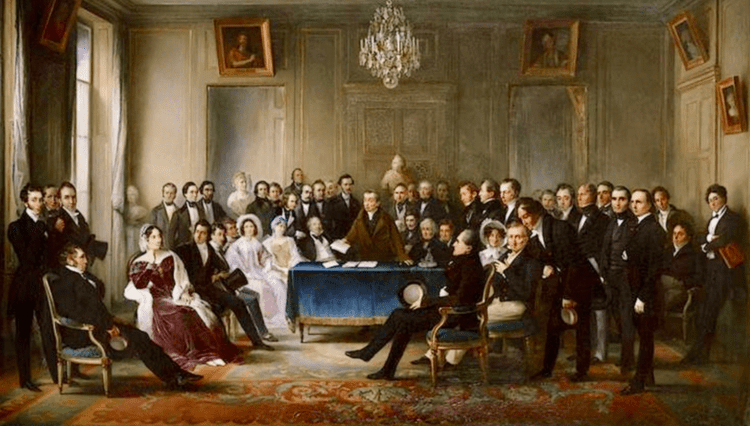
Walter McDougall’s “Gems of American History”

By |2026-01-13T21:19:19-06:00January 12th, 2026|Categories: American Founding, American Republic, Books, History|

Historian Walter McDougall is that rare "twofer": a wonderful writer of history and a wonderful lecturer. In this book, he combines essential tips for the writer with a series of uniformly sparkling essays that range from the era of the American Revolution to the present day. Gems of American History: The Lecturer’s Art, by Walter [...]
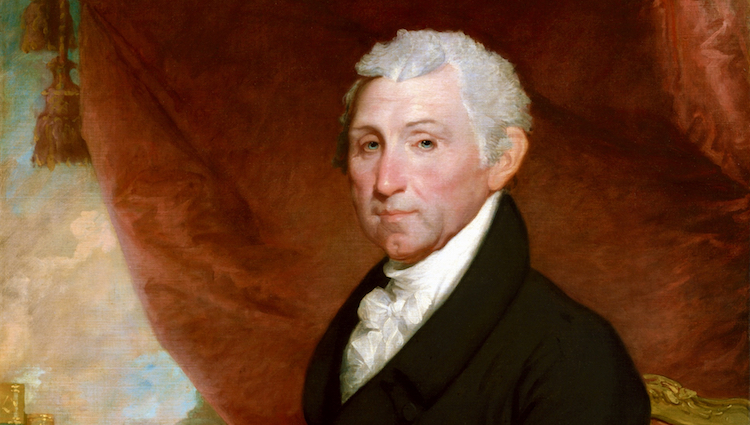
The Monroe Doctrine: Lynchpin of American Foreign Policy

By |2026-01-04T20:08:52-06:00January 3rd, 2026|Categories: American Founding, American Republic, Bradley J. Birzer, Europe, Foreign Affairs, History, John Quincy Adams, Senior Contributors, Timeless Essays|

In his ideas regarding American foreign policy, James Monroe echoed both Washington and Jefferson, yet he had to worry about things neither of them did—in particular, European involvement in the affairs of the republics of the Western Hemisphere. His policy needed to follow the diplomatic thought of the previous administrations while also adapting to quickly [...]

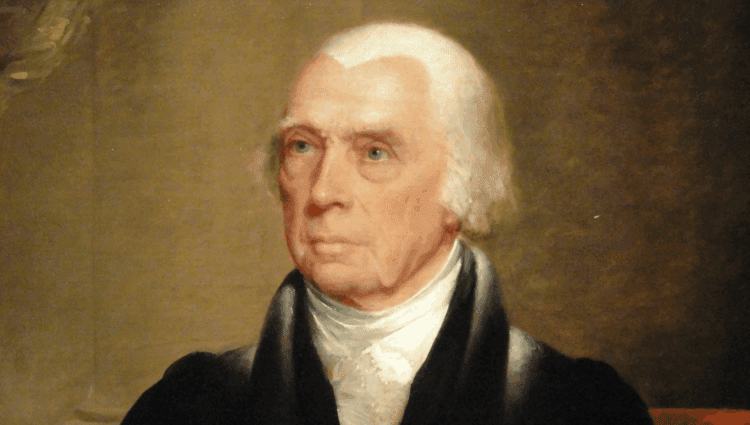
The Pessimism of James Madison

By |2025-12-12T19:46:11-06:00December 12th, 2025|Categories: American Founding, American Republic, Economic History, Economics, Free Trade, James Madison|

When he retired from public life in 1817, James Madison turned his full attention to averting a demographic catastrophe. He foresaw a time when a majority of the population would be “without land or other equivalent property and without the means or hope of acquiring it.”             I. During his presidency, Thomas Jefferson struggled to [...]

How Successful Were the Articles of Confederation?

By |2025-11-14T16:47:29-06:00November 14th, 2025|Categories: American Founding, American Republic, Declaration of Independence, Freedom, History, Timeless Essays|

The Articles of Confederation were doomed by their perceived structural weakness. Yet defenders of the Articles at the time correctly pointed out that this early constitution, drafted under intense pressure at a critical time in the country’s history and intended to deal foremost with the exigencies of war, had been remarkably successful. The Declaration of [...]

The Baleful Comet of Boston: Samuel Adams & the Puritan Republic

By |2025-09-26T13:46:05-05:00September 26th, 2025|Categories: American Founding, American Republic, American Revolution, M. E. Bradford, Samuel Adams, Timeless Essays|Tags: |

Samuel Adams believed that men are ruled more by fear or other emotions than by reason. And Sam Adams knew how to generate anger and fear. Thus he kept up the flow of propaganda that followed from the town's versions of what had happened in the Boston Massacre. Samuel Adams (September 27, 1722-October 2, 1803), [...]

Surveying America: The Chain-Bearers

By |2025-09-18T16:20:21-05:00September 18th, 2025|Categories: American Republic, George Washington, History, Literature, Thomas Jefferson|

What is history if not a “survey,” and what are historians if not chain-bearers? Have you reckoned a thousand acres much? —Walt Whitman, Song of Myself History records that in 1763 two guys surveyed a demarcation line separating Pennsylvania and Maryland as well as bits of Delaware and West Virginia. The surveyors were Charles Mason [...]

The Jubilee of the Constitution

By |2025-09-17T05:59:44-05:00September 16th, 2025|Categories: Constitution, History, John Quincy Adams, Timeless Essays|

The Constitution consummated the work commenced by the Declaration of Independence—a work in which the people of the North American Union had achieved the most transcendent act of power that social man in his mortal condition can perform. John Quincy Adams, at the time a former President of the United States and member of the [...]

Sources of Authority: The Roots of the Great American Identity Crisis

By |2025-09-14T20:58:01-05:00September 14th, 2025|Categories: American Founding, American Republic, American Revolution, Authority, Catholicism, Christianity, Civil Society, Community, Culture, Nature of God, New Polity, Social Order|

The problem of authority is not merely a political problem or even simply a problem of faith. It instead requires a gathering up of the whole of life, indeed the world in all of its rich multitude of aspects, in relation to its meaning-granting center. Anxious about trends he was witnessing in the ’60s and [...]

John Marshall on the Supreme Court & Universal Injunctions

By |2025-08-13T15:28:01-05:00August 13th, 2025|Categories: Constitution, Donald Trump, John Marshall, Rule of Law, Supreme Court|

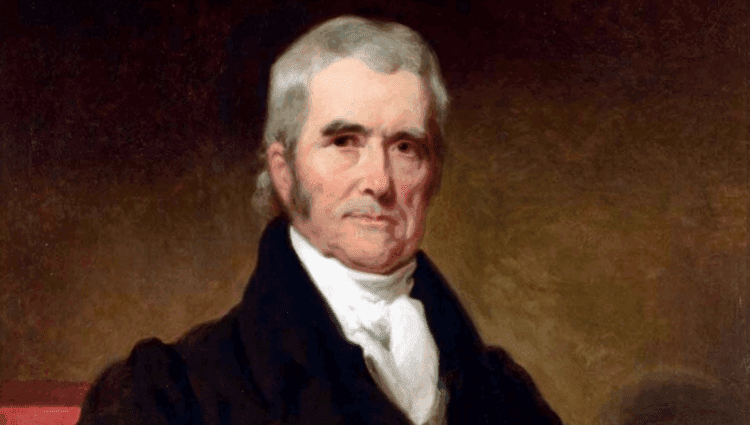
If we could explain to him what executive orders of a President mean today and what jurisdiction the district courts now have, what would the great John Marshall have said about the Supreme Court’s opinion limiting the power of the district judges to issue universal or nationwide injunctions? Introduction In June, the United States Supreme [...]

Did Edmund Burke Support the American Revolution?

By |2025-07-18T14:51:44-05:00July 18th, 2025|Categories: American Founding, American Republic, Bradley J. Birzer, Conservatism, Declaration of Independence, Edmund Burke, History, Independence Day, Robert Nisbet, Russell Kirk, Senior Contributors, Timeless Essays|

Many conservatives have assumed that Edmund Burke was opposed to the American Revolution. It is, to my mind, an erroneous assumption. “Burke broke his agentship and went publicly silent on the American cause once war broke out,” Robert Nisbet claimed in his most definitive analysis of Edmund Burke, written and published in 1985. His fellow [...]

July 4, 1776: Congress Adopts the Declaration of Independence

By |2025-07-03T23:18:58-05:00July 3rd, 2025|Categories: American Founding, American Republic, American Revolution, Declaration of Independence, History, Independence Day, Thomas Jefferson, Timeless Essays|

The adoption of the Declaration of Independence of “the thirteen united States of America” on July 4, 1776 formally ended a process that had been set in motion almost as soon as colonies were established in what became British North America. The early settlers, once separated physically from the British Isles by an immense ocean, [...]

The Humane Republic: Cato and Cora

By |2025-03-14T17:15:28-05:00March 14th, 2025|Categories: American Founding, American Republic, Books, Bradley J. Birzer, Cato, Joseph Addison, Slavery, Timeless Essays|

Two great works of republican literature, though separated by almost exactly a century, give us an important insight into the republican mind. The first, Joseph Addison’s play “Cato,” found a receptive and devoted audience among American founders such as George Washington, Nathan Hale, and Patrick Henry. During his famous and well-attended University of Pennsylvania lectures [...]

The Constitutional Thought of Thomas Jefferson

By |2025-03-09T21:43:13-05:00March 9th, 2025|Categories: American Founding, American Republic, Books, Constitution, Republicanism, Thomas Jefferson|

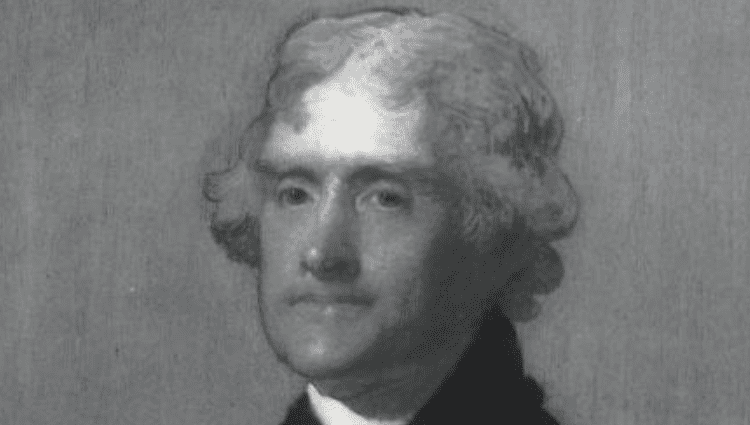
Were the actions of Thomas Jefferson as president consistent with his constitutional theory? David N. Mayer’s account raises fundamental but unanswered questions. The Constitutional Thought of Thomas Jefferson by David N. Mayer (416 pages, University of Virginia Press, 1995) Thomas Jefferson continues to fascinate scholars. A voluminous literature examines his long public career and extensive comments on [...]

Celestial Courtroom: America at the Judgment of the Nations

By |2025-02-28T15:44:01-06:00February 28th, 2025|Categories: American Founding, American Republic, Barbara J. Elliott, Featured, Fiction, Secularism, Timeless Essays|

Through unnamed sources involved in the proceedings, these notes were smuggled out of the Celestial Courtroom, where the ongoing evaluation of the Nations takes place in Committee Hearings in preparation for the Final Judgment. St. Peter was the presiding Chairman, Senator Screwtape the first witness. [Classified Top Secret, Embargo on Distribution] St. Peter: We are [...]

Go to Top