Ordering Love: Liberal Societies and the Memory of God

by Winston Elliott IIIDavid Schindler

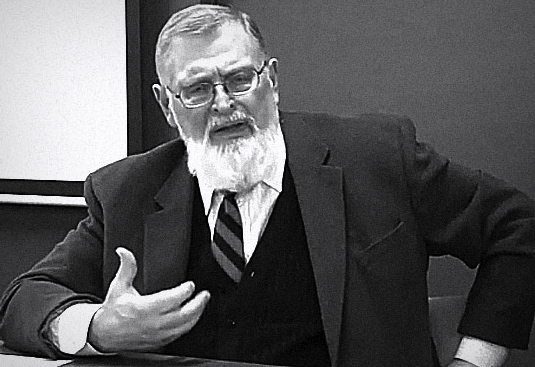
David Schindler, in Ordering Love: Liberal Societies and the Memory of God sees this as a technological age not simply because of technological advancements but because of the way we think as the result of our technological orientation. He shows, within the context of politics, economics, science, and cultural and professional life generally, that God-centered love is what gives things their deepest and most proper order and meaning…

Available from The Imaginative Conservative Bookstore. [Read more...]

Wit & Wisdom of Imaginative Conservatives (Feb 9-15)

by Winston Elliott IIITIC mug side 1

The Imaginative Conservative began the week with Brittany Baldwin’s consideration of poverty and The Conservative Call to Compassion: Poverty, Charity, and the Dignity of the Human Person. Next, Daniel McInerny sharpened his witty blades On Popular Fictions, Or How I Learned to Relax and Enjoy Downton Abbey. Then we heard from Russell Kirk on what T.S. Eliot called The Permanent Things. We went on a search with Robert Woods to find the divine in common spaces in A Christian Humanistic Devotional? Hallowed Be This House. [Read more...]

Clockwork Blues: Hubris, Humility & The Minimum Wage

by Darrin Mooreminimum wage

President Obama buttered up the American taxeaters with his syrupy State of the Union address on Fat Tuesday night by tabling a massive stack of new spending proposals that are selling like hotcakes with folks who will never have to pick up the tab.  If enacted, these proposals will pancake employers, batter investors, and will flip employees from the frying pan into the fire.

Additionally the president audaciously asserted that all his profligacy would add not a single dollar to the deficit (repeating a broken promise he made more than five trillion ago).  So naturally the chorus of progressives who have been on the Obama bandwagon long before it started carrying a tune were out trumpeting the president’s big easy plans to put more people on the gravy train.  They are proposing an expensive party to let the good times roll while our economy remains in the gutter, our debt rises past the high water mark, and the levee is about to break.  We may already be swamped, so plugging holes wherever we can kind of feels like perhaps we’re just rearranging the decks chairs on a sinking ship, if you’ll excuse the cliché. [Read more...]

Children’s Literature and the Spirited Element

by Daniel McInerny

Children’s LiteratureAdmirers of C.S. Lewis’s The Abolition of Man (of which I am one–it is, for me, Lewis’s most compelling work of non-fiction), will remember that the inciting incident of his argument is a school textbook he calls, in order to save its authors from embarrassment, The Green Book. The moral theory Lewis discovers lying like a snake in the grass between the lines of The Green Book is “emotivism,” the theory that all judgments of value are mere expressions of emotion, rather than responses that may be either true or false, good or bad, depending on how adequate they are to reality. Because judgments of value are only expressions of emotion, The Green Book’s authors conclude that all judgments of value are trivial. In contrast, Lewis defends a morality, and a theory of moral formation, rooted in what he calls the Tao–which is to say, an ethic based upon natural law. [Read more...]

Read Christopher Dawson or Russell Kirk, Not Hoffman

Russell Kirk

Bradley J. Birzer

by Bradley J. Birzer

A few weeks ago, I had the opportunity to review Lord Percy’s Heresy of Democracy, a book Russell Kirk considered essential for an understanding of conservatism in the 1950s.  Another book he had in list that was more or less unfamiliar to me was Ross J.S. Hoffman’s The Spirit of Politics and the Future of Freedom (Milwaukee, WI, 1950). I’ve had the opportunity to read a few of Hoffman’s smaller pieces, and he and Kirk considered each other with admiration.  They corresponded frequently, and Kirk looked at Hoffman in the same manner as he looked at Leo Strauss.  Both were senior scholars to be approached for their advice as well as their blessing on his own endeavors. [Read more...]