Faith and Marriage Under Attack

by Stratford Caldecott

MarriageOn both sides of the Atlantic, we are witnessing a concerted attack on Christianity and on the institution that the Church deems the fundamental cell of society, namely the family founded on the marriage of a man and a woman. In the US, Archbishop Chaput and other bishops have reacted strongly to the “contraception mandate” – the plans of the Obama administration to force Catholic agencies indirectly to fund contraception and abortion services. In the UK, the High Court ruled “unlawful” the practice of local town councils to open their meetings with a prayer. A government scheme permits girls as young as 13 to receive secret contraceptive implants at school without the knowledge of their parents. Meanwhile the Archbishop of Canterbury has warned against the movement to legalize assisted suicide or euthanasia as representing a disastrous shift in the “moral and spiritual atmosphere”. In both the US and UK, where homosexual unions are increasingly regarded as normal, pressure is growing for the right to homosexual “marriage”, contrary to the dictionary definition as well as the longstanding universal tradition that marriage is a lifelong union between a man and a woman, ultimately for the sake of offspring. (The question of offspring has been blurred by the development of IVF and surrogacy, and the question of same-sex unions by gender “reassignment”, whether by legal decree or by surgery.) See Christian Concern for these and other relevant news stories. [Read more...]

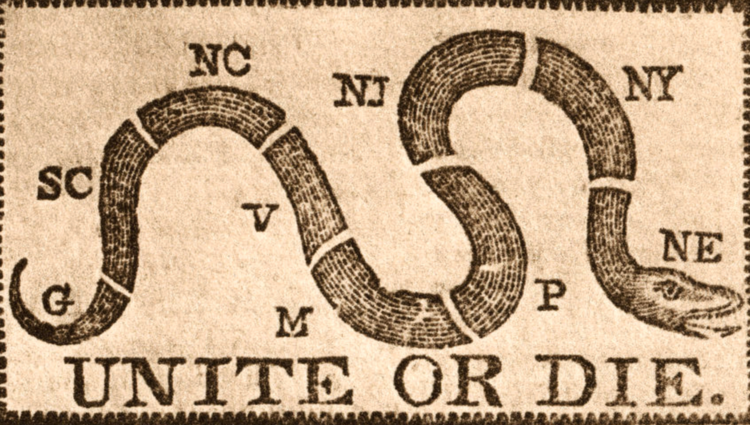
History of State’s Rights, 1774-1817

by Brad Birzer

Rights

Brad Birzer

On the eve of the American Revolution, most American thinkers had embraced the idea of all rights (and, therefore, sovereignty) being inherited.[1] Americans, as brothers and descendents of Englishmen, were entitled to the rights inherited from the English through the development of Anglo-Saxon common law and through the several political battles, such as those witnessed most blatantly with King John signing the Magna Carta in 1215, the development of Parliament in the thirteenth and fourteenth centuries, and the ascendancy of Parliament in the Glorious Revolution of 1688. Parliament not only embodied the will of the people, but it also served as the ultimate authority and the sovereign, at least in conjunction with the Crown. Americans, prior to the fall of 1774, saw themselves in this tradition, inheriting the rights of the common law and of Englishmen. The legal scholar and future signer of the Declaration of Independence, Charles Carroll of Carrolton, put it succinctly:

How came many unconstitutional powers to be exercised by the crown, and suffered by parliament? for instance, the dispensing power—the answer is obvious; it required the wisdom of ages, and accumulated efforts of patriotism, to bring the constitution its is present point of perfection; a thorough reformation could not be effected at once; upon the whole fabrick is stately, and magnificent, yet a perfect symmetry, and correspondence of parts is wanting; in some places, the pile appears to be deficient in strength, in others the rude and unpolished taste of our Gothic ancestors is discoverable.[2] [Read more...]

A Player Piano for the Twenty-First Century

by Gary L. Gregg II

PianoPlayer Piano by Kurt Vonnegut, Jr.

I have long resisted reading Kurt Vonnegut. In this life of finite time and seemingly infinite and ever expanding good things to read, his biography or writing just did not seem enough to clear the bar to justify pushing some other unread book aside. I am very glad, however, that I found the excuse and the time this winter break to read Vonnegut’s Player Piano.
 
Vonnegut, born in Indianapolis, Indiana in 1922, published Player Piano in 1952 (though to encourage book sales among science fiction readers, it was originally published with the meaningless title of Utopia 14). At thirty years old, this was Vonnegut’s first novel and comes seventeen years before his most famous Slaughterhouse Five. In an early 1970s interview, Vonnegut gave more than mere inspirational credit to Huxley’s Brave New World for his plot, though he also talked about his time working in a General Electric factory as providing additional source material.