Balancing the Universal and the Particular in American History

western tradition american history

Brad Birzer

by Bradley J. Birzer

Certainly, as John Willson and others have argued throughout their professional careers, one of the greatest problems of western civilization has been its attempt to balance universal truths (not necessarily limited to the transcendent and divine truths, but timeless and universal nonetheless) with particular, cultural expressions of those truths.

Throughout the history of our civilization, we tend toward one or the other.  If we err toward too much universalism, we lose our proper sense of diversity or what Russell Kirk called “the principle of proliferating variety.”

If we focus too much on the particular, we become bigots, nationalists, and racists. [Read more...]

The Equality Racket

by Patrick J. Buchanan

Our mainstream media have discovered a new issue: inequality in America. The gap between the wealthiest 1 percent and the rest of the nation is wide and growing wider.

This, we are told, is intolerable. This is a deformation of American democracy that must be corrected through remedial government action.

What action? The rich must pay their fair share. Though the top 1 percent pay 40 percent of federal income taxes and the bottom 50 percent have, in some years, paid nothing, the rich must be made to pay more.

That’s an appealing argument to many, but one that would have horrified our founding fathers. For from the beginning, America was never about equality, except of God-given and constitutional rights.

Our revolution was about liberty; it was about freedom.

The word equality was not even mentioned in the Constitution, the Bill of Rights or the Federalist Papers. The word equal does not make an appearance until the 14th Amendment’s equal protection of the laws after the Civil War. The feminist’s Equal Rights Amendment was abandoned and left to die in 1982 after 10 years of national debate.

When Thomas Jefferson wrote that memorable line — All men are created equal — he was not talking about an equality of rewards, but of rights with which men are endowed by their Creator. He was talking about an ideal.

For as he wrote John Adams in 1813, Jefferson believed nature had blessed society with a precious gift, a natural aristocracy of virtue and talents to govern it. In his autobiography, a half decade before his death in 1826, he restated this idea of the aristocracy of virtue and talent which nature has wisely provided for the direction of the interests of society.

Equality, egalite, was what the French Revolution, the Bolshevik Revolution, Mao’s Revolution of 1949, Castro’s Revolution of 1959 and Pol Pot’s revolution of 1975 claimed to be about.

This was the Big Lie, for all those revolutions that triumphed in the name of equality were marked by mass murders of the old ruling class, the rise of a new ruling class more brutal and tyrannical, and the immiseration of the people in whose name the revolution was supposedly fought.

Invariably, Power to the people! winds up as power to the party and the dictator, who then act in the name of the people. The most egalitarian society of the 20th century was Mao’s China. And that regime murdered more of its own than Lenin and Stalin managed to do.

Inequality is the natural concomitant of freedom.

For just as God-given talents are unequally distributed, and the home environments of children are unequal, and individuals differ in the drive to succeed, free societies, where rewards of fame and fortune accrue to the best and brightest, must invariably become unequal societies.

In the 19th and 20th centuries, no nation achieved greater prosperity for working men and women than the United States, where all were born free, but equal only in constitutional rights.

Yet, though inequalities of income and wealth have endured through the history of this republic, each generation lived better and longer than the one that came before.

That was the America we grew up in. As long as life for the working and middle classes was improving, who cared if the rich were getting richer?

Todays new inequality is due to several factors.

One is a shift from manufacturing as the principal source of wealth to banking and finance. A second is the movement of U.S. production abroad.

This has eliminated millions of high-paying jobs while enriching the executives and shareholders of the companies that cut the cost of production by relocating overseas.

With globalization, the interests of corporations — maximizing profit — and the interests of the country — maintaining economic independence — diverged. And the politicians who depend on contributions from executives and investors stuck with the folks that paid their room, board and tuition.

Yet, behind the latest crusade against inequality lie motives other than any love of the poor. They are resentment, envy and greed for what the wealthy have, and an insatiable lust for power.

For the only way to equalize riches and rewards in a free society is to capture the power of government, so as to take from those who have, to give to those who have not.

And here is the unvarying argument of the left since Karl Marx: If you give us power, we will take from the rich who have so much and give it to you who have so little. But before we can do that, you must give us power.

This is the equality racket. As Alexis de Tocqueville wrote:

The sole condition which is required in order to succeed in centralizing the supreme power in a democratic community, is to love equality, or to get men to believe you love it. Thus the science of despotism, which was once so complex, is simplified, and reduced … to a single principle.

When they come preaching equality, what they want is power.

Originally published January 11, 2011. Appears here by permission of the author.

Virginia’s American Revolution: From Dominion to Republic

American Revolutionby Kevin R. C. Gutzman

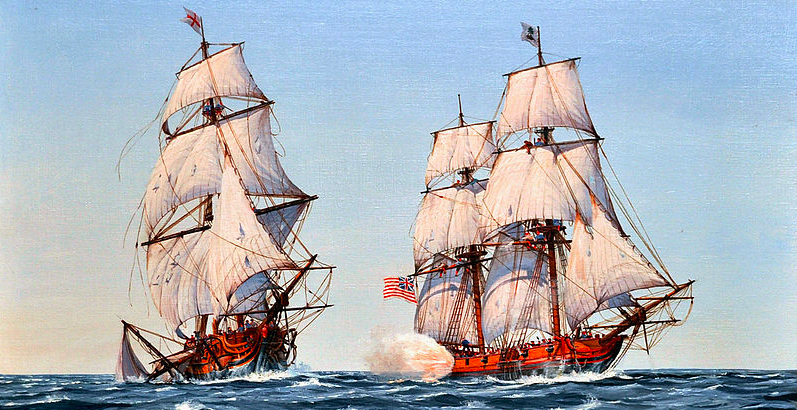
Virginia’s revolutionary May Convention adopted its three resolutions of May 15, 1776. In doing so, it decided to craft a declaration of rights, a republican constitution, federal relations with other former British colonies in the New World, and foreign alliances for the fledgling Virginia republic. It did more than that, however:  it also touched off a decades-long dispute about the meaning of republican self-government, about the shape the Virginians’ new republic would take. On the mid-May day that it ran up a continental union flag atop the old colonial capitol at Williamsburg, James Madison said, Virginia staked its claim to self-government.  What proved more difficult was deciding what self-government would mean.

The American Revolution proceeded simultaneously on two levels:  the state and the federal. The federal Constitution ratified in 1788 provided an international context in which the sparsely populated, weak new states could conduct the experiment in republicanism the Revolution was meant to inaugurate,[1] and the founding of the federal republic has naturally drawn the bulk of historians’ attention. While federal reform was essential, and while Virginians took the lead in achieving it, the state-level activity of those years struck contemporaries as more important. As Thomas Jefferson noted in 1776, independence would have been for naught without success in state-level reforms of government and society.[2] [Read more...]

What Holds America Together?

by Robert Speaight
americaThe Roots of American Order by Russell Kirk. [Revised edition: ISI 2003, 534 pages]

The President of a great American university told me not long ago that most of his students shared the opinion of Mr. Henry Ford: history was “bunk.” They would not have said that about heredity, which is supposed to unload the sins of the children upon the fathers, and cheerfully to leave them there.

Yet history, read as what has mattered and not only as what has happened, is simply another name for heredity. This important book by Dr. Russell Kirk is a study in the heredity of the United States. Its publication at a time when America is preparing to celebrate the bicentenary of its independence is a significant event. No doubt we shall be hearing a good deal about the American “revolution,” but Dr. Kirk shows convincingly that no revolution was less revolutionary than the War of Independence. The last thing the Patriots of the Thirteen Colonies wanted was to turn things upside down; all they wanted was to leave them as they were, but in the hands of a capable English gentleman called George Washington instead of an incapable English king called George III. [Read more...]

Mexico Way

by John Willson

Mexico Way (by Chilton Williamson, Jr.; Chronicles Press, 2008)

This is a way cool novel, as several of my grand daughters would say. Chilton Williamson, Jr. who grew up in the wilds of New York City and after many missed steps found himself to be a cowboy, is one of the best writers that too few people know about.

Mexico Way is about almost redemption. The character is “Samuel Adams White, retired inspector with the United States Customs Bureau.” His wife dumps him: “I think that you are the most boring human being I’ve known ever.” And then he gets kidnapped by Mexican drug-runners because he had made a stupid mistake and offended their honor.

He knew very little about Mexico before his abduction, despite working along the border for an entire career. In that sense he is a metaphor for most Americans, and he learns the hard way.

His name is never again mentioned after page 12. He is “the inspector.” He dies, more or less, is resurrected, baptized in a hilarious and terribly painful way, gets bitten by the snake from the (really funny) garden, and through all kinds of adventures–bullfights, priests, terrible and marvelous women–almost finds his soul.

I do not want to reveal more. Mr. Williamson is one of our truly great writers. If you want to warm up to Mexico Way read his Desert Light, or his wonderful nonfiction book on immigration.

Fascism: A Precursor to Postmodernism

fascismby Bill Crouse

You hear the word fascism bandied about in the press and media quite a bit nowadays but almost always as a pejorative describing one’s enemy.[1]  Zeev Sternhell says, “The label fascist has become the term of abuse par excellence, conclusive and unanswerable.”[2] It is also the ultimate way to insult an opponent though no one ever claims the label. Unfortunately, its increased usage today is not accompanied by a proper or historical understanding of the term. When most people think of fascism today, they think of an egomaniacal fuhrer, or possibly an ideology that was defeated in WWII, and more recently espoused by uneducated skinheads or militants in northern Idaho. The most common, but largely false and simplistic answer given to the question, What is Fascism? is: The extreme right wing of the political spectrum, i.e., conservatism, or, the polar opposite of Marxism. The term itself originates from the Latin; fasces, literally meaning: the bundle of rods sporting an axe-head that symbolized the unchallenged state authority of Rome. (You can see this symbol on the backside of a silver Mercury dime, cir. 1916). Later it came to mean: high office or supreme power or command. The first apparent use of the term: Fascist, was by Benito Mussolini when he formed the Fascist Party of Italy in 1919. [Read more...]

Only Mozart

by Joseph Sobran

mozart

Wolfgang Mozart

Some guys have it and some guys don’t. Wolfgang Amadeus Mozart, now over 250 years old, obviously had it. By age eight he was already writing symphonies you can still hear on the radio. And there is no sign that the Mozart fad will blow over very soon.

A couple of years later he was writing operas, which culminated, for me, in The Magic Flute toward the end of his short life. To my mind the saddest fact in musical history is that he died at 35. Nobody can imagine what his inexhaustible imagination would have produced if he’d been granted another five years. If he’d lived to threescore and ten, there would have been no need for Beethoven, whom I also adore. [Read more...]

The Revolutionary Conservatism of Jefferson’s Small Republics

by Arthur J. Versluis

jefferson

By the early twenty-first century, Americans had become accustomed to, even took for granted, virtually everything against which George Washington and Thomas Jefferson had warned: gigantic public and private debt, a massive national government, entangling foreign alliances, a standing army, undeclared war in the form of military interventionism, the destruction of American agrarianism, and the list goes on. What some called a “New World Order,” others an “Imperial America,” had become very nearly the equivalent of the former Soviet Union: a huge, unwieldy, unsustainable, bureaucratic, increasingly totalized state. Given the gigantism of the American state by the beginning of the twenty-first century, one finds it hard to recall that this was not always the case, that indeed, even fifty years before, let alone a hundred and fifty, the American polis was weighted much more toward the local and regional than to the national government. In the course of its history, the very notion of an American confederation had been lost. In what follows, we will explore and seek to recover the revolutionary conservative principle of Jeffersonian American autonomy.

I have elsewhere pointed out that by the early twenty-first century United States, the terms “Left” and “Right,” though used often enough polemically, no longer could be clearly differentiated as regards centralization of state power. Up to the mid-twentieth century, the Old Right conservatives stood in the Jeffersonian tradition that encouraged confederation and local or regional rather than national authority, and opposed, for instance, the New Deal. But already in January of 1952, the outlines of a “New Right” began to appear, when William F. Buckley wrote in Commonweal that “we have to accept Big Government for the duration—for neither an offensive nor defensive war can be waged given our present government skills, except through the instrument of a totalitarian bureaucracy within our shores…. And if they deem Soviet power [or terrorism, or whatever, one might add] a menace to our freedom…they will have to support large armies and air forces, atomic energy, central intelligence, war production boards, and the attendant centralization of power in Washington.” By the early twenty-first century, such a perspective had manifested itself clearly in the second Bush administration, which oversaw a “centralization of power in Washington” like none before.
In the meantime, what became known as the New Left, from the 1960s onward, became identified at least to a significant extent with opposition to what President Eisenhower had warned against, the military- industrial complex. Up to this period, such opposition belonged primarily to the Old Right—but by the end of the twentieth century, opposition to the merged power of corporations and of the American military was to be found almost entirely on the Left. A figure like Noam Chomsky, for example, oftentimes seemed to stand nearly alone as a critic of the centralized American military-industrial state—and what is more, by the early twenty-first century, was being bitterly attacked from the “Right,” by someone like David Horowitz, who thirty years before had identified himself as on the “Left.” Such a situation is, in terms of basic principles, approaching a Babel of confusion. It would seem that the Left had become identified with the critique of centralized power, and the Right had become its defender, precisely the reverse of what had been the case earlier in the twentieth century.
One might suggest, cynically but with considerable accuracy, that whatever side is in power is in favor of centralizing power for themselves. Thus, during the Roosevelt era, the critics of centralized power were on the Right—yet when the pendulum of power swung to the other side at the end of the twentieth and early twenty-first centuries, then it was the Left who largely stood against centralized military-industrial power. Who could doubt, really, that if the Left had been given the reins of power in the United States during this period too, its representatives would seek to enforce its own dictates and undoubtedly would not have an agenda of dismantling the very state and all its perquisites that they had so recently won? On the question of centralizing state bureaucratic power, “Left” and “Right” are in fact fundamentally similar: the opposition only comes from those who are not in power. From this perspective, the tendency of national government to accrue ever more power cannot be arrested, let alone reversed.
What we do see, in other words, is the seemingly unstoppable growth of what Paul Gottfried and others have termed the “managerial state.” Having generated a gigantic national bureaucracy of education, or of entitlement programs, or of the military-industrial-security apparatus, that apparatus continues regardless of who is in putative power. Indeed, when the “Right” is in charge, the power of the national government to mandate programs and requirements to the states— and the transfer of a whole range of powers from state to federal courts—actually increases, as is evident in the 1980s and again in the early twenty-first century. What endures and grows is the centralized managerial state, which corresponds to and indeed dovetails with the managerial, centralized structure of huge, multinational corporations.
And, of course, there is the related problem—diagnosed with considerable accuracy by Carl Schmitt during the Weimar Republic of the 1920s—that we may term the paralytic nature of parliamentary liberalism. During the Weimar Republic, legislators spent a great deal of time in discussion and posturing, but were unable to address the fundamental problems of the period. Close study of the fin de siècle United States Congress and the executive branch reveals a similar if more exaggerated dynamic: much posturing and mugging for cameras on the part of legislators or presidents, but when it comes to all the fundamental issues of the day, one sees only a continuation of the status quo. A skyrocketing national debt, massive individual and corporate indebtedness on a scale never seen before in history, a deteriorating natural world, and a seemingly total inability to encourage conservation of energy: here are the fundamental problems of the day, yet both the national legislature and the executive branch were incapable of addressing them because, in large part, their policies were to a significant degree responsible for those very problems.
Given the brief history to which we have alluded here, it is self-evident that while political power is cyclical—Democratic partisan power wanes, and Republican power waxes, or the reverse—one can see a larger pattern in which the national government gathers more and more power to itself. In times of economic distress, like the economic depression of the 1930s, that power accrues to those who propose that the national government can protect citizens economically; and in times of security threats, as in the 2000s, that power accrues to those who propose, once again, that the national government can protect citizens if only more power is given to it. But it is only natural that if power is accrued in one place, it is drawn from another. This is the real and much longer term cycle of power. Ascension to national legislative, executive, and judicial hegemony of Democrats or Republicans is, from this longer perspective, only ancillary to the larger question of whether power is flowing inexorably toward the national government, or away from it. The course of the twentieth and early twenty-first century shows only the former course of centralization of power.
That authority is drawn from somewhere. From where, you ask? The answer, of course, is from states, regions, localities, families, and individuals. The more that the national government claims authority to issue all manner of ever-expanding legislative and executive or judicial edicts, the less authority is vested in what Jefferson called the “little republics” upon which the American republic as a whole depends. Thus, when power rests with the local community or the state, so too there rests responsibility and accountability. But the more that the national government issues edicts—always in the name of some greater good and draped with moralizing, often hypocritical rhetoric—the less authority rests with states, communities, and individuals. Eventually, the national government issues edicts concerning whether one can live or die, whether one ought to wear a restraining belt in a vehicle, whether a state court can rule on what is in its obvious jurisdiction—the list multiplies with extraordinary rapidity.
There can be no doubt that the Founding Fathers considered the authority of individual states to be extremely important. We will recall that the first two of the Articles of Confederation are these: “Article I. The Stile of this Confederacy shall be ‘The United States of America.’ Article II. Each state retains its sovereignty, freedom, and independence, and every power, jurisdiction, and right, which is not by this Confederation expressly delegated to the United States, in Congress assembled.” From this we can see that the first substantive point of the Articles of Confederation—agreed to by Congress November 15, 1777; ratified and in force, March 1, 1781—was none other than to protect the authority of the individual states. The same authority was protected in the Constitution’s Tenth Amendment on the Powers of the States and People, which reads “The powers not delegated to the United States by the Constitution, nor prohibited by it to the States, are reserved to the States respectively, or to the people.” Thomas Jefferson made interpretation of this statement absolutely clear: “The States supposed that by their tenth amendment, they had secured themselves against constructive powers.”[1] Even more explicitly, he wrote “I consider the foundation of the Constitution as laid on this ground: That ‘all powers not delegated to the United States by the Constitution, nor prohibited by it to the States, are reserved to the States or to the people.’ To take a single step beyond the boundaries thus specifically drawn around the powers of Congress, is to take possession of a boundless field of power, no longer susceptible of any definition.”[2]
Jefferson furthermore held that the federal government had authority over foreign affairs, while the states had authority over domestic affairs. He insisted that “To the State governments are reserved all legislation and administration in affairs which concern their own citizens only, and to the federal government is given whatever concerns foreigners or the citizens of other States; these functions alone being made federal. The one is the domestic, the other the foreign branch of the same government; neither having control over the other, but within its own department. There are one or two exceptions only to this partition of power.”[3] Jefferson added, “With respect to our State and federal governments, I do not think their relations correctly understood by foreigners. They generally suppose the former subordinate to the latter. But this is not the case. They are coordinate departments of one simple and integral whole.”[4] Such an interpretation of the relations between state and national authority no doubt appears radical today, but Jefferson laid great emphasis upon it.
What happened to the state powers? As Thomas Jefferson put it in a letter to James Monroe in 1797, “The system of the General Government is to seize all doubtful ground. We must join in the scramble, or get nothing. Where first occupancy is to give right, he who lies still loses all.”[5] To John Taylor, Jefferson wrote already in 1798 “It is a singular phenomenon that while our State governments are the very best in the world, without exception or comparison, our General Government has, in the rapid course of nine or ten years, become more arbitrary and has swallowed more of the public liberty than even that of England.”[6] It is clear that already before the turn of the nineteenth century, Jefferson worried about the absorption of more and more power by the national government. But the encroachment of national authority upon that of states and localities happened incrementally, and over the course of centuries, not decades. And what recourse is there for the states? Jefferson recommended a convention of the states in order that they might insist on retaining those powers to be otherwise usurped by the national government.[7]
It is clear, when we look over the course of American history through the nineteenth and twentieth centuries, that we see disproportionately more and more national power, but it is also clear that Jefferson today too would urge the reversal of that tendency, so that power flows back from the national toward state and local authorities. Later in life, Jefferson emphasized the importance of what he called the “little republics” as essential to the sustenance of an enduring larger republic. He wrote to John Cartwright that each ward or township should be like “a small republic within itself, and every man in the State would thus become an acting member of the common government, transacting in person a great portion of its rights and duties, subordinate indeed, yet important, and entirely within his competence. The wit of man cannot devise a more solid basis for a free, durable and well-administered republic.”[8] Wards are to be responsible for a local judge, “a constable, a military company, a patrol, a school, the care of their own poor, their own portion of the public roads.”[9] In his view, the strength of the republic as a whole—and for that matter, the vitality of the original American Revolution— lay nowhere but in the strength of the little republics.[10] Jefferson would have deplored the topsy growth of the national government.
Jefferson saw the townships or wards as the essential key to an enduring larger republic. He wrote that “There are two subjects, indeed, which I shall claim a right to further as long as I breathe: the public education, and the sub-division of counties into wards. I consider the continuance of republican government as absolutely hanging on these two hooks.”[11] In his autobiography, Jefferson also outlined this vision: “Every state again is divided into counties, each to take care of what lies within its local bounds; each county again into townships or wards, to manage minuter details; and every ward into farms, to be governed each by its individual proprietor…. It is by this partition of cares descending in gradation from general to particular that the mass of human affairs may be best managed for the good and prosperity of all.”[12] He even went so far as to write Joseph Cabell in 1816 that “As Cato then concluded every speech with the words, ‘Cathago delenda est,’ so do I every opinion with the injunction, ‘divide the counties into wards.’”[13]
But does the Jeffersonian vision have any currency in a world inclined so much toward gigantism in every sphere? One could certainly dismiss it as an historical artifact of the early republic, suitable for a period now long since gone and, indeed, forgotten. A township cannot be responsible for, say, a nuclear power plant and its ten-thousand-year nuclear waste; a township cannot be responsible for its part of a national highway system, or a huge university. It would seem that in a highly technological age—in which all aspects of society are bound together through the interconnected wires and frequencies of massive technical apparatus— a Jeffersonian republic is no longer possible. Only a totalizing state authority can be comparable in scope to the massive system of technics within which it exists, and in which the Jeffersonian township, from this view, is but an anachronism.
Given what happened to the American republic over the course of the twentieth century, one has to ask how one might reverse this flow of power. At first, the task would seem overwhelming and impossible. It would not be enough to call a convention of individual states, as Jefferson suggested in 1824, for after all, the fundamental composition of society has changed irrevocably. Jefferson assumes the primacy of the farming family, but by the end of the twentieth century, remaining farmers were so few as no longer even to have a space on the national census form! If 99 percent of the population or more does not farm, or even live on or near a farm, then the very foundation of townships or wards, as Jefferson saw it, is gone. It would seem that the fabric of society would need to change in order for a Jeffersonian republic to reappear. Would such a thing be possible? Again, it would appear not. Nor would it be likely that twenty-first-century American society could escape the consequences of usury and massive personal, corporate, and public indebtedness, nor of an unstable fiat currency, nor of the chaos and incredible wastefulness of globalist “free trade,” let alone of the destruction of farmland and of rural American life. Such a society is on a trajectory away from a Jeffersonian republic, not towards it.
What, then, does the Jeffersonian vision offer us? There are several possibilities. One is that the Jeffersonian republic represents an ideal that now must be realized somewhere other than in America. Since American society has gone so far in its trajectory away from the Jeffersonian ideal, one could argue that it is best to abandon any vestigial hope of restoration, and that instead the Jeffersonian vision might be realized somewhere else, in some other land where there are still small farms and vital towns where republican ideals could flourish. Proponents of such a view would argue that the Jeffersonian republic is not intrinsically American, but universal in nature, and that there is no inherent reason that it could not be realized in Italy, or in New Zealand, or in Russia, for example. We should not dismiss this possibility out of hand.
Yet one must wonder whether the Jeffersonian republic is entirely impossible in the United States. A major error of most recent political philosophers is to think only in the titanic terms common to the modern age, only of massive economic and political systems and grand, abstract terms that lend themselves to the sweeping and often destructive proclamations of distant rulers in Washington, Moscow, or Peking. But why is it not possible to begin to reverse the trend by concentrating on one’s own locale and region? Perhaps the problem is not that too many roads lead to Rome, but rather that we pay far too much attention to them, and not nearly enough attention to the roads that lead to our own locale. The Jeffersonian republic relies upon a foundation of educated, responsible local citizens. Citizens of suitable localities and regions need only begin to reassert themselves in their townships, counties, and states, and thereby alone they will begin to reverse the trend of power from the global or national back toward the regional and local.
Such a reversal is certainly possible. It is true that the twentieth century saw the precipitous decline and near-disappearance of American agrarianism. Furthermore, the twentieth century saw the profligate destruction of some of America’s richest farmland, which was covered with monotonous subdivisions and malls. But much good land still remained at the beginning of the twenty-first century, and indeed it remained possible, for those who wanted, to purchase a small farm, and to rebuild rural communities and towns. In the long term, such an agrarian renaissance is not a pipe dream, but a simple and straightforward necessity. It only makes sense that in a stable and truly prosperous society, food will be grown nearby, just as most manufactured goods will be built in one’s own region and not shipped around the globe.
How do we know that such a movement toward agrarianism and localism is possible? Agrarian localism continued throughout the twentieth century in the form of Amish and other Anabaptist communities; and it continued to exist in other pockets across the country. It exists, in fact, anywhere that local citizens have come together, created their own “little republic,” and begun to build a more prosperous and self-sufficient community right there where they live. Miner County, South Dakota, is an example: its citizens chose to emphasize raising cattle organically, and building wind turbines in order to create a stable local economy and to reverse the trend of depopulation that nearly overcame them in the latter twentieth century. Such a reversal has to be rooted in particular townships, counties, and regions, and it has to emerge from the commitment of citizens.
If indeed, as Jefferson envisioned, local communities are to be responsible for police, for local governance, for care of the poor, for schools, for a military company, and for roads, the desire for such responsibilities must originate from local citizens themselves. “Little republics” depend entirely upon the willingness of citizens to take responsibility for their community and region. State and national government should institute policies that encourage such local responsibility—or, to put it another way, they should refrain from inserting themselves into every local decision. A Michigan township spent more than a year fashioning a local ordinance concerning giant hog and chicken factories—only to have the Republican controlled legislature invalidate their ordinance with state-wide legislation that forbade local control over agri-industry. Why? Simple: because multinational corporations had purchased the cooperation of a sufficient quantity of state legislators. Each legislative or executive decision of this kind shifts power away from localities, and toward a centralized, often corrupt state or toward federal political operators. By contrast, a Jeffersonian republic would encourage enlightened local decisions.
Of course, there is a very real problem that remains. What if benighted and selfish representatives govern a township? That is a risk one has to take, but it is arguably less of a risk than that state or federal representatives might be inclined to make selfish, destructive decisions— because the range of impact is so much greater in the national or state than in the local case. Furthermore, township or county representatives are closer to their own constituents, who know them personally, are their neighbors, and are not as likely to let them get away with destructive policies. On balance, local and regional decision-making—though far from perfect—is less likely (for example) to export local manufacturing capacity to foreign lands, or to encourage the destruction of regional agriculture than are its distant and corpulent overlords in a profligate far-away Rome.
What we are exploring here is not some grand utopian scheme to be implemented by national fiat, but rather a profound change of emphasis that, to be successful, would take many decades to ramify and finally bear fruit. Given that it took over a century for the United States to centralize power in the national government and to divest itself of many family farms, small towns, and local manufacturing, no doubt it would be the work of another century to restore a prosperous, stable, and in the most profound sense of the word, a conservative America. Such a course of events would come about only through a gradual reorientation of power back toward local communities and regions, encouraged by national and state policies consciously intended to restore America’s little republics, policies driven not by the lucre of lobbyists, but rather informed by the fundamental principles outlined with such clarity by Thomas Jefferson.
We have tried the Hamiltonian experiment of centralized government, usury, and gigantism long enough. Surely it is time, somewhere, for the Jeffersonian vision to begin to reappear, like Polaris or the Pleiades emerging again from behind the clouds and orienting us toward a more balanced way of life, showing us anew the course that we must take. Jefferson recognized what was to happen, and wrote to Gideon Granger in 1800: “Our country is too large to have all its affairs directed by a single government. Public servants at such a distance, and from under the eye of their constituents, must, from the circumstance of distance, be unable to administer and overlook all the details necessary for the good government of the citizens; and the same circumstance, by rendering detection impossible to their constituents, will invite public agents to corruption, plunder and waste.”[14] The cure for this fatal disease of the polity is the noble tradition of American autonomy, for as Jefferson put it, “The wit of man cannot devise a more solid basis for a free, durable and well administered republic.”[15] It is high time that we begin to heed his wise and enduring advice.
Books mentioned in this essay may be found in The Imaginative Conservative Bookstore. 
Arthur J. Versluis is Chair of the Department of Religious Studies and Professor in the College of Arts & Letters at Michigan State University and is the author of The Esoteric Origins of the American Renaissance. Reprinted with the gracious permission of Modern Age (Winter, 2006).
Notes:
1. Jefferson to William Johnson, 1823. ME 15:450.
2. Jefferson: National Bank Opinion, 1791. ME 3:146.
3. Jefferson to John Cartwright, 1824. ME 16:47.
4. Jefferson to John Cartwright, 1824. ME 16:47.
5. Jefferson to James Monroe, 1797. ME 9:423.
6. Jefferson to John Taylor, 1798. ME 10:65.
7. Jefferson to John Cartwright, 1824. ME 16:47.
8. Jefferson to John Cartwright, 1824. ME 16:46.
9. Jefferson to John Adams, 1813. ME 13:400.
10. Jefferson to John Tyler, 1810. ME 12:394.
11. Jefferson to Joseph C. Cabell, 1814. ME 14:84.
12. Thomas Jefferson, Autobiography (1821). ME 1:122.
13. Jefferson to Joseph C. Cabell, 1816. ME
14:423. 14. Jefferson to Gideon Granger, 1800. ME 10:167.
15. Jefferson to John Cartwright, 1824. ME 16:46.

The Real Business of Liberal Learning

by Mark A. Kalthoff

liberal learning

Mark A. Kalthoff

Just what is the business of a liberal arts college?  Is it to make well-rounded young adults, to equip the next generation with job skills demanded by a work-a-day world, or perhaps to train up Constitution-toting citizens in the ways of republican civic-mindedness?  Or is it something even more ambitions – making saints or saving the world?   On the other hand, might it be much simpler and a bit more crass?  Perhaps the aim of the college should be a fun-packed four years in residence at an activity-laden day-care center for pre-mature adults?  And yet, perhaps the business of a college properly considered is something else altogether. [Read more...]

It All Turns on Affection by Wendell Berry

by Winston Elliott III

wendell berry
Wendell Berry

In this lecture Mr. Berry challenges our assumptions about the economy, our culture and our place in the world. He also asks profound questions regarding our connections with each other and the environment. Will we seek to escape our limits and reconnect with nature, our families, our neighbors and our own humanity? All members of the TIC community will benefit from Mr. Berry’s wisdom. He begins his lecture approximately eleven minutes into the video.

“So I am nominating economy for an equal standing among the arts and humanities,” Mr. Berry said. “I mean, not economics, but economy, the making of the human household upon the earth: the arts of adapting kindly the many human households to the earth’s many ecosystems and human neighborhoods. This is the economy that the most public and influential economists never talk about, the economy that is the primary vocation and responsibility of every one of us…we do not have to live as if we are alone.” (text excerpt and link to full text below) [Read more...]

Adam and Eve After the Pill: Paradoxes of the Sexual Revolution

John Willson sexual revolution

John Willson

by John Willson

Winston has asked me to review books for TIC, and to ask you to help me with this project. I read hardcover books, softcover books, Kindle books, little kids’ books (one of my favorites is Reynard the Fox); almost anything that comes into my hands. We might have a small budget to get the right books into the hands of the right persons. I will be the monarch of that domain. We must review books that Winston Elliott and Brad Birzer would like, or that I would tell them they like.

Here is the first one.

Adam and Eve After the Pill: Paradoxes of the Sexual Revolution, by Mary Eberstadt (Ignatius Press, 2012)

The conclusion of this wonderful and difficult book is that Humanae Vitae got it all right. I don’t know Mary Eberstadt, but she writes like an angel, and so I would like to call her and say, “Thank you.”

Even though I am a historian by trade I’m not all that impressed by empirical evidence. Numbers just don’t get it. Mary tells us that men, women and children have all been worse off since the pill, and all the numbers say she’s right. So in this case I will grant numbers their due.

My dad was the last of the country doctors, and he knew, as he said to me many times before he died, that anything that changed the most powerful thing in the world, the life force in women, can’t be all good.

This short book, starting with a terrific chapter called “The Will to Disbelieve,” shows us that we have an almost infinite capacity to do what is wrong and call it right. Is there a connection between the Cold War and contraception/abortion? Yes.

The sexual revolution, she says with great energy, is the most important revolution of all time. It has devalued women. It has made men even dumber and more aggressive than we have always been. It has harmed our children, whom we have been put on this earth to defend, as we have been put on this earth to tend the garden.

But she says all this with grace, and with comparisons to smoking and food and obesity and pornography, a kind of cultural hope and charity that gives love a chance.

Books mentioned in this essay may be found in The Imaginative Conservative Bookstore. Essays by Dr. Willson may be found here.

John Willson, is a Senior Contributor to The Imaginative Conservative and professor of history emeritus, Hillsdale College. His work has been published in Modern Age, Imprimis, and the University Bookman, and he contributed to Reflections on the French Revolution (1990). Dr. Willson is past President of the Philadelphia Society and gives speeches regularly to various groups.

An Excerpt from: James Madison and the Making of America

by Kevin R. C. Gutzman


James Madison, Jr. entered the world at midnight of the night of March 16-17, 1751.[1] By chance, he was an American prince.


James Madison, Sr., the master of Montpellier in Piedmont Virginia’s semi-frontier Orange County, was the wealthiest man in the county. His lands were extensive, his slaveholdings were notable, and his family connections were impressive. In a society that privileged the wealthy to a notable degree, James, Jr.’s world was his oyster.

Piedmont Virginia lay west of the Tidewater region that had been dominated by Virginia planters for well over a century. Life was cruder there, and tradition less powerful. Social status figured very strongly in a young man’s life, but not to the degree that it did in the coastal counties. If James Madison, Jr. ever experienced having a common Virginian doff his hat as young Madison passed, then, he was not quite so snobbish as a Byrd, Carter, or Harrison. Still, like them, Madison knew his place.

As the scion of a prominent planter’s family, Madison—unlike most Virginia boys—received an enviable education. First, he attended a small school for sons of the elite in King and Queen County run by Donald Robertson. Next, from 1767-69, his father hired an Episcopal priest tutor to live at Montpelier as Madison’s, and possibly his siblings’, teacher.[2] Finally, aged 18, Madison went on to the College of New Jersey (now known as Princeton University). Along the way, Madison read widely in Greek and Latin. He imbibed strong republican sentiments, as well as a skeptical attitude toward office-holders.

Opting for Princeton was uncommon among Virginia blue bloods, and the reasons Madison ended up there are unclear. More commonly, boys of his class went to England’s Inns of Court or Scotland’s University of Edinborough for advanced professional training in law or medicine, or, like Thomas Jefferson, spent a few years at the colonial college, William and Mary. At William and Mary, nominally Episcopalian, the students were not notably studious and the curriculum was far from rigorous.

Princeton, on the other hand, had a president unlike anything in Virginia. Reverend John Witherspoon was a Presbyterian, a recent immigrant from Scotland.[3] As a matter of course, his attitudes about the relationship between church and states, government and religion, the conscience and society were different from those to which Madison would have been exposed at William and Mary. Witherspoon contributed substantially to the course of American philosophy through his devotion to the Scottish Enlightenment, then in full flower, and transmission of Scottish common-sense philosophy to America.

Witherspoon joined leading figures in Scotland’s philosophical establishment in accepting common-sense philosophy. This philosophy downplayed the utility of “metaphysical” thought, preferring hard-headed realism, and held that everyone carried the ability to achieve insight into the true and the good by applying his mental faculties to the world around him. Not books, but experience was the best guide.[4] In other words, Witherspoon was Aristotelian, not Platonic—with a vengeance, and he believed that the common man could participate in government along with the aristocrat.

Witherspoon taught, as a Presbyterian minister could be expected to do, that man was self-centered and not to be trusted. Among other sources for this teaching was the Scottish philosopher David Hume, with whom Witherspoon was not uniformly in tune. Famously, Madison would turn Hume’s teaching to good account in The Federalist #10—and, indeed, throughout his career. We can find many points of similarity between Witherspoon’s beliefs and Madison’s, but Madison clearly was not an undiscriminating student. For example, Witherspoon held state support of Christianity essential to the health of society and of Christianity, while Madison ultimately rejected that idea, with world-historic significance, as we shall see.[5]

Although he would later win acclaim for his learnedness, Madison was never a cold, calculating scholar. Rather, he always demonstrated an active sense of humor. Proof of this from his college days is provided by some poetry Madison contributed to an intramural dispute.

Princeton students, it seems, had organized competing literary/social clubs, the Whigs and the Cliosophians. Madison took the lead among Whigs in a doggerel war in 1771-72, contributing several poems to the ongoing conflict.[6] The editors of Madison’s papers infer that the Whigs were the socially elite group, while their rivals’ backgrounds often formed the grist for Whig mockery.[7] Among the choicest bits was this:

Keep up you[r] minds to humourous themes
And verdant meads & flowing streams
Untill this tribe of dunces find
The baseness of their grovelling mind
And skulk within their dens together
Where each ones stench will kill his brother.
In light of which, you can only imagine how Homeric the quality of the rest must have been. But I will spare you.

While at Princeton, Madison decided to study law on the side. He bought the books he thought he needed for that purpose and, in the fashion of those days, began to read them.[8] Very few American legal scholars took classes in law at the time. Instead, they commonly read leading texts and apprenticed to individual members of the bar. Madison’s course, then, was nothing unusual. Nor, I wager, was his experience. Madison’s first flush of tepid enthusiasm (in December 1773) soon gave way before the reality of legal study, which he described (in January 1774) as “coarse and dry.” Fortunately for him and for us, Madison seems to have abandoned his hobby almost instantly.

In 1772, Madison entered upon a very interesting correspondence with one of his Princeton classmates, Philadelphia’s William Bradford. Bradford, who one day would serve briefly as George Washington’s attorney general, broached subjects philosophical and religious with Madison, and the Virginian responded in kind.[9]

At this point, Madison was still prone, in the fashion of his Princeton instructors, to religious speculations and philosophical diversions. For example, Madison wrote Bradford at one point that, although of course young men would be ambitious, “Nevertheless a watchful eye must be kept on ourselves lest while we are building ideal monuments of Renown and Bliss here we neglect to have our names enrolled in the Annals of Heaven.”[10] Warming to the subject, Madison went on to say that, “As to myself I am too dull and infirm now to look out for any extraordinary things in this world for I think my sensations for many months past have intimated to me not to expect a long or healthy life, yet it may be better with me after some time tho I hardly dare expect it and therefore have little spirit and alacrity to set about any thing that is difficult in acquiring and useless in possessing after one has exchanged Time for Eternity.” Madison, aged 21, went on to advise his pal not to be swayed by the allure of “those impertinent fops that abound in every City to divert you,” but to stick to his resolution to study “History and the Science of Morals.” Fortunately, Madison said, his secluded perch in ultra-rural Orange County insulated him from such temptations, which “breed in Towns and populous places, as naturally as flies do in the Shambles.”

Bradford replied with an expression of concern for Madison’s health.[11] Little could he know that Madison would be fatigued and often on the verge of death for another 64 years. In their exchanges, Madison made clear that he respected the ministry and wished his friend would enter upon that profession; the editors of his papers infer that perhaps he would have liked to become a minister, if it were not for his health.[12] The twenty-two-year-old Madison also noted that, “I do not meddle with Politicks.” Events would soon bring a change in that sentiment.

In his letter of December 1, 1773, Madison struck out on a new path.[13] Since Bradford’s Pennsylvania was, along with New Jersey and Rhode Island, one of three colonies without established churches, Madison asked him to describe the Pennsylvania “fundamental principles of legislation” and “particularly the extent of your religious Toleration.” Bradford had finally decided to become an attorney, and Madison did not want to rush him. Rather, he asked him please to provide this information once he had “obtained sufficient insight.”

Displaying a systematic approach to political and philosophical topics that would soon be commented upon by his colleagues as characteristic of his statesmanship, Madison gave Bradford two specific questions to answer for him: 1) “Is an Ecclesiastical Establishment absolutely necessary to support civil society in a supream Government?” and 2) “how far is it hurtful to a dependant State?” Presumptuously, Madison suggested Bradford might attend to these issues “in the course of your reading and consulting experienced Lawyers & Politicians upon.” He awaited a report on “the Result of your reserches.”

Bradford’s next missive included an enclosure describing the Boston Tea Party of December 16, 1773.[14] Madison responded by saying that, “I verily believe the frequent Assaults that have been made on America[,] Boston especially[,] will in the end prove of real advantage.”[15]

This led Madison directly back to the issue of state churches that he had raised with his friend before: “If the Church of England had been the established and general Religion in all the Northern Colonies as it has been among us here,” he erupted, “and uninterrupted tranquility had prevailed throughout the Continent, It is clear to me that slavery and Subjection might and would have been gradually insinuated among us.” Next came the young Madison’s historic insight, the one that would soon reshape his world: “Union of Religious Sentiments begets a surprising confidence and Ecclesiastical Establishments tend to great ignorance and Corruption[,] all of which facilitate the Execution of mischievous Projects.”

Madison told Bradford that he wished to visit Pennsylvania “to breathe your free Air. I expect it will mend my Constitution & confirm my principles.” His unhappiness with his own colony had arisen from the fact that, “The diabolical Hell conceived principle of persecution rages among some,” including the Episcopal clergy. “This,” he moaned, “vexes me the most of any thing whatever.”

Madison provided Bradford the sad details: “There are at this [time?] in the adjacent County not less than 5 or 6 well meaning men in close Goal [jail] for publishing their religious Sentiments which in the main are very orthodox.” Apparently Madison had raised this issue (“squabbled and scolded abused and ridiculed”) among his Virginia compatriots without any positive effect. He closed by asking Bradford to “pray for Liberty of Conscience [to revive among us].” This, as history would prove, was a radically more liberal position on church-state relations than the “religious Toleration” invoked by Madison in his December 1 letter to Bradford.[16]

Madison returned to this theme again when next he wrote Bradford.[17] The May 1774 session of the Virginia General Assembly, he heard, was going to take up the matter of religious dissent. Baptist petitions and Presbyterian influence might well produce greater religious liberty. Madison doubted that any good would come of it, however, as discussion in the last session had thrown the enthusiasts (whom we would now call “Evangelicals”) in a bad light. Coming to the establishment’s defenders, he virtually spat upon the page, saying, “The Sentiments of our people of Fortune & fashion on this subject are vastly different from what you have been used to. That liberal catholic and equitable way of thinking as to the rights of Conscience, which is one of the Characteristics of a free people and so strongly marks the people of your province is but little known among the Zealous adherents to our [Episcopal] Hierarchy.” There were some legislators who were good men on this score, “but number not merit you know is necessary to carry points there.” Madison thought that the clergy, powerful thanks to its ties to English bishops and the king, would strenuously resist any relaxation of the established religion’s enforcement.

As he had before, Madison next contrasted Virginia’s establishment to the Pennsylvanian regime under which his friend lived. He envied Bradford, and that envy evoked from Madison an impassioned, youthful statement of his faith in religious freedom:

You are happy living in a land where those inestimable privileges are fully enjoyed and public has long felt the good effects of their religious as well as Civil Liberty. Foreigners have been encouraged to settle amg. you. Industry and Virtue have been promoted by mutual emulation and mutual Inspection, Commerce and the Arts have flourished and I can not help attributing those continual exertions of Gen[i]us which appear among you to the inspiration of Liberty and that love of Fame and Knowledge which always accompany it. Religious bondage shackles and debilitates the mind and unfits it for every noble enterprize every expanded prospect. How far this is the Case with Virginia will more clearly appear when the ensuing Trial is made.[18]

Beyond the question of the Virginia religious establishment and the treatment of dissenters, Madison in his correspondence with Bradford increasingly considered the growing Imperial Crisis.[19] In addition, he described news of Lord Dunmore’s War, a Virginian conflict with the Indians to the Old Dominion’s west. Finally, Madison told Bradford that he favored Virginia’s more confrontational approach in mid-1774 to the conciliatory measures advocated by Pennsylvania. In light of his criticism of Virginia’s religion policy, one cannot ascribe this preference to budding Virginia patriotism. Instead, it reflected young Madison’s personal feeling: the colonies must stand up, and Congress was the mechanism. Since Bradford lived in Philadelphia, he was able to keep Madison abreast of the latest news from that body.[20]

When the Congress closed, Madison wrote that Virginians “universally approved” of its actions because, “A spirit of Liberty & Patriotism animates all degrees and denominations of men.”[21] Another way of putting that is that all ranks in society and all religious affiliations stood for American rights. Further, Madison hazarded that, “Many publickly declare themselves ready to join the Bostonians as soon as violence is offered them or resistance thought expedient.” Virginians in some parts were organizing themselves into military units, and Madison wanted the entire colony on a war footing.

Madison wrote to Bradford excitedly the following May 9 with a description of the recent colonial response to Virginia Gov. Lord Dunmore’s seizure of the colonial gunpowder.[22] In those pre-bullet days, firearms required gunpowder, which was in short supply in the colonies, and so the governor’s action amounted to an attempt to disarm the colonial militia at a stroke. Madison was thrilled by the confrontation between the militia and the governor, and particularly by Patrick Henry’s forcing Dunmore to compensate Virginia for the powder. He also criticized the Tidewater planters who had urged moderation; as he lived in the Piedmont, Madison did not face the same military risks as did tobacco barons closer to the coast. They, not he, were close to the sea (hence the Royal Navy) and the governor.

When the leading men of Orange County decided to endorse Henry’s actions, they selected Madison to be their penman.[23] In four resolutions and a summary, Madison, his father, and their most prominent neighbors strongly criticized the governor and heaped praise upon Henry. Dunmore’s seizure, they said, had been “fraudulent, unnecessary, and extremely provoking to the people of this colony,” while the Hanover County volunteers’ “resentment” and “reprisal … highly merit[ed] the approbation of the public.” In case the governor attempted to recoup the money, the Orange County resolutions called on their delegates to see that the money be “laid out in gunpowder.”

The fourth resolution, finally, addressed a message to Henry and his followers (and through them, to the world). The governor’s insistence that he intended to return the powder had been untruthful, they said, and so they thanked the Hanover men for “your zeal for the honour and interest of your country.” By “your country,” note, Madison meant Virginia. The Orange County men added that Parliament’s recent Coercive Acts, while directed at Massachusetts, were really “a hostile attack on this and every other colony, and a sufficient warrant to use violence and reprisal, in all cases where it may be expedient for our security and welfare.” [emphasis added] If Parliament could close the port of Boston and reorganize Massachusetts’ democratic government into a military dictatorship, it could do the same to any other colony—including Virginia. Madison, his father, and their neighbors endorsed the use of whatever means came to hand to resist this outcome.

Fighting between British and colonial forces began at Lexington and Concord, Massachusetts on April 19, 1775. Through the rest of the year, Madison received several additional missives from Bradford passing along rumors about the war and events in Congress. In October 1775, Madison was selected by the Committee of Safety—Virginia’s Executive Branch in the days after Lord Dunmore fled the colony—as colonel of his county’s militia.[24] That made him second in command to his father, the county lieutenant. However, as Madison recalled in his old age, he was both generally infirm and prone to “sudden attacks, somewhat resembling Epilepsy, and suspending the intellectual functions.” Therefore, he seems never to have served in the Revolution.[25]

The first office young Madison did perform was that of delegate to the Virginia Convention, the Legislative Branch of Revolutionary Virginia down to the implementation of its 1776 constitution. He won election for a one-year term on April 25, 1776.[26] Soon thereafter, on May 15, the Convention adopted resolutions saying that a declaration of rights, a republican constitution, federation with other colonies, and alliances must be adopted. That night, Williamsburg celebrated Virginia’s independence “with a military display ‘of great exactness,’” as a continental Union flag replaced the Union Jack over the Virginia capitol.[27] “The city was brilliantly illuminated,” and the citizens provided the soldiers a fabulous feast.[28]

It was the Convention’s decision to adopt a permanent republican constitution that made Virginia independent. Madison considered Virginia independent from May 15, 1776 as well.[29]

It seems that Madison prepared for the constitution-writing task before him by assembling materials on the other colonies’ constitutional systems.[30] In time, his diligent application would win him a reputation as consistently the best prepared and most knowledgeable (if not always the most perspicuous) man in American politics. Princeton had prepared him well.

The Virginia Convention of 1776 is largely forgotten now. It was, as John Adams might have said, an epochal event. That Convention adopted the Virginia Declaration of Rights, the first American declaration of rights, and the Virginia Constitution of 1776, the first written constitution adopted by the people’s representatives in the history of the world. In Virginia legislative bodies, inexperienced members were expected to hang back and allow senior members to do the important work. Yet Madison, though a very junior member of this august assemblage, played a highly significant role. Arguably, his accomplishment in that body was the most significant of his entire storied career.

The Declaration of Rights served as the foundation of the Constitution. It laid out the principles on which Virginia’s elite agreed that republican government ought to be based. Madison served on the committee that drafted the Declaration and the Constitution, whose leading member was the widely respected senior statesman George Mason.

Mason, master of Gunston Hall on the Potomac River, was among the most learned men in a Virginia ruling class spangled with highly educated people. His political principles owed much to the English Whig tradition, which based claims to individual and communal rights on a particular reading of English legal and political history. Unsurprisingly, with men of that turn of mind at its head, the Convention established the Old Dominion’s new republican government on a firmly English foundation.

In the Glorious Revolution of 1688-89, England first expelled it king, then adopted a Bill of Rights as the foundation of its government. Only when they had agreed to abide by the Bill of Rights were William III and Mary recognized as England’s new joint monarchs.

Mason, who called himself a man of 1688, had Virginia do the same thing. As Dunmore (and through him, King George III) had fled the colony, and as the king had declared that the colonies were in rebellion and beyond his protection, the first step—removal of the king—had been taken for them. Next came the task of drafting a declaration of rights.[31] According to Madison, Mason drafted the committee version.[32]

The Preamble said, “A DECLARATION OF RIGHTS made by the representatives of the good people of VIRGINIA, assembled in full and free Convention; which rights do pertain to us, and our posterity, as the basis and foundation of government.”[33] With that Lockean foundation, the first section of the committee draft said, “That all men are by nature equally free and independent, and have certain inherent rights, of which they cannot, by any compact, deprive or divest their posterity; namely, the enjoyment of life and liberty, with the means of acquiring and possessing property, and pursuing and obtaining happiness and safety.” Robert Nicholas, the colonial treasurer, objected.

If Virginia went on record saying this, Nicholas declared, Virginians would instantly face a terrible choice: either they could ignore their most basic principles, or they could in the midst of a great war with the world’s foremost military power throw their society into convulsion. What he meant, of course, was that a claim that all men are equally free was inconsistent with slavery. Virginians could either ignore this inconsistency and keep slavery, which would make a mockery of their stated principles, or they could adopt this language and abolish slavery, which would throw Virginia into wide-spread upheaval.

In Madison’s day, quite a substantial share of Virginians believed that slavery needed to be at least reined in. Some wanted to see it ultimately eliminated. There had been repeated efforts in the General Assembly either to adopt a policy of gradual emancipation or at least to ban further imports of slaves, but those efforts had run aground—because elite Virginians wanted to keep slavery, in case of the abolition proposals, and because the king would not allow an import ban. A lot of Virginians feared that freeing the slaves would lead to economic doom and perhaps even race war, and so it seemed to men like Nicholas that May 1776 was a very bad time to take up the matter.

Nicholas proposed to make a slight change to Mason’s committee draft. Insert the phrase “when they enter into a state of society” into Mason’s version, Nicholas held, so that it read, “That all men are by nature equally free and independent, and have certain inherent rights, of which, when they enter into a state of society, they cannot, by any compact, deprive or divest their posterity….” Then, it would not apply to slaves—who were not parties to this new social compact.

Nicholas’s proposal was accepted. Virginia went on the record at the birth of its republican government to the effect that slaves were not part of Virginia political society.

Madison did not object.

Succeeding sections said that the people were sovereign (Section II), that a majority could replace the government whenever it wanted (Section III), that the separation of powers principle should be observed (Section V), that the right to vote should be widely available (Section VI), and that the military should be subordinate to the civilians (Section XIII). Besides making these general claims concerning political philosophy, the Declaration of Rights also enumerated several of the most important rights of individual Englishmen-cum-Virginians: the right to trial by jury in criminal (Section VIII) and civil (Section XI) cases, the right to militia service (Section XIII), the freedom of the press (Section XII), and the right to proportionate and humane punishment (Section XII), among others.

When the final section of the draft came up, Madison intervened. Here, Mason—following the English precedent—had penned language guaranteeing Virginians “the fullest toleration in the exercise of religion.”[34] In a day when persecution was the lot of Protestants in Spain and France, Orthodox Christians in the Turkish Empire, and Catholics in many Protestant lands, toleration served as the benchmark of liberal attitudes toward dissenting minorities. Mason rightly considered this a forward-thinking formula.

But for James Madison, aged 25, that was not enough. What, after all, was the implication of a government promise to “tolerate” someone’s opinion? Surely it was that government knew better, but it would put up with the individual’s divergent understanding for now. Madison’s proposed substitute said, “That religion, or the duty which we owe to our CREATOR, and the manner of discharging it, can be directed only by reason and conviction, not by force or violence; and therefore, that all men are equally entitled to enjoy the free exercise of religion, according to the dictates of conscience….”[35] With the excision of the second “that” and the word “enjoy,” this was the final language of Section 16. The Convention agreed to it unanimously.

Here, then, was the fruition of Madison’s anguished complaints to his Pennsylvanian friend from Princeton days about the tyrannical effects of Virginia’s religious establishment. Not only did Madison wish Virginia’s regime more closely to resemble Pennsylvania’s, but he did something about it. He led the way in enshrining full-throated religious libertarianism in the first American declaration of rights—where it still takes pride of place today.

Excerpted from James Madison and the Making of America (chapter one). Appears here by permission of the author.

Notes:
[1] “Record of Birth and Baptism of James Madison, Jr.,” The Papers of James Madison: Congressional Series (hereafter, PJMC), ed. William T. Hutchinson, et al. (Chicago: The University of Chicago Press, 1962-1991), 1:3. Also see n. 1.
[2] PJMC, 1:43, n. 1.
[3] For Witherspoon’s philosophy and his presidency of Princeton, Jeffry H. Morrison, John Witherspoon and the Founding of the American Republic (Notre Dame, Indiana: University of Notre Dame Press, 2005), 113-28, 45-69.
[4] Jeffry H. Morrison, John Witherspoon and the Founding of the American Republic, 58,
[5] Jeffry H. Morrison, John Witherspoon and the Founding of the American Republic, 152 nn. 76-77.
[6] “Collegiate Doggerel,” PJMC, 1:61-65.
[7] PJMC, 1:66, n. 1.
[8] “Notes on Salkeld,” PJMC, 1:70-71.
[9] For Bradford’s biography, see PJMC, 1:73, n. 1.
[10] JM to William Bradford, November 9, 1772, PJMC, 1:74-76.
[11] William Bradford to JM, March 1, 1773, PJMC, 1:79-81.
[12] JM to William Bradford, September 25, 1773, PJMC, 1:95-97.
[13] JM to William Bradford, December 1, 1773, PJMC, 1:100-01.
[14] William Bradford to JM, December 25, 1773, PJMC, 1:102-03.
[15] JM to William Bradford, January 24, 1774, PJMC, 1:104-06.
[16] PJMC, 1:109, n. 1.
[17] JM to William Bradford, April 1, 1774, PJMC, 1:111-13.
[18] As Madison feared, the 1774 session did not grant dissenters any relief. PJMC, 1:114, n. 3.
[19] JM to William Bradford, July 1, 1774, PJMC, 1:114-16; JM to William Bradford, August 23, 1774, PJMC, 1:120-22.
[20] William Bradford to JM, October 17, 1774, PJMC, 1:125-27.
[21] JM to William Bradford, November 26, 1774, PJMC, 1:129-30.
[22] JM to William Bradford, May 9, 1775, PJMC, 1:144-45.
[23] Editors’ Note and address, “Address to Captain Patrick Henry and the Gentlemen Independents of Hanover,” May 9, 1775, PJMC, 1:146-47. I accept William Cabell Rives’ claim that he took these resolutions from a copy in Madison’s hand. For Rives and Madison, see Drew McCoy, The Last of the Fathers: James Madison and the Republican Legacy (New York: Cambridge University Press, 1989).
[24] “Commission as Colonel of Orange County Militia,” October 2, 1775, PJMC, 1:163. The information in the balance of this paragraph is found at 1:164, n. 1.
[25] Madison was also elected a trustee of Hampden-Sydney Academy, which in 1783 would become Hampden-Sydney College, on November 8, 1775. His only known effort in this regard was in helping to run a lottery in 1777. PJMC, 1:211, n. 1.
[26] “Certificate of Election of James Madison, Jr., and William Moore,” April 25, 1776
[27] Kevin R. C. Gutzman, Virginia’s American Revolution: From Dominion to Republic, 1776-1840 (Lanham, Maryland: Lexington Books, 2007), 24. The quotation is from Robert A. Rutland, George Mason: Reluctant Statesman (Baton Rouge: Louisiana State University Press, 1961), 49.
[28] Hugh Blair Grigsby, The Virginia Convention of 1776 (1855; reprinted New York: Da Capo Press, 1969).
[29] JM to William Bradford, c. May 21, 1776, PJMC, 1:180.
[30] See William Bradford, “Memorandum Book,” June 3, 1776, PJMC, 1:184, in which Bradford noted that JM had requested that Bradford provide him information concerning both Pennsylvania and Connecticut. As we shall see, Madison’s characteristic mode of preparation was to assemble relevant materials from as many jurisdictions as possible, foreign and domestic, contemporary and historic.
[31] The declaration as ultimately adopted is at “Virginia Declaration of Rights,” The Avalon Project, http://avalon.law.yale.edu/18th_century/virginia.asp  (retrieved on August 1, 2010).
[32] Editors’ Note, “Independence and Constitution of Virginia,” 1827?, PJMC, 1:175-78, at 176.
[33] Editors’ Note, “Committee’s Proposed Article on Religion,” PJMC, 1:173.
[34] “Committee’s Proposed Article on Religion,” May 27-28, 1776, PJMC, 1:173.
[35] “Madison’s Amendments to the Declaration of Rights,” “B,” May 29-June 12, 1776, PJMC, 1:174; Virginia Declaration of Rights, http://avalon.law.yale.edu/18th_century/virginia.asp (retrieved on August 1, 2010).